
What Is the Difference Between Robotic Knee Replacement and Traditional Surgery?
Robotic vs traditional knee replacement is a common comparison for patients with severe knee arthritis. Both procedures can relieve pain and improve mobility. Robotic knee replacement uses computer-guided technology for greater surgical precision, while traditional knee replacement relies on manual surgical techniques with proven long-term outcomes.
What Is Knee Replacement Surgery?
Knee replacement surgery is commonly recommended for patients suffering from:
- Severe osteoarthritis
- Chronic knee pain
- Joint stiffness
- Difficulty walking
- Reduced quality of life
When medications, injections, and physiotherapy for knee pain no longer provide relief, knee replacement may become the most effective treatment option.
How Does Robotic Knee Replacement Work?
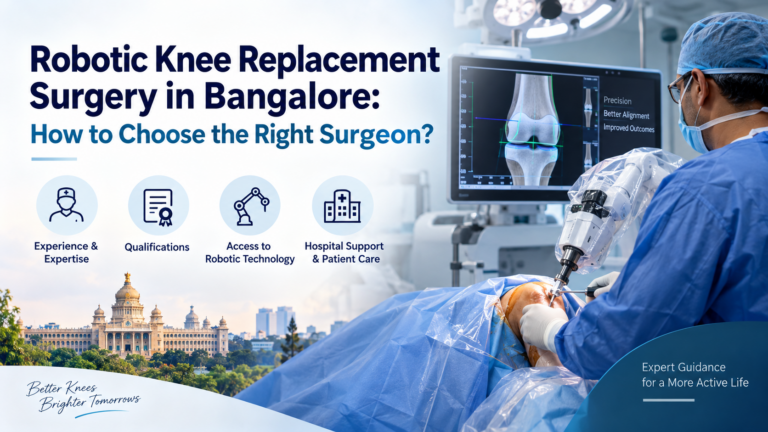
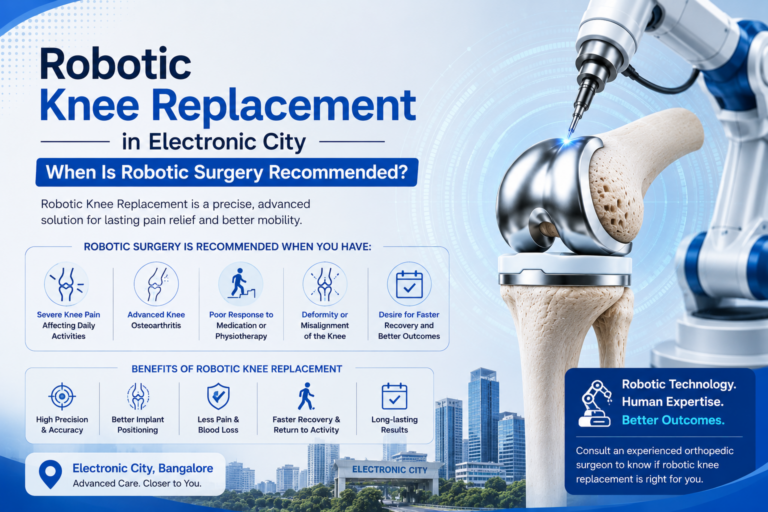
Robotic knee replacement uses advanced computer-guided technology to help surgeons perform the procedure with greater precision.
Before surgery:
- Detailed imaging of the knee is performed
- A personalised surgical plan is created
- Implant positioning is planned according to the patient’s anatomy
During surgery, the robotic system assists the surgeon while maintaining complete surgeon control throughout the procedure.
What Is Traditional Knee Replacement Surgery?
Traditional knee replacement surgery has been successfully performed for many years and remains an effective treatment option.
In this procedure:
- The surgeon manually removes damaged bone and cartilage
- The artificial implant is positioned using conventional instruments
- Alignment is based on surgical measurements and experience
Traditional surgery continues to provide excellent outcomes for many patients.
What Are the Benefits of Robotic Knee Replacement?
Improved Surgical Precision
One of the biggest advantages of robotic knee replacement is improved accuracy during implant placement.
More precise alignment may help:
- Improve joint function
- Reduce implant wear
- Enhance long-term outcomes
Personalised Surgical Planning
Robotic systems allow surgeons to create customised treatment plans based on each patient’s knee anatomy.
This personalised approach may improve overall surgical results.
Potentially Faster Recovery
Some patients experience:
- Less soft tissue disruption
- Reduced post-operative discomfort
- Earlier mobility
Recovery varies from person to person but may be improved in selected cases.
Better Implant Alignment
Accurate implant positioning may improve:
- Knee stability
- Joint movement
- Implant longevity
Proper alignment is one of the key goals of knee replacement surgery.
What Are the Benefits of Traditional Knee Replacement Surgery?
Traditional knee replacement surgery has been performed successfully for decades. It remains an effective treatment for severe knee arthritis.
Benefits include:
- Reduced knee pain
- Improved mobility
- Better daily function
- Enhanced quality of life
Many patients achieve excellent long-term outcomes when the procedure is performed by an experienced orthopaedic surgeon.
Robotic vs Traditional Knee Replacement Surgery
| Factor | Robotic Knee Replacement | Traditional Surgery |
| Surgical Planning | Personalised | Standard |
| Precision | Higher accuracy | Manual accuracy |
| Implant Alignment | More precise | Conventional |
| Technology | Robotic-assisted | Traditional instruments |
| Recovery | May be faster in some patients | Standard recovery |
| Long-Term Outcomes | Potentially improved alignment | Proven long-term success |
Both procedures can deliver successful outcomes when performed by an experienced orthopaedic surgeon.
Is Robotic Knee Replacement More Expensive?
Robotic knee replacement generally costs more than traditional surgery because of advanced technology and personalised planning.
| Procedure | Approximate Cost in India |
|---|---|
| Traditional Knee Replacement | ₹1.5–3.5 lakh |
| Robotic Knee Replacement | ₹2.5–5 lakh |
What Are the Risks of Robotic Knee Replacement?
Robotic knee replacement is generally safe when performed by an experienced surgeon. However, every surgical procedure carries some risks.
Potential complications may include:
- Infection
- Blood clots
- Swelling
- Joint stiffness
- Implant-related issues
Although robotic technology improves surgical accuracy, it cannot completely eliminate risks or guarantee specific outcomes.
Who Is a Good Candidate for Robotic Knee Replacement?
Robotic-assisted surgery may be suitable for:
- Patients with severe knee arthritis
- Individuals with knee deformities
- Active adults seeking precise implant placement
- Patients considering advanced knee replacement surgery
A detailed evaluation helps determine whether robotic-assisted surgery is the right option.
What Is Recovery Like After Knee Replacement Surgery?
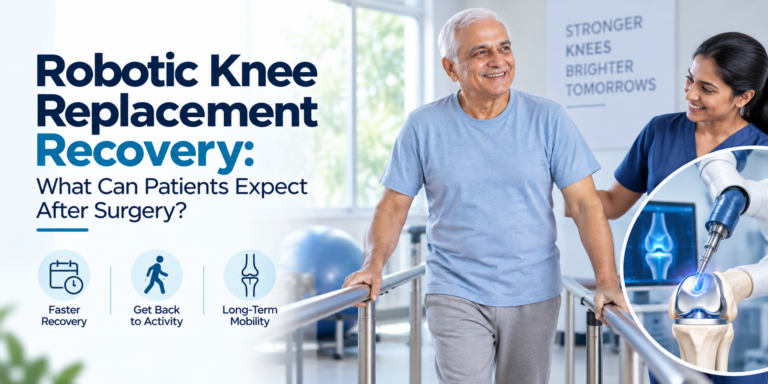
Recovery after knee replacement surgery involves physiotherapy, walking exercises, muscle-strengthening programs, and regular follow-up visits.
Most patients gradually regain mobility over several weeks or months. However, recovery time varies based on age, overall health, activity level, and the type of procedure performed.
Conclusion
Both robotic knee replacement and traditional knee replacement surgery are effective treatments for severe knee arthritis and chronic joint pain.
Robotic-assisted surgery offers greater precision and personalised planning. On the other hand, traditional surgery continues to deliver reliable long-term results.
Consulting an experienced orthopaedic surgeon can help determine the most suitable treatment option based on your condition, lifestyle, and recovery goals.
Consult Dr. Abhinandan Punit for Robotic Knee Replacement in Bangalore
If you are experiencing chronic knee pain, severe arthritis, joint stiffness, or difficulty walking, seeking expert advice can help you understand your treatment options. Early evaluation allows for accurate diagnosis and personalised treatment planning based on your condition and lifestyle goals.
Dr. Abhinandan Punit is a European Board-Certified Orthopaedic Surgeon with over 15 years of experience in joint replacement surgery and advanced robotic-assisted procedures. He has successfully performed more than 6,000 orthopaedic surgeries and specializes in robotic knee replacement, knee arthritis treatment, and rehabilitation-focused recovery.
Patients can consult Dr. Abhinandan Punit at Elite Orthocare, Kanakapura Road, Bangalore, and Narayana Clinic, Electronic City, Bangalore for expert evaluation and personalised treatment recommendations.
Book a appointment to discuss whether robotic knee replacement or traditional knee replacement surgery is the most suitable option for your long-term mobility and joint health.
Frequently Asked Questions About Robotic Knee Replacement Surgery
Which is better: robotic knee replacement or traditional knee replacement?
Both procedures are effective for treating severe knee arthritis. Robotic knee replacement may offer improved implant positioning and personalised surgical planning, while traditional knee replacement has a long history of proven success. The best option depends on the patient’s condition and treatment goals.
Is robotic knee replacement safe?
Yes, robotic knee replacement is generally safe when performed by an experienced orthopaedic surgeon. The robotic system assists with surgical planning and implant positioning, while the surgeon remains in control. Like any surgery, risks such as infection, swelling, and blood clots can occur.
Is robotic knee replacement worth it?
For many patients, robotic knee replacement may be beneficial because it allows greater surgical precision and customised treatment planning. However, suitability depends on individual anatomy, arthritis severity, and surgeon recommendation.
Is robotic knee replacement more expensive than traditional surgery?
Robotic knee replacement may cost more because it uses advanced technology and personalised surgical planning. Costs vary based on the hospital, implant type, surgeon’s expertise, and location. Patients should discuss pricing and treatment options before surgery.
How long does a robotic knee replacement last?
Modern knee replacement implants can last 15–20 years or longer in many patients. Implant longevity depends on activity level, body weight, overall health, and implant positioning.