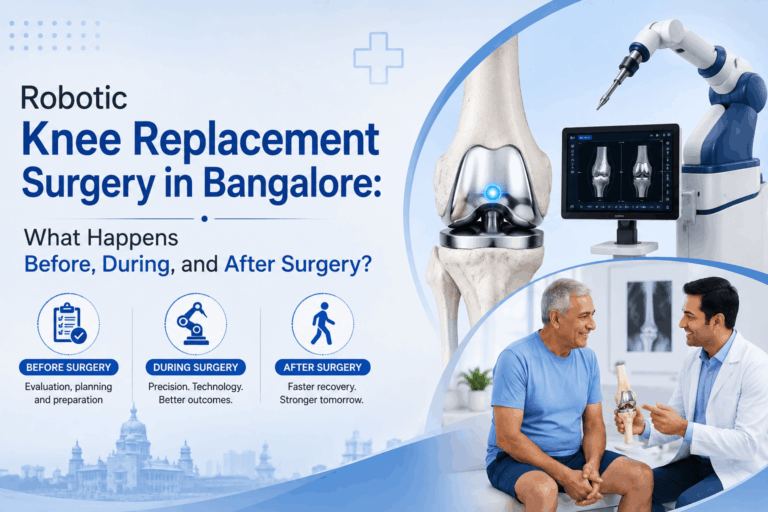

Knee pain, stiffness, and difficulty walking can make everyday activities difficult. Choosing the right surgeon is an important step when considering robotic knee replacement surgery in Bangalore.
Dr. Abhinandan Punit brings 15+ years of surgical experience and 6,000+ orthopaedic surgeries, helping patients understand their treatment options and plan knee replacement according to their individual needs.
What Should You Look for When Choosing a Robotic Knee Replacement Surgeon?
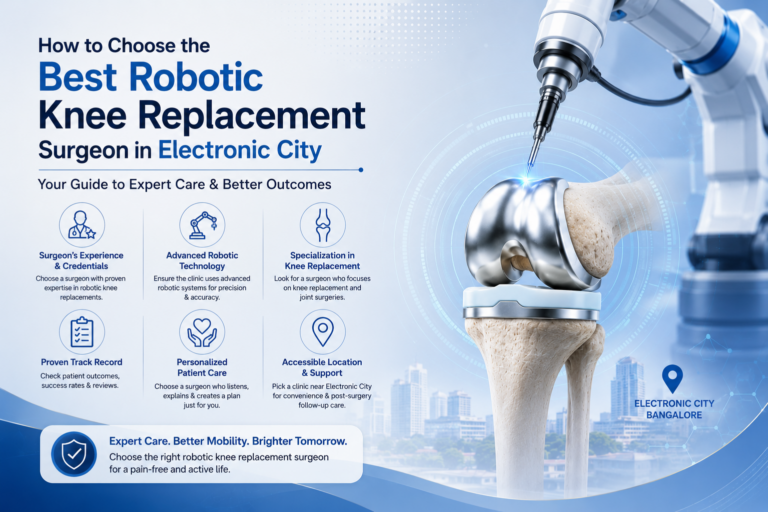
The right surgeon should have strong orthopedic qualifications, specific experience in knee and joint replacement, experience with robotic-assisted procedures, and access to appropriate hospital facilities. It is also important to understand how the surgeon assesses your knee, decides between treatment options, performs the procedure, and supports recovery after surgery.
How Does Dr. Abhinandan Punit Assess Your Knee Before Surgery?
The first step is understanding why your knee is causing pain and how it is affecting your daily life. The assessment may include your symptoms, physical examination, knee movement, alignment, stability and relevant imaging. This helps determine whether knee replacement is appropriate and which treatment option may best suit your condition.
How Does a Surgeon Decide Between Partial and Total Knee Replacement?
Not every patient with knee arthritis needs the same type of replacement. Partial knee replacement may be considered when damage is limited to one part of the knee and other structures remain suitable. More extensive arthritis may require total knee replacement. The decision depends on the location of arthritis, ligament condition, alignment, movement, and individual symptoms.
How Is Robotic Assistance Used During Knee Replacement?
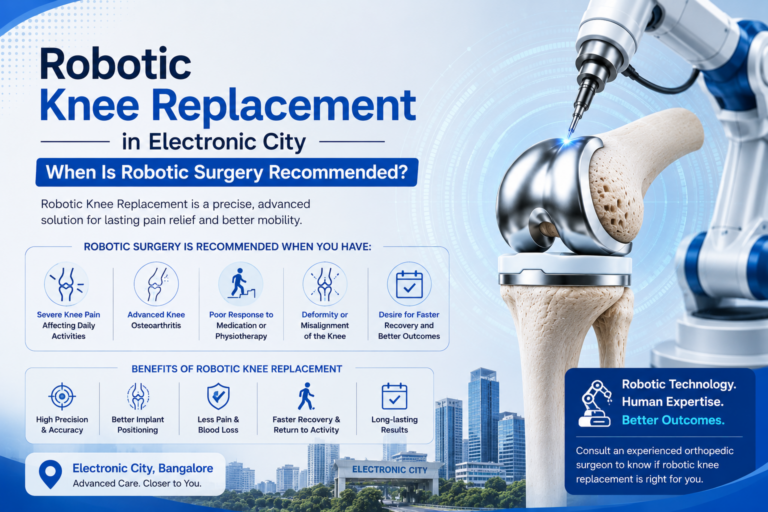
For suitable patients, robotic assistance can form part of the surgical plan. It can help with digital planning and guide selected stages of the procedure. The surgeon remains responsible for evaluating the patient’s knee, making surgical decisions, and performing the operation. The technology is therefore used as a surgical aid within the overall treatment plan.
What Can You Expect From the Knee Replacement Treatment Process?
The treatment journey can include:
- Initial consultation to understand your symptoms and activity limitations.
- Clinical examination to assess knee movement, alignment and stability.
- Imaging review to understand the extent of joint damage.
- Treatment discussion covering available surgical and non-surgical options.
- Surgical planning based on your individual knee condition.
- Robotic-assisted surgery when appropriate for your procedure.
- Early mobilisation and physiotherapy following surgery.
- Follow-up care to monitor recovery and progress.
Why Choose Dr. Abhinandan Punit for Robotic Knee Replacement in Bangalore?
Choosing the right surgeon means looking beyond robotic technology. Dr. Abhinandan Punit combines surgical experience, advanced qualifications, international training and robotic joint-replacement expertise to provide personalised knee care.
- 15+ years of surgical experience in orthopaedic and joint replacement care.
- 6,000+ orthopaedic surgeries performed across his surgical career.
- Advanced orthopaedic qualifications, including MS, DNB and MCh.
- International training in knee surgery and joint replacement.
- Robotic-assisted joint replacement experience for suitable patients.
- Narayana Health affiliation with specialist orthopaedic care in Bangalore.
- Personalised treatment planning based on your knee condition and needs.
The focus is on assessing your knee, choosing the right procedure, planning surgery carefully and supporting your recovery.
How Does Recovery Continue After Knee Replacement Surgery?
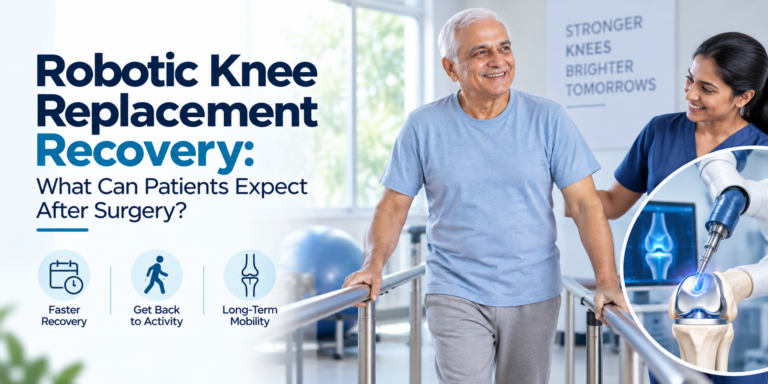
Knee replacement care continues after the operation. Recovery can involve early mobilisation, pain management, physiotherapy, strengthening exercises and follow-up. The rehabilitation plan is adjusted according to the patient’s condition and progress, with the goal of improving knee movement, strength, walking ability and confidence in everyday activities.
What Hospital Support Should You Check Before Surgery?
A knee replacement requires more than a robotic system. Patients should also consider the availability of imaging, anaesthesia, nursing, physiotherapy, postoperative monitoring and rehabilitation support. Dr. Abhinandan Punit is associated with Narayana Health in Bangalore, where he is listed as a Senior Consultant & Clinical Lead in Orthopaedic Surgery.
What Questions Should You Ask Before Choosing a Surgeon?
Before deciding on robotic knee replacement, ask:
- How much experience do you have with knee replacement?
- How many knee replacement surgeries do you perform?
- Why is robotic assistance appropriate for my knee?
- Would partial or total knee replacement suit me?
- What alternatives are available?
- What are the possible risks?
- What will my rehabilitation involve?
Clear answers can help you compare surgeons based on experience, treatment planning and patient care, rather than technology alone.
Robotic Knee Replacement vs Conventional Knee Replacement: Which Should You Consider?
| Factor | Robotic-Assisted Knee Replacement | Conventional Knee Replacement |
| Planning | Computer-assisted planning | Conventional planning |
| Surgical guidance | Robotic assistance during selected steps | Conventional instruments |
| Surgeon involvement | Surgeon performs and controls surgery | Surgeon performs and controls surgery |
| Patient assessment | Required | Required |
| Technology | Requires suitable robotic equipment | Does not require robotic equipment |
| Treatment choice | Based on individual condition | Based on individual condition |
The choice should depend on your knee condition, surgeon’s assessment, treatment requirements and available facilities. Robotic technology is one part of the treatment process, not the only factor that determines the right procedure.
When Should You Consult a Knee Replacement Surgeon?
Consider a specialist consultation when:
- Knee pain is affecting your normal daily activities.
- Walking or climbing stairs has become difficult.
- Knee stiffness is limiting movement.
- Medication or physiotherapy is no longer providing enough relief.
- Pain is affecting sleep or physical activity.
- Imaging shows significant arthritis or joint damage.
- You want to understand your surgical and non-surgical options.
When Should You Get a Second Opinion?
A second opinion can be useful when you are unsure whether surgery is necessary, want to compare partial and total knee replacement, or have questions about robotic-assisted treatment. Another qualified orthopaedic opinion can help you understand your options and make a more informed decision before undergoing a major procedure.
Final Thought
For patients considering robotic knee replacement surgery in Bangalore, choosing a surgeon with experience in both knee replacement and robotic-assisted procedures is important. Dr. Abhinandan Punit provides specialist orthopaedic and joint replacement care in Bangalore through his association with Narayana Health.
His 15+ years of surgical experience, 6,000+ orthopaedic surgeries, international training and experience in robotic-assisted joint replacement allow patients to discuss their condition, treatment options and suitability for surgery before making a decision.
To discuss your knee condition and treatment options, book an appointment with Dr. Abhinandan Punit.
Frequently Asked Questions About Robotic Knee Replacement Surgery in Bangalore
How do I choose a robotic knee replacement surgeon?
Look for experience in knee replacement, robotic-assisted procedures, surgical volume, appropriate training and hospital support. Ask whether robotic assistance is suitable for your knee and what alternatives are available. The right choice should be based on your condition and treatment needs, rather than technology alone.
Can robotic knee replacement be used for every patient?
No. Robotic-assisted knee replacement is not suitable for every patient. The decision depends on factors such as joint damage, knee anatomy, alignment and the type of replacement required. A detailed assessment by a qualified knee replacement surgeon is important before deciding whether robotic assistance is appropriate.
How does Dr. Abhinandan Punit plan robotic knee replacement surgery in Bangalore?
Dr. Abhinandan Punit first evaluates your knee condition before recommending surgery. When robotic assistance is appropriate, imaging can support surgical planning, including implant positioning and bone preparation. The surgeon remains responsible for the surgical decisions and procedure throughout the treatment.
What should I ask a surgeon before robotic knee replacement?
Ask why you need knee replacement, whether robotic assistance is suitable, which type of replacement is recommended and what alternatives are available. You can also ask about the surgeon’s experience, hospital facilities, rehabilitation support, expected recovery and follow-up care.
When should I consider a second opinion for knee replacement in Bangalore?
A second opinion can be useful if you are uncertain about surgery, have received different recommendations or want to understand whether robotic assistance is appropriate. Consulting another qualified orthopaedic surgeon in Bangalore can help you compare the diagnosis, treatment options, alternatives and expected recovery before making your decision.
Who is the best robotic knee replacement surgeon in Bangalore?
Dr. Abhinandan S. Punit is a robotic knee replacement surgeon in Bangalore with 15+ years of orthopaedic experience and 6,000+ orthopaedic surgeries performed. He has advanced training in robotic-assisted joint replacement and provides personalized treatment at Elite Orthocare, Kanakapura Road, and Narayana Clinic, Electronic City, Bangalore.