
Robotic knee replacement in Electronic City may be recommended when advanced knee arthritis causes persistent pain, stiffness, and difficulty with daily activities and knee replacement is considered appropriate. Robotic assistance can help with surgical planning and implant positioning, but it is not necessary for every patient. The decision depends on knee damage, alignment, bone condition, and individual needs.
What Is Robotic Knee Replacement?
Robotic knee replacement is a knee replacement procedure in which computer-assisted technology helps the surgeon plan the operation and perform precise bone preparation and implant positioning. The robotic system supports the surgeon during surgery rather than independently performing the procedure.
The aim is to help create a treatment plan based on the patient’s individual knee anatomy.
When Is Robotic Knee Replacement Recommended?
Robotic-assisted knee replacement may be considered when advanced arthritis has significantly affected the knee and non-surgical treatments no longer provide sufficient relief.
Common reasons to discuss knee replacement include:
- Persistent knee pain
- Difficulty walking
- Pain while climbing stairs
- Reduced mobility
- Knee stiffness
- Difficulty sleeping because of knee pain
- Difficulty performing routine activities
- Limited improvement with non-surgical treatment
A surgeon first determines whether knee replacement is necessary before deciding whether robotic assistance is appropriate.
Is Robotic Surgery Recommended for Every Knee Replacement Patient?
No. Robotic surgery is not automatically required for every patient undergoing knee replacement. The suitability of robotic assistance depends on the individual’s knee anatomy, arthritis pattern, alignment, bone condition, medical history, and treatment goals.
The decision should be made after a clinical examination and appropriate imaging rather than simply choosing robotic surgery because the technology is available.
How Does Robotic Technology Help During Knee Replacement?
Robotic technology can assist with preoperative planning, bone preparation, alignment, and implant positioning. The surgeon uses information about the patient’s knee anatomy to plan the procedure and then uses the robotic system as an additional surgical aid.
The surgeon continues to control the procedure and makes the important clinical decisions throughout the operation.
What Knee Conditions May Lead to Robotic Knee Replacement?
Robotic knee replacement may be considered for patients with advanced knee osteoarthritis when joint damage has become severe enough to require replacement.
Symptoms may include persistent pain, reduced walking ability, stiffness, difficulty with stairs, and limitations in everyday activities. The extent of joint damage is assessed through clinical examination and imaging before surgery is recommended.
Can Robotic Knee Replacement Be Used for Severe Knee Arthritis?
Yes, robotic-assisted knee replacement may be an option for selected patients with severe knee arthritis when knee replacement is indicated.
However, the presence of severe arthritis alone does not mean that robotic surgery is automatically necessary. The surgeon must evaluate the pattern of joint damage, knee alignment, bone quality, and other factors before selecting the surgical approach.
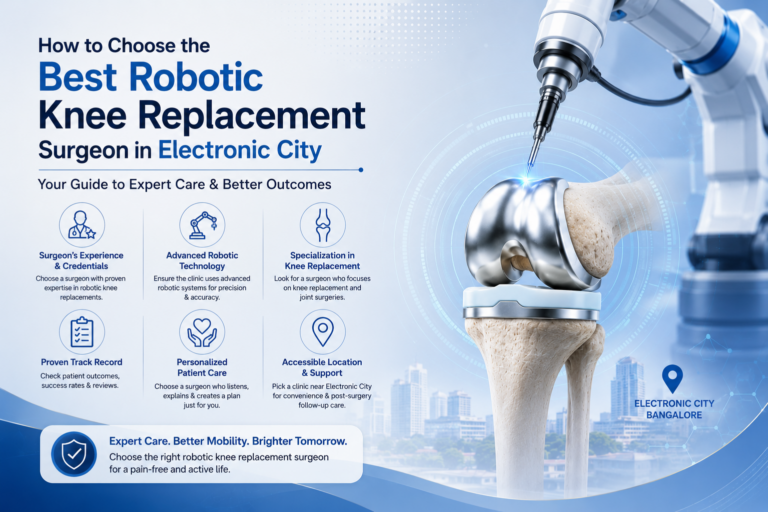
What Should You Consider When Choosing a Robotic Knee Replacement Surgeon?
Patients considering robotic knee replacement in Electronic City should evaluate:
- Orthopedic qualifications
- Knee replacement experience
- Specific robotic joint replacement training
- Experience with relevant knee conditions
- Hospital and surgical facilities
- Postoperative rehabilitation support
- Individualized treatment planning
The goal is to select an orthopedic surgeon who can determine whether robotic assistance is appropriate rather than recommending it automatically.
Why Is Surgeon Experience Important in Robotic Knee Replacement?
Robotic technology can support surgical precision, but it does not replace the surgeon’s clinical judgment. The surgeon must assess the patient’s condition, select the appropriate implant, plan the procedure, balance the knee, and manage findings that may arise during surgery.
For this reason, robotic technology and surgeon experience should be considered together when evaluating treatment options.
Why Consider Dr. Abhinandan Punit for Robotic Knee Replacement in Electronic City?
Dr. Abhinandan Punit is an Orthopedic and Robotic Joint Replacement Surgeon with 15+ years of experience and 6,000+ orthopedic surgeries. He performs 700+ joint replacement procedures annually and has received international fellowship training in advanced joint reconstruction.
He provides consultations at Elite Orthocare, Kanakapura Road, Bangalore, and Narayana Clinic & Hospitals, Electronic City, Bangalore. These locations provide consultation options for patients looking for robotic knee replacement in and around Electronic City.
How Is Robotic Knee Replacement Suitability Determined?
The assessment generally considers the patient’s symptoms, physical examination, imaging findings, severity of arthritis, knee alignment, bone condition, previous treatments, and overall health.
The purpose is to determine two separate questions: Does the patient need knee replacement? And, if so, would robotic assistance be appropriate for the planned procedure?
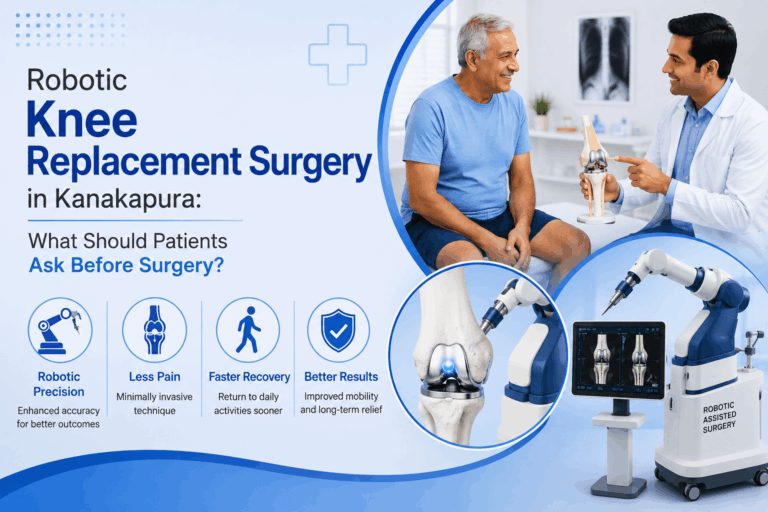
What Should You Ask Before Robotic Knee Replacement?
Before making a decision, consider asking:
- Is knee replacement necessary for my condition?
- Am I a suitable candidate for robotic-assisted surgery?
- What type of robotic technology will be used?
- How much experience does the surgeon have with robotic knee replacement?
- What implant options are available?
- What are the expected benefits and limitations?
- What will recovery and rehabilitation involve?
- What alternatives are available?
These questions can help you understand whether robotic knee replacement is appropriate for your specific situation.
When Should You Consult a Knee Replacement Surgeon?
Consider an orthopedic consultation if knee pain continues to interfere with walking, stairs, exercise, sleep, work, or daily activities, particularly when conservative treatments have not provided adequate relief.
An orthopedic evaluation can determine whether the symptoms are caused by advanced arthritis and whether knee replacement should be considered.
Conclusion
Robotic knee replacement in Electronic City may be recommended when knee arthritis has progressed to the point where joint replacement is appropriate and robotic assistance is considered suitable for the patient’s condition. It should not be viewed as necessary for every knee replacement patient.
The decision should consider the extent of arthritis, knee anatomy, alignment, bone condition, overall health, surgeon experience, and individual treatment goals.
Frequently Asked Questions
1.When is robotic knee replacement recommended?
Robotic knee replacement may be considered when advanced knee arthritis causes persistent pain, stiffness, and difficulty with daily activities and knee replacement is medically appropriate. The decision to use robotic assistance depends on the patient’s knee anatomy, arthritis severity, alignment, bone condition, and other clinical factors assessed during an orthopedic evaluation.
2.Is robotic knee replacement better than traditional knee replacement?
Robotic assistance can support surgical planning, bone preparation, and implant positioning, but it is not automatically better for every patient. The appropriate approach depends on the individual’s knee condition and the surgeon’s assessment. Both robotic-assisted and conventional knee replacement can be appropriate when selected for the right patient.
3.Is robotic knee replacement suitable for everyone?
No. Not every patient requiring knee replacement needs robotic-assisted surgery. The surgeon considers arthritis severity, knee alignment, bone condition, previous surgery, medical history, and other factors. A clinical examination and imaging assessment help determine whether robotic assistance is appropriate for the planned knee replacement.
4.Where can I consult Dr. Abhinandan Punit for robotic knee replacement in Electronic City?
Dr. Abhinandan Punit provides orthopedic and robotic joint replacement consultation at Narayana Clinic & Hospitals, Electronic City, Bangalore. Consultation is also available at Elite Orthocare, Kanakapura Road, Bangalore. Patients should confirm the current appointment schedule and clinic location before visiting.
5.What should I ask a surgeon before robotic knee replacement?
Ask whether knee replacement is necessary, whether robotic assistance is appropriate, what robotic technology and implant will be used, the surgeon’s experience with the procedure, expected recovery, rehabilitation requirements, potential risks, and available alternatives. This allows you to understand the treatment plan before making a decision.