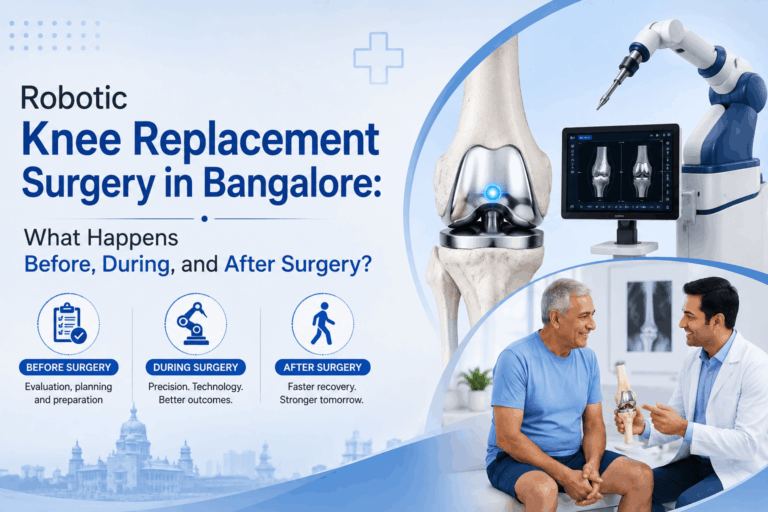

Yes, robotic knee replacement can be safe for adults over 60 when the patient is medically fit and properly evaluated before surgery. Dr. Abhinandan S. Punit, a joint replacement surgeon in Kanakapura, Bangalore, with 15+ years of experience and 6,000+ surgeries performed, provides personalized evaluation and treatment planning for patients considering robotic knee replacement.
What is robotic knee replacement?
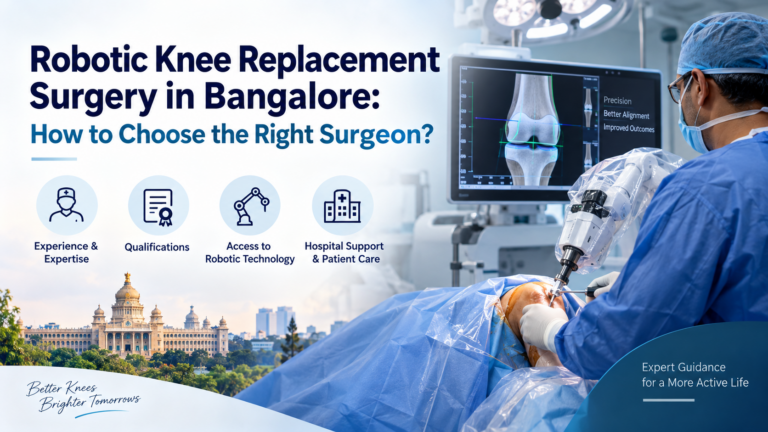
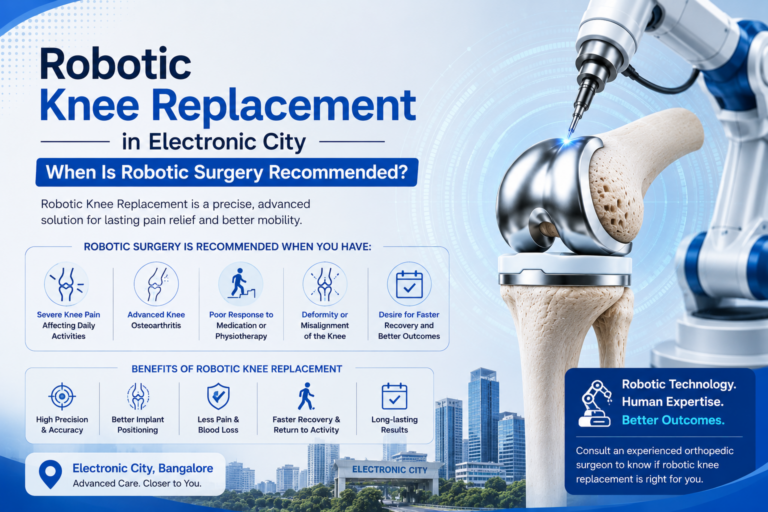
Robotic knee replacement is a form of total knee replacement that uses computer-based planning and robotic assistance to help the surgeon position the implant and make bone cuts accurately. The surgeon remains in control throughout the procedure. The technology is designed to improve planning, alignment, and consistency rather than replace surgical expertise.
Does age affect the safety of knee replacement surgery?
Age can influence recovery because older adults may have other medical conditions, reduced muscle strength, or slower rehabilitation. However, age by itself is not a reason to avoid knee replacement. Research shows that older adults can experience meaningful improvements in mobility and daily function after total knee replacement.
What health checks are needed before robotic knee replacement after 60?
Before surgery, the surgeon usually reviews the patient’s heart and lung health, blood pressure, diabetes control, kidney function, medications, bone health, weight, mobility, and previous medical history. Blood tests, imaging, and medical clearance may also be required. Good preoperative preparation helps identify and manage factors that could affect recovery.
What should older adults check before surgery?
- Heart health: Check whether the heart is fit for planned surgery and anesthesia.
- Diabetes control: Keep blood sugar controlled to support healing and reduce infection risk.
- Blood pressure: Ensure hypertension is appropriately assessed and treated before surgery.
- Bone health: Evaluate bone quality when there are concerns about osteoporosis.
- Medications: Review blood thinners and other medicines before the procedure.
- Muscle strength: Improve leg strength where possible before surgery.
- Daily mobility: Assess walking ability, balance, and independence before treatment.
Can people with diabetes have robotic knee replacement after 60?
Yes, many older adults with diabetes can undergo knee replacement, but blood sugar control is important before surgery. Poorly controlled diabetes can increase the risk of complications, including infection and delayed healing. The surgical team should review diabetes medicines and glucose levels and coordinate care when additional medical management is required.
How does a surgeon decide if someone over 60 needs knee replacement?
The decision depends on pain, stiffness, walking difficulty, X-ray findings, daily limitations, and response to non-surgical treatment. Knee replacement is generally considered when severe arthritis significantly affects quality of life and treatments such as exercise, physiotherapy, medicines, or injections no longer provide adequate relief.
When should someone over 60 see a knee replacement specialist?
- When knee pain regularly limits walking, stairs, or household activities.
- When severe arthritis appears on X-rays alongside persistent symptoms.
- When physiotherapy and other non-surgical treatments provide insufficient relief.
- When knee stiffness makes normal daily movements increasingly difficult.
- When pain regularly affects sleep or causes significant activity restrictions.
- When medications or injections no longer provide lasting improvement.
Is robotic knee replacement risky for older adults?
Like every major operation, robotic knee replacement has potential risks, including infection, blood clots, bleeding, stiffness, nerve or blood-vessel injury, implant problems, and medical complications. Robotic assistance does not remove these risks. A patient’s medical condition, surgical planning, hospital care, surgeon experience, and rehabilitation all influence the overall safety of treatment.
How long does recovery take after robotic knee replacement after 60?
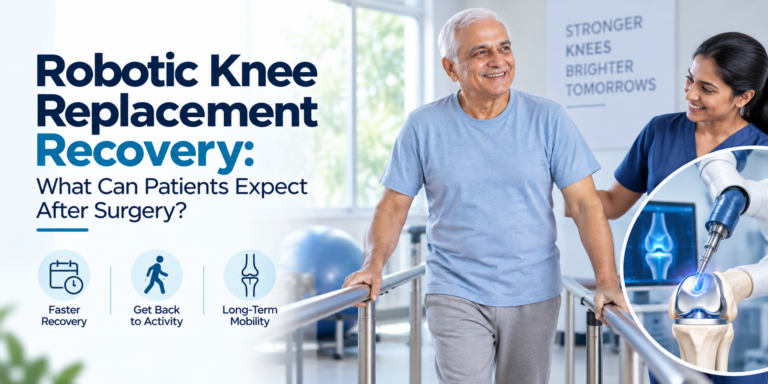
Recovery varies between individuals. Many patients begin standing and walking with assistance soon after surgery, followed by structured physiotherapy. Older adults may require more time to rebuild strength, balance, and confidence. Recovery can continue for several months, and progress depends on fitness, medical conditions, rehabilitation participation, and the condition of the knee before surgery.
Does robotic knee replacement reduce pain after surgery?
Robotic technology is intended mainly to assist surgical planning and execution rather than act as a direct pain-control treatment. Some studies report early recovery benefits, but evidence remains mixed. Pain after surgery is influenced by the surgical technique, pain-management plan, rehabilitation, inflammation, muscle strength, and individual pain response.
Can someone over 70 or 80 have robotic knee replacement?
Yes, selected patients in their 70s and 80s can undergo knee replacement when their overall health allows surgery. The assessment should focus on fitness, medical conditions, independence, bone health, frailty, and rehabilitation potential rather than age alone. Older patients may need more detailed medical preparation and support during recovery.
What can older adults do before robotic knee replacement?
Preparing the body before surgery can make rehabilitation easier. Patients should follow their surgeon’s instructions, maintain appropriate physical activity, work on leg strength when medically suitable, manage existing medical conditions, maintain a healthy weight where appropriate, and arrange support at home for the early recovery period.
Why is rehabilitation important after robotic knee replacement?
Rehabilitation helps restore knee movement, leg strength, balance, and confidence after surgery. Robotic assistance does not eliminate the need for physiotherapy. Older adults may particularly benefit from structured rehabilitation because maintaining muscle strength and balance can support safe walking and reduce difficulties during recovery.
Robotic Knee Replacement vs Conventional Knee Replacement: Which Is Safer After 60?
Neither approach is automatically safer for every older adult. Robotic assistance may provide greater planning and positioning support, while conventional knee replacement remains an established treatment. The most appropriate option depends on the patient’s anatomy, medical condition, arthritis severity, surgeon’s expertise, available technology, and expected rehabilitation needs. Current evidence does not establish robotic surgery as universally superior.
What should you ask a surgeon before robotic knee replacement after 60?
- Is knee replacement surgery necessary now, or can treatment be delayed?
- Am I medically fit for surgery and anaesthesia?
- Which robotic system will be used for my surgery?
- What medical conditions could increase my surgical risk?
- How long might my hospital stay be?
- What rehabilitation will I need after surgery?
- When can I expect to walk independently?
- What support will I need at home?
Why choose Dr. Abhinandan Punit for robotic knee replacement on Kanakapura Rd, Bangalore?
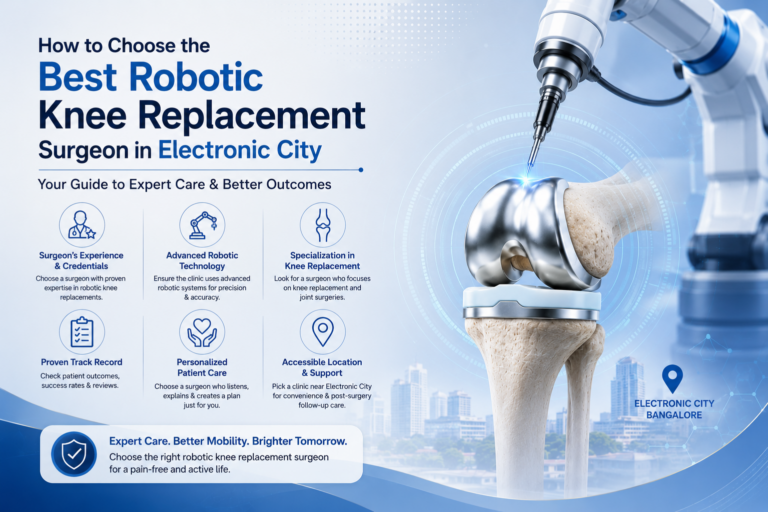
Dr. Abhinandan S. Punit is a Senior Consultant and Clinical Lead in Orthopaedic Surgery and Joint Replacement at Narayana Health City, Bangalore. He has 15+ years of surgical and clinical experience and has performed 6,000+ surgeries, with advanced training in robotic joint replacement and sports medicine from institutions in the UK, Europe, and Australia.
His qualifications include MBBS, MS Orthopaedics, MCh Orthopaedics, and Fellowship in Robotic Joint Replacement and Sports Medicine. He is trained in robotic-assisted knee replacement using advanced robotic systems, including CUVIS and CORI.
Patients looking for robotic knee replacement on Kanakapura Rd can consult Dr. Abhinandan Punit at Elite Orthocare, where treatment planning is based on the patient’s knee condition, anatomy, activity level, overall health, and recovery goals. His approach focuses on personalized robotic and minimally invasive joint replacement care for patients in Bangalore. To discuss your knee condition and treatment options, book an appointment with Dr. Abhinandan Punit.
Conclusion: A Safer Path to Better Knee Mobility
Knee pain and stiffness after 60 can make walking, climbing stairs, and everyday activities difficult, but age alone does not mean you have to live with limited mobility. When severe arthritis affects daily life, robotic knee replacement may be considered after a detailed medical evaluation and proper surgical planning.
With personalized care from Dr. Abhinandan S. Punit, patients looking for robotic knee replacement on Kanakapura Rd, Bangalore, can receive treatment based on their knee condition, overall health, and recovery goals. With 15+ years of experience and 6,000+ surgeries performed, Dr. Abhinandan Punit provides joint replacement care at Elite Orthocare.
Frequently Asked Questions
Is robotic knee replacement safe for a 60-year-old?
Yes. Robotic knee replacement can be safe for a 60-year-old when overall health is suitable for surgery. Age alone is not a deciding factor. Heart health, diabetes, bone strength, medications, mobility, and fitness should be assessed before surgery.
Is robotic knee replacement better for older adults?
Robotic knee replacement provides detailed surgical planning and assists with implant positioning and bone preparation. However, it is not automatically better for every older adult. The choice depends on knee condition, anatomy, overall health, surgeon expertise, and rehabilitation needs.
How soon can an older adult walk after robotic knee replacement?
Many patients can stand and walk with assistance soon after robotic knee replacement. The exact timeline depends on overall health, muscle strength, balance, pain control, and the surgeon’s recovery plan. Physiotherapy is important for gradually restoring movement and walking ability.
Who should I consult for robotic knee replacement on Kanakapura Road, Bangalore?
For robotic knee replacement on Kanakapura Road, Bangalore, you can consult Dr. Abhinandan S. Punit at Elite Orthocare. He evaluates your knee condition, medical fitness, symptoms, and recovery goals before recommending the appropriate treatment approach.
Why should I consider Dr. Abhinandan Punit for robotic knee replacement?
Dr. Abhinandan S. Punit has 15+ years of experience and 6,000+ surgeries performed. He has qualifications including MBBS, MS Orthopaedics, MCh Orthopaedics, and advanced training in robotic joint replacement, providing personalized care for patients considering robotic knee replacement in Kanakapura Road, Bangalore.