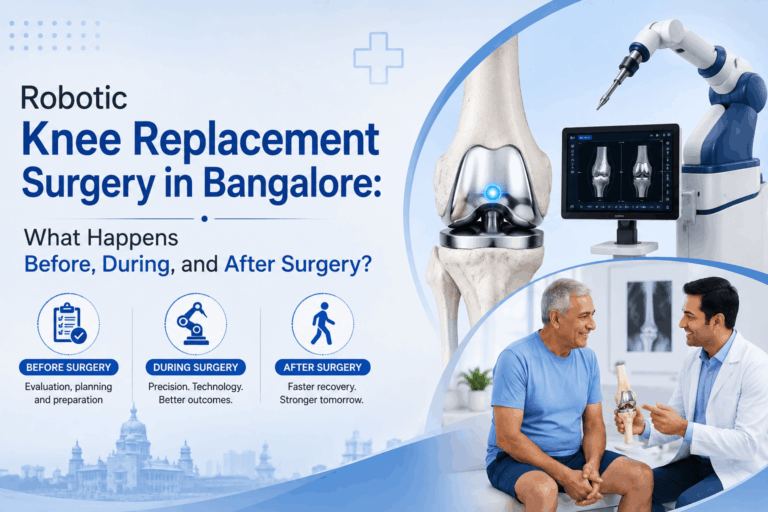

Robotic knee replacement recovery usually involves early movement, pain management, physiotherapy, and a gradual return to daily activities. Most patients begin standing and walking with assistance soon after surgery. Recovery varies based on age, overall health, muscle strength, knee condition, and rehabilitation. Dr. Abhinandan S. Punit, with 15+ years of experience and 6,000+ surgeries performed, provides personalized joint replacement care in Electronic City, Bangalore.
What is robotic knee replacement recovery?
Robotic knee replacement recovery is the period after surgery when the knee gradually regains movement, strength, stability, and function. Recovery includes pain management, wound care, walking exercises, physiotherapy, and regular follow-up. Robotic assistance supports surgical planning and implant positioning, but rehabilitation remains essential for achieving good functional recovery.
How soon can you walk after robotic knee replacement?
Many patients can stand and begin walking with assistance soon after surgery, depending on their medical condition and the surgeon’s protocol. Walking usually starts with support such as a walker or crutches. Physiotherapy then helps improve strength, balance, knee movement, and confidence as walking ability gradually increases.
What happens during the first 24 hours after robotic knee replacement?
During the first 24 hours, the medical team monitors your pain, wound, blood pressure, circulation, and overall recovery. Physiotherapy may begin with simple ankle movements, knee exercises, sitting, standing, and assisted walking. The goal is to start safe movement early while protecting the surgical area and preventing avoidable complications.
What can patients expect during the first day?
- Medications: Prescribed medicines are provided to manage pain and support comfortable recovery after surgery.
- Gentle knee movements: Simple knee movements may be introduced to encourage circulation and begin restoring knee mobility.
- Movement with physiotherapist support: A physiotherapist helps the patient sit, stand, and begin walking safely with appropriate support.
- Regular checks by the medical team: The medical team monitors the patient’s pain, wound, blood pressure, circulation, and overall condition.
- Physiotherapy: Initial physiotherapy focuses on safe movement, muscle activation, knee exercises, and beginning the rehabilitation process
What happens during the first week after robotic knee replacement?
The first week focuses on controlling pain and swelling while gradually increasing movement. Patients usually continue prescribed exercises and walking practice. The knee may feel swollen or stiff, which can improve progressively. Following wound-care instructions, taking medicines as prescribed, and attending physiotherapy are important during this early stage.
How much pain is normal after robotic knee replacement?
Some pain, swelling, tightness, and discomfort are expected after knee replacement surgery. Pain should generally become more manageable as recovery progresses. Your doctor may prescribe medicines and recommend exercises or other measures for comfort. Severe, worsening, or unusual pain should be reported to your healthcare team immediately.
How important is physiotherapy after robotic knee replacement?
Physiotherapy is essential after robotic knee replacement because surgery alone does not restore muscle strength, flexibility, balance, and normal walking. A structured rehabilitation programme helps progressively improve knee movement and function. Exercises are adjusted according to recovery, strength, pain levels, and the patient’s ability to safely perform each activity.
What exercises are done after robotic knee replacement?
Exercises usually begin with gentle movements and gradually become more demanding as healing progresses. The specific programme should be provided by your surgeon or physiotherapist. Common rehabilitation activities may include ankle pumps, knee-bending exercises, straight-leg raises, muscle-strengthening exercises, walking practice, and balance training.
How long does robotic knee replacement recovery take?
Recovery time varies from patient to patient. Many people gradually return to routine activities over several weeks, while strength, flexibility, and confidence can continue improving for several months. Age, fitness, existing medical conditions, muscle strength, surgical factors, and participation in physiotherapy can all influence the overall recovery timeline.
What can you do during the first few weeks after surgery?
During the first few weeks, focus on following your rehabilitation programme and gradually increasing activity. Avoid pushing through significant pain or attempting activities before your surgeon approves them. Keep follow-up appointments, take prescribed medicines correctly, maintain appropriate nutrition, and use walking support until you can safely walk without it.
What should patients focus on during early recovery?
- Follow your prescribed physiotherapy programme consistently and safely.
- Gradually increase walking distance according to your recovery progress.
- Perform recommended knee exercises regularly to improve movement.
- Take prescribed medicines according to your surgeon’s instructions.
- Keep the surgical wound clean and follow dressing instructions.
- Attend scheduled follow-up appointments to monitor your progress.
When can you climb stairs after robotic knee replacement?
Patients may practice stairs with physiotherapy guidance when they are medically ready and can walk safely with support. The timing depends on strength, balance, pain, and confidence. Initially, patients are taught safe stair techniques rather than climbing normally. Your physiotherapist can guide you on when and how to progress.
When can you drive after robotic knee replacement?
Driving should only resume when your surgeon considers it safe and you can comfortably control the vehicle without hesitation or significant pain. You should also be able to perform emergency braking safely and no longer require medicines that impair alertness. The exact timing varies depending on recovery and individual circumstances.
When can you return to normal activities after robotic knee replacement?
Returning to normal activities happens gradually rather than on a single fixed date. Basic household activities may resume earlier, while demanding activities require more strength and knee control. Your surgeon and physiotherapist can guide your progression based on healing, walking ability, range of motion, strength, and overall recovery.
What factors can affect robotic knee replacement recovery?
Recovery can be influenced by several factors beyond the robotic technology itself. Age, general fitness, muscle strength, body weight, diabetes, other medical conditions, previous mobility problems, knee stiffness, pain management, and participation in rehabilitation can all affect progress. A personalized recovery plan helps address individual limitations and recovery needs.
What are the warning signs after robotic knee replacement?
Patients should contact their medical team if they develop symptoms that are severe, worsening, or unusual. These may include increasing redness around the wound, significant drainage, fever, severe swelling, sudden calf pain, breathing difficulty, chest pain, or rapidly worsening pain. Prompt medical assessment can help identify complications and ensure appropriate treatment.
When should you contact your doctor after surgery?
- If fever or chills develop alongside other concerning symptoms.
- If wound redness, drainage, or swelling continues to increase.
- If sudden calf pain or significant leg swelling develops.
- If breathing difficulty or chest pain occurs unexpectedly.
- If pain becomes severe despite prescribed pain-management measures.
- If knee movement or walking suddenly becomes more difficult.
Can older adults recover well after robotic knee replacement?
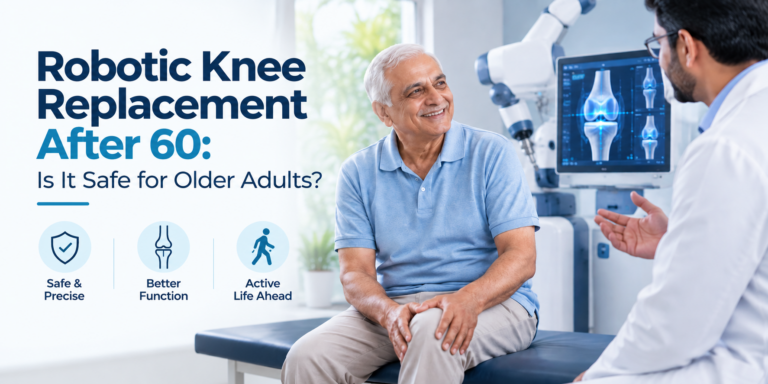
Older adults can recover well when they are medically fit, appropriately selected for surgery, and committed to rehabilitation. Recovery may take longer when patients have muscle weakness, balance problems, or other medical conditions. Proper preoperative preparation, physiotherapy, nutrition, home support, and regular follow-up can support a safer and more effective recovery.
What should you avoid after robotic knee replacement?
Patients should avoid activities that place excessive stress on the recovering knee before receiving medical clearance. High-impact exercise, sudden twisting, heavy lifting, or unsupervised progression of activity may interfere with recovery. The safest approach is to follow your surgeon’s and physiotherapist’s instructions and increase activity gradually as strength and movement improve.
How can you prepare your home for recovery?
Preparing your home before surgery can make the early recovery period easier and safer. Keep frequently used items within easy reach, remove loose rugs and obstacles, arrange a comfortable place to rest, and consider support for household tasks. A family member or caregiver may also be helpful during the initial period.
Why choose Dr. Abhinandan Punit for robotic knee replacement in Bangalore?
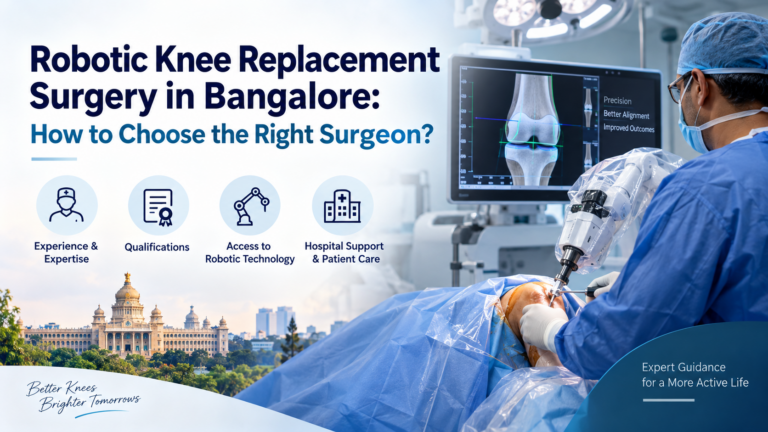
Dr. Abhinandan S. Punit is a Senior Consultant and Clinical Lead in Orthopaedic Surgery and Joint Replacement at Narayana Health City, Bangalore. He has 15+ years of surgical and clinical experience and has performed 6,000+ surgeries. His qualifications include MBBS, MS Orthopaedics, MCh Orthopaedics, and Fellowship in Robotic Joint Replacement and Sports Medicine.
He has advanced training in robotic joint replacement and sports medicine from institutions in the UK, Europe, and Australia. He is trained in robotic-assisted knee replacement using advanced robotic systems, including CUVIS and CORI. His treatment approach considers the patient’s knee condition, anatomy, activity level, overall health, and recovery goals.
Patients looking for robotic knee replacement surgery Bangalore can consult Dr. Abhinandan Punit at Elite Orthocare for personalized joint replacement care. To discuss your knee condition and recovery options, book an appointment with Dr. Abhinandan Punit.
Conclusion:
Robotic knee replacement recovery is a gradual process focused on reducing pain, restoring knee movement, rebuilding strength, and returning to daily activities. Early walking, regular physiotherapy, proper wound care, and follow-up appointments can support steady progress and help patients regain confidence in their movement.
For patients considering robotic knee replacement on Electronic city, Bangalore, Dr. Abhinandan S. Punit at Elite Orthocare provides personalized treatment and recovery planning. With 15+ years of experience and 6,000+ surgeries performed, he evaluates each patient’s condition and recovery goals to provide appropriate joint replacement care.
Frequently Asked Questions About Robotic Knee Replacement Recovery
How long does it take to recover from robotic knee replacement?
Recovery varies between patients, but many gradually return to routine activities over several weeks. Strength, flexibility, balance, and confidence can continue improving for several months. Age, health, muscle strength, knee condition, and regular physiotherapy can influence recovery.
Can I walk normally after robotic knee replacement?
Most patients gradually work towards normal walking as strength, balance, knee movement, and confidence improve. Walking usually begins with assistance and progresses to independent walking. The exact timeline depends on individual recovery, muscle strength, pain levels, and rehabilitation progress.
When can I return to work after robotic knee replacement?
Return to work depends on your occupation and recovery progress. Desk-based work may resume earlier than physically demanding jobs. Your surgeon can assess knee movement, strength, pain, and functional recovery before recommending when you can safely return to work.
When should I contact my doctor during recovery?
Contact your medical team if you experience severe or worsening pain, increasing wound redness or drainage, fever, sudden calf pain, significant swelling, breathing difficulty, or chest pain. These symptoms may require prompt medical assessment to identify complications and provide appropriate treatment.
Who should I consult for robotic knee replacement in Electronic City, Bangalore?
For robotic knee replacement in Electronic City, Bangalore, patients can consider consulting Dr. Abhinandan S. Punit at Elite Orthocare. He has 15+ years of experience and 6,000+ surgeries performed, with advanced training in robotic joint replacement and sports medicine.