
Advanced hospitals offering Direct Anterior Hip Replacement near Kanakapura Road employ fellowship-trained surgeons, maintain high-volume joint replacement programs (700+ annually), use robotic planning systems, have dedicated physiotherapy teams, and follow structured infection control and Enhanced Recovery protocols. Evaluate hospital accreditation, surgeon credentials, and outcome data—not marketing claims—when choosing your provider.
Quick Summary
- Direct Anterior Hip Replacement offers faster recovery and lower dislocation risk than traditional approaches.
- Hospital advancement depends on surgeon fellowship training, surgical volume, and infrastructure—not location alone.
- Robotic hip replacement improves precision when available; not essential for excellent outcomes.
- High-volume centres (700+ joint replacements annually) deliver better safety and functional results.
- Kanakapura Road area hospitals should offer structured ERAS protocols and dedicated hip replacement teams.
Introduction
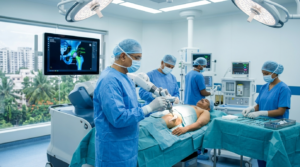
Patients searching for hip replacement hospital Bangalore near Kanakapura Road deserve clarity: advanced surgery is not defined by hospital size or marketing prominence, but by surgeon expertise, institutional volume, and multidisciplinary infrastructure. This guide explains what evidence-based advancement means in DAA hip replacement surgery and how to evaluate hospitals in South Bangalore objectively.
What Is Direct Anterior Hip Replacement (DAA)?
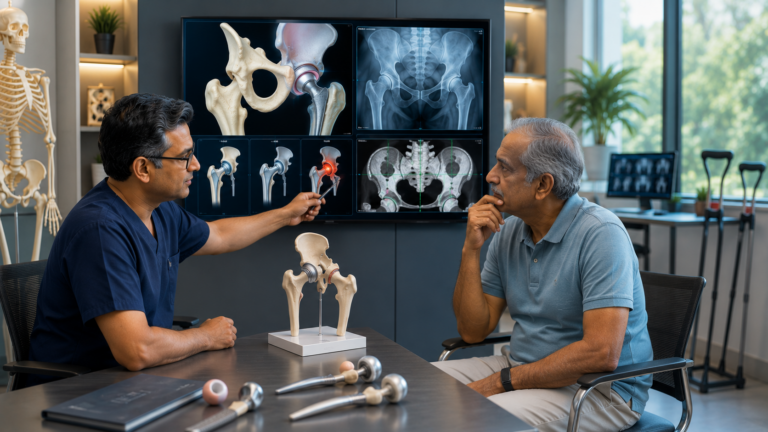
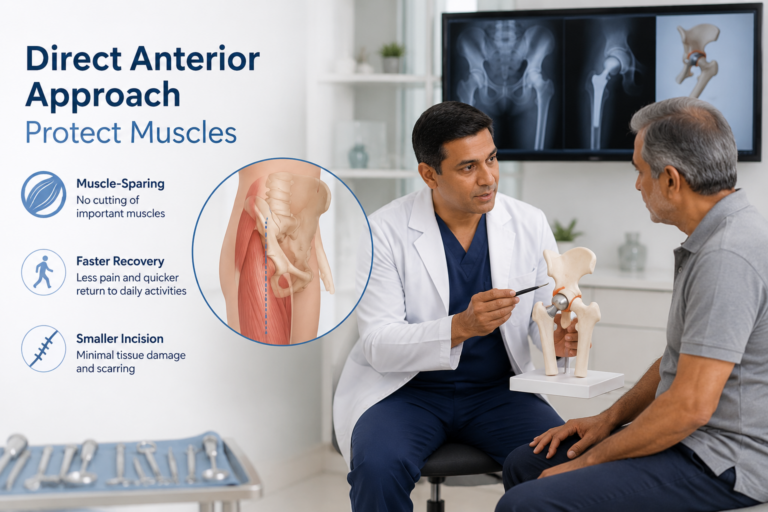
Direct Anterior Hip Replacement is a muscle-sparing hip replacement approach that accesses the hip joint from the front of the thigh, working between existing muscle planes rather than detaching them. This anatomically distinct approach preserves hip abductor and external rotator muscles, which remain the body’s primary stabilisers of the artificial joint.
The consequence is measurable: preserved muscles mean less post-operative pain, faster return to walking, improved stair climbing, and lower dislocation risk compared to traditional posterior or lateral approaches. The trade-off is surgical precision—anterior hip replacement requires specialized training, dedicated instruments, and refinement through high-volume practice.
Why Do Patients Choose DAA Hip Replacement?
Evidence from international joint registries demonstrates several consistent advantages of the anterior approach:
Less muscle damage leads directly to lower pain scores at 6 and 12 weeks post-operatively compared to traditional approaches.
Faster walking — most anterior hip patients walk independently within days, compared to 1–2 weeks for posterior approaches.
Reduced pain enables earlier mobilisation and accelerated rehabilitation, reducing blood clot risk and improving functional recovery.
Earlier return to activities — patients resume stairs, driving, and work 2–4 weeks sooner than with traditional approaches.
Improved stability — the low dislocation rate (0.5–2% in primary cases) allows greater freedom of movement and fewer activity restrictions during recovery.
Registry data from Australia, Norway, and the United Kingdom—tracking thousands of patients over two decades—consistently confirm these advantages when the approach is performed by trained surgeons in high-volume settings.
What Makes a Hospital Advanced for DAA Hip Replacement?
Advanced hospitals offering DAA hip replacement possess specific institutional and clinical characteristics:
Fellowship-trained hip surgeons — Surgeons trained through recognized anterior hip fellowships (typically 1–2 years) demonstrate superior technical consistency and better patient outcomes than surgeons who self-taught or attended brief courses.
High surgical volume — Hospitals performing 700+ joint replacements annually, including 150+ anterior hip replacements per surgeon, develop institutional expertise and standardized protocols that reduce complications.
Dedicated joint replacement program — A structured service with dedicated operating theatres, surgical trays, recovery protocols, and staff training in hip-specific care produces better outcomes than occasional hip surgery performed within a general surgical service.
Robotic-assisted technology — When available and appropriately used, robotic systems improve accuracy of cup positioning and may reduce outliers in implant orientation.
Advanced imaging infrastructure — Multi-detector CT scanners and 3D planning software enable pre-operative anatomical assessment and personalized surgical planning.
Enhanced Recovery After Surgery (ERAS) protocols — Structured, evidence-based perioperative pathways—including optimized anesthesia, pain management, early mobilisation, and nutrition—reduce complications and accelerate recovery compared to traditional post-operative care.
Dedicated physiotherapy — In-house or closely affiliated physiotherapy teams trained in anterior hip-specific rehabilitation, not generic post-op protocols.
Transparent infection control metrics — Surgical site infection rates <1%, reported publicly or on request.
Multidisciplinary team — Access to specialized anesthesia, nursing, blood bank services, and emergency backup for complications.
How Important Is Surgeon Experience Compared to Hospital Facilities?
Evidence is unequivocal: surgeon expertise drives outcomes more than hospital infrastructure.
Large international studies comparing anterior hip outcomes show that high-volume surgeons (150+ anterior cases annually) achieve superior results—lower complications, better functional outcomes, higher patient satisfaction—regardless of whether the hospital is a private tertiary centre or a regional teaching hospital.
Conversely, surgeons with low anterior hip volume (fewer than 50 cases annually) show higher complication rates and longer learning curves, even in hospitals with advanced facilities.
The implication: a patient should prioritize surgeon experience and volume over hospital size or marketing prominence. That said, a surgeon’s ability to deliver excellent care is amplified when hospital infrastructure, physiotherapy, and team experience are strong. The best outcome occurs when a high-volume, fellowship-trained surgeon operates within a hospital committed to high-quality hip replacement care.
Can Robotic Technology Improve DAA Hip Replacement?
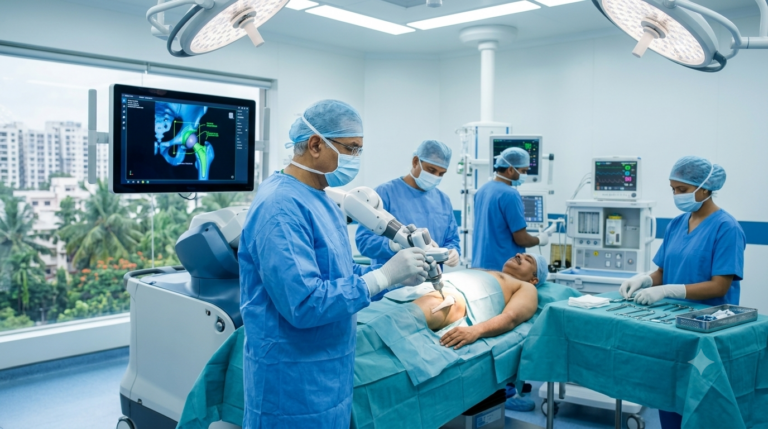
Robotic hip replacement systems—including image-guided and CT-based platforms—have emerged as refinement tools for anterior hip replacement. These systems allow pre-operative 3D planning of cup position, provide real-time intra-operative feedback, and help surgeons achieve precise implant positioning within a pre-planned target zone.
Current evidence suggests robotic guidance improves consistency of cup placement, reduces outliers in implant orientation, and may facilitate restoration of leg length and offset—all factors that influence implant stability and patient satisfaction.
Peer-reviewed studies from high-volume anterior centres report improved outcomes in selected patient populations when robotic guidance is used. However, excellent long-term outcomes are well-established with freehand anterior technique performed by experienced surgeons.
Robotic surgery should be viewed as a precision tool, not a replacement for surgeon skill. A high-volume surgeon with extensive experience often achieves outcomes equivalent to or exceeding those of less-experienced surgeons using robotics. The decision to use robotic guidance should be individualized and transparent.
What Questions Should You Ask Before Choosing a Hospital?
Before scheduling DAA hip replacement, ask these evidence-based questions:
- How many anterior hip replacements has your lead surgeon performed personally? (Target: 150+ cases; see peer-reviewed publications if available)
- What percentage of your hip replacements are performed via anterior approach? (Higher percentage suggests institutional commitment and standardized protocols)
- What is your surgical site infection rate for hip replacement? (Should be <1%; ask for external verification or accreditation)
- Do you use robotic planning for anterior hip replacement, and under what circumstances? (Transparency matters more than the technology)
- What is your early complication rate (dislocation, infection, thromboembolic events) for primary anterior hip replacements? (Hospitals should track and share this data)
- Who supervises post-operative physiotherapy, and are staff trained specifically in anterior hip protocols? (In-house physiotherapy with anterior-specific training is superior)
- What is your structured follow-up protocol, and do you measure patient-reported functional outcomes at 6, 12, and 24 months? (Demonstrates commitment to long-term patient success)
What Is Recovery Like After DAA Hip Replacement?
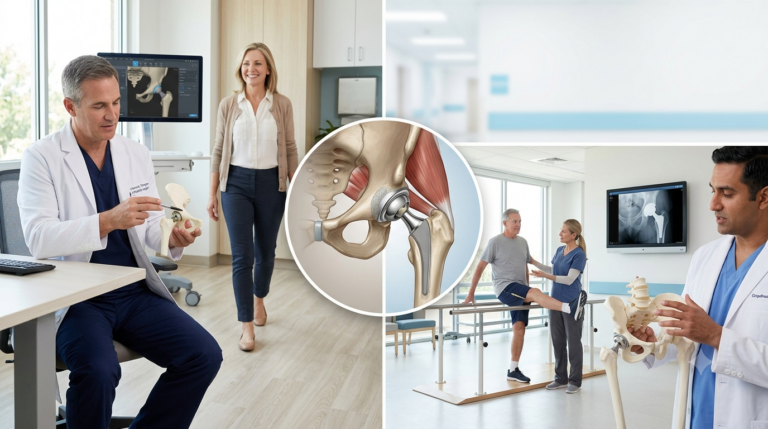
Recovery after fast recovery hip replacement using the anterior approach follows a predictable timeline when supported by structured physiotherapy:
Days 0–1: Standing and walking with physiotherapy support; pain typically well-controlled with multimodal analgesia.
Weeks 1–2: Independent walking with crutches or walker; stairs with assistance becoming possible.
Weeks 2–4: Transition from assistive devices; driving (if left-sided surgery, automatic transmission) typically possible by week 4–6.
Weeks 4–8: Return to light duties, desk work; unsupported walking and stairs independent.
Weeks 8–12: Return to most activities of daily living; light recreational activities resume.
Months 3–6: Progressive strengthening; higher-impact activities and sports typically safe by month 4–6 depending on activity and individual recovery.
Beyond 6 months: Strength and confidence continue improving; full participation in desired activities expected.
Physiotherapy is central to this timeline. Patients who complete 8–12 supervised sessions and perform home exercises consistently achieve faster and more complete recovery than those who do not engage fully in rehabilitation.
What Does Current Research Say About DAA Hip Replacement?
The Australian Orthopaedic Association National Joint Replacement Registry, Norwegian Arthroplasty Register, and National Joint Registry of England and Wales have tracked tens of thousands of anterior hip replacements over two decades. These population-based registries provide the most robust evidence available:
Dislocation rates for anterior hip replacement are 0.5–2% in primary cases, compared to 2–5% for posterior approaches—a clinically significant and consistent difference across multiple registry populations.
Patient satisfaction is measurably higher with anterior approach at 6, 12, and 24 months, with superior pain relief and functional capacity compared to posterior approaches.
Implant survival at 10 and 15 years is excellent for both anterior and posterior approaches; no long-term durability advantage favors either approach.
Rare complications—including hip arthroscopy for femoroacetabular impingement, heterotopic ossification, and femoral nerve palsy—are reported in <1% of anterior cases in high-volume centres.
The American Academy of Orthopaedic Surgeons (AAOS) recognises anterior hip replacement as a safe and effective technique for appropriately trained surgeons. Ongoing research is examining long-term outcomes beyond 20 years, functional gains in different age groups, and the role of robotic guidance—areas where evidence is actively accumulating.
Direct Anterior Hip Replacement vs Traditional Hip Replacement
| Aspect | Direct Anterior (DAA) | Posterior/Lateral (Traditional) |
| Incision location | Front of hip between muscle planes | Back or side of hip |
| Muscle preservation | Hip abductors and rotators preserved | Abductors and/or rotators detached |
| Early pain (6–8 weeks) | Lower; often minimal by week 4 | Moderate to high; often 8–12 weeks |
| Walking timeline | Days 1–2 post-op | 3–7 days post-op |
| Dislocation risk | 0.5–2% in primary cases | 2–5% in primary cases |
| Hospital stay | 1–2 days | 2–3 days |
| Return to stairs | 2–4 weeks | 4–8 weeks |
| Return to driving | 4–6 weeks | 6–8 weeks |
| Activity restrictions | Fewer; no hip precautions needed | Hip precautions for 6–12 weeks |
| Long-term strength | Excellent; muscles intact | Very good; may have abductor weakness |
| Technical difficulty | High; steep learning curve | Moderate; widely taught |
| Surgeon training required | Fellowship training recommended | Standard orthopedic training sufficient |
Features of an Advanced Hip Replacement Centre
- Fellowship-trained surgeons with 150+ anterior hip replacements performed personally.
- High institutional volume — 700+ joint replacement surgeries annually.
- ERAS (Enhanced Recovery After Surgery) protocol documented and implemented.
- Dedicated joint replacement operating suite with specialized instruments and imaging.
- Robotic-assisted technology available for patients where anatomically appropriate.
- In-house physiotherapy team trained specifically in anterior hip rehabilitation protocols.
- Published or verifiable infection rates <1% for surgical site infection.
- Structured follow-up programme with functional outcome measurement at 6, 12, and 24 months.
7 Questions to Ask Before Choosing a Hospital for DAA Hip Replacement
- Is your lead hip surgeon fellowship-trained in anterior hip replacement? (Answer should name the fellowship and year completed)
- How many anterior hip replacements has your surgeon performed in the last 12 months? (Target: 150+; verify via CV or publications)
- Can you provide your dislocation rate specifically for primary anterior hip replacements? (Should be <2%; ask for supporting documentation)
- Do you have a dedicated joint replacement physiotherapy team, or is post-op care managed by general physiotherapy? (Dedicated anterior-trained team is superior)
- What is your Enhanced Recovery After Surgery (ERAS) protocol, and how is it measured for compliance? (Should be documented and monitored)
- Do you use robotic planning for anterior hip replacement, and what is the selection criteria? (Transparency about when and why it is used)
- How do you measure and communicate long-term patient outcomes (pain, function, implant survival)? (Best centres track and publish this data)
Frequently Asked Questions
Which hospital is most suitable for DAA hip replacement in Bangalore?
Choose a hospital where the lead surgeon has performed 150+ anterior hip replacements, holds fellowship training in anterior hip surgery, and practices within a high-volume programme (700+ joint replacements annually). Verify infection rates, dislocation rates, and follow-up protocols. Hospital location is less important than surgeon expertise and institutional commitment to this specialized approach.
Is Direct Anterior Hip Replacement available in Bangalore?
Yes. Several hospitals in Bangalore, including centres on Kanakapura Road and surrounding South Bangalore areas, offer anterior hip replacement performed by fellowship-trained surgeons with high case volumes. Verify surgeon credentials, volume metrics, and institutional support before choosing a provider.
Does robotic surgery improve outcomes for anterior hip replacement?
Robotic guidance improves precision of cup positioning when available and appropriately used. However, excellent long-term outcomes are well-established with high-volume freehand anterior technique. Robotic surgery should be viewed as a refinement tool, not a necessity. Ask your surgeon whether robotics would specifically benefit your anatomy.
Is DAA suitable for elderly patients?
Yes. Anterior hip replacement can be beneficial for older patients due to lower dislocation risk, preserved abductor strength, and faster early mobilisation—factors that reduce post-operative falls. Age alone is not a contraindication; medical fitness and patient motivation matter more. Hospitals should not exclude elderly patients from this approach based on age.
How long is recovery after anterior hip replacement?
Most patients walk independently within 1–2 weeks, return to light activities by 4–6 weeks, and resume most normal activities by 3–4 months. Full strength recovery and confidence typically require 4–6 months of consistent physiotherapy and progressive activity. Recovery timelines vary individually and depend on age, pre-operative fitness, and rehabilitation compliance.
Will I need physiotherapy after anterior hip replacement?
Yes. Structured physiotherapy is essential for optimal recovery. High-volume centres recommend 8–12 supervised sessions over 6–8 weeks, plus ongoing home exercises and progressive strengthening. Patients who comply fully with physiotherapy achieve faster functional recovery and lower long-term complication rates.
About Dr. Abhinandan Punit — Advanced DAA Hip Replacement Specialist, Kanakapura Road & South Bangalore
Dr. Abhinandan Punit is a European Board Certified Orthopaedic Surgeon with an MCh in Orthopaedics and 15+ years of dedicated clinical practice in adult hip reconstruction. He serves as Senior Consultant and Clinical Lead – Joint Replacement at Narayana Health City, Bangalore, and practices at Elite Orthocare & Multi Speciality Clinic, conveniently located for patients across South Bangalore, Kanakapura Road, and Electronic City.
Clinical volume and expertise:
Dr. Punit performs 1000+ orthopaedic procedures annually, including over 700 joint replacement surgeries and more than 200 Direct Anterior Hip Replacements each year. This surgical volume places his anterior hip practice among the highest-volume programs in India, supporting the institutional infrastructure and continuous refinement necessary for superior patient outcomes.
Advanced surgical capabilities:
He is trained and certified in robotic joint replacement, enabling preoperative 3D planning and intra-operative precision for selected patients. His international fellowship training in advanced hip reconstruction, combined with European Board Certification, underscores his commitment to evidence-based, continuously updated surgical practice.
Infrastructure and outcomes:
His affiliated hospitals employ Enhanced Recovery After Surgery (ERAS) protocols, dedicated joint replacement teams, in-house physiotherapy with anterior hip-specific training, and structured follow-up programmes measuring patient-reported functional outcomes at 6, 12, and 24 months.