
A high-quality Direct Anterior Hip Replacement clinic personalizes care by conducting thorough pre-operative assessment, using advanced imaging and robotic planning, employing fellowship-trained surgeons, and delivering structured post-operative rehabilitation. The best clinic matches surgical technique to individual anatomy, coordinates multidisciplinary care, and supports patients through individualised recovery protocols.
Quick Summary
- Direct Anterior Hip Replacement is a muscle-sparing approach with faster early recovery than traditional methods.
- Personalized care begins with thorough anatomical assessment and customized surgical planning.
- Robotic hip replacement improves accuracy of implant positioning when available.
- Fellowship training in DAA and high-volume surgical practice predict better patient outcomes.
- Ongoing physiotherapy and follow-up protocols protect long-term implant durability and patient satisfaction.
Introduction
Choosing where to have hip replacement surgery in Bangalore is one of the most significant healthcare decisions a patient makes. Yet many patients focus primarily on the surgical approach without evaluating whether the clinic’s infrastructure, surgeon experience, and rehabilitation protocols truly support their individual needs. This guide explains what personalized care means in DAA hip replacement and how to evaluate a clinic offering this advanced technique.
What Is Direct Anterior Hip Replacement (DAA)?
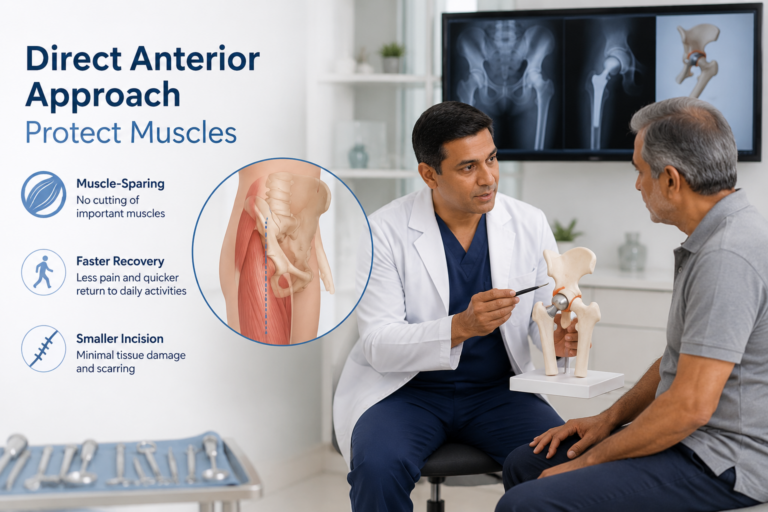
Direct Anterior Hip Replacement is a muscle-sparing hip replacement approach that accesses the hip joint from the front of the thigh, between existing muscle planes. Unlike traditional posterior or lateral approaches — which detach hip muscles — the anterior approach preserves the hip abductors and external rotators, maintaining structural stability and reducing post-operative pain.
The key advantage is early functional recovery. Because muscles remain intact, patients typically walk independently within days, climb stairs more quickly, and return to activities of daily living faster than with traditional approaches. The trade-off is surgical precision: anterior hip replacement requires specialized training and the technical ability to work within a narrower surgical corridor.
Why Does Personalized Care Matter in Hip Replacement?
Every patient’s hip anatomy is unique. Age, activity level, bone quality, muscle strength, body weight, and existing medical conditions all influence surgical planning and recovery. A clinic offering personalized care recognises these differences rather than applying a one-size-fits-all protocol.
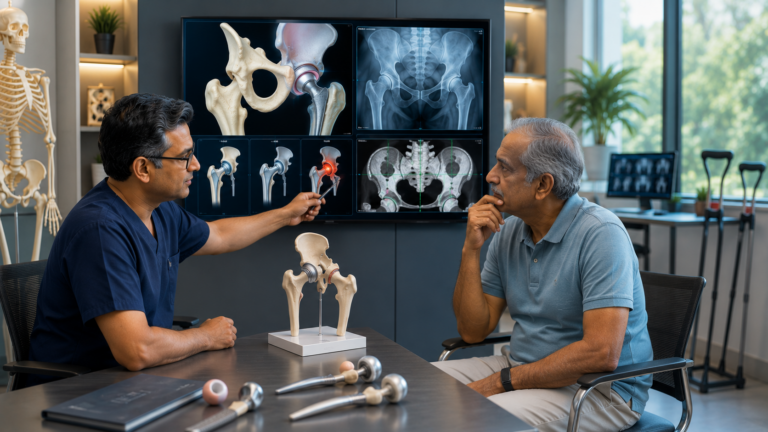
For example, a 55-year-old athlete with good bone density and strong muscles requires different implant choices, rehabilitation intensity, and activity progression than an 80-year-old with osteoporosis recovering from a fall. Personalized assessment involves detailed imaging, biomechanical analysis, and frank discussion of realistic recovery goals — not what the clinic prefers, but what the patient’s anatomy and life circumstances allow.
Clinics committed to personalized care employ high-volume surgeons, maintain strong physiotherapy departments, and follow structured protocols that adapt to individual patient needs throughout the recovery journey.
What Should You Look for in a DAA Hip Replacement Clinic?
The following features distinguish clinics capable of delivering evidence-based, patient-centred care:
Fellowship-trained surgeon: Look for a surgeon with formal training in anterior hip replacement, ideally through a recognized fellowship programme. This indicates proficiency beyond basic competence.
High surgical volume: Surgeons performing 200+ anterior hip replacements annually develop superior technical consistency and better outcomes than low-volume surgeons.
Advanced imaging: Multi-detector CT scanning allows pre-operative 3D planning of implant positioning tailored to the individual patient’s anatomy.
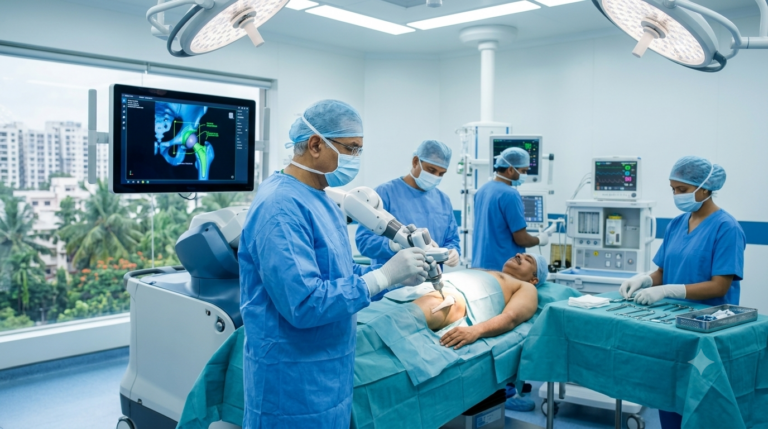
Robotic planning capability: When available, robotic systems improve accuracy of cup positioning, particularly in complex cases.
Structured physiotherapy: A clinic should have in-house or closely affiliated physiotherapists trained in DAA-specific rehabilitation protocols, not generic post-operative hip care.
Multidisciplinary team: Access to anesthesia specialists, nursing staff trained in hip replacement care, and pain management expertise ensures coordinated care throughout the hospital stay.
Transparent follow-up: A clinic should schedule structured post-operative reviews at 6 weeks, 3 months, 6 months, and 12 months, with imaging protocols to assess implant integration and patient progress.
How Does Personalized Treatment Improve Recovery?
Personalized surgical planning—based on individual imaging, biomechanics, and activity goals—produces better outcomes across multiple domains:
Pain management: Pre-operative assessment of pain patterns, muscle weakness, and neurological status allows targeted anesthesia protocols and realistic pain expectations. Patients recovering faster with lower pain scores are more compliant with physiotherapy.
Early mobilisation: Patients who understand their specific recovery timeline and movement restrictions are more confident mobilising early, which reduces blood clots, improves circulation, and accelerates muscle recovery.
Rehabilitation success: Physiotherapy tailored to individual strength deficits, age, and goals is more effective than generic protocols. A high-volume clinic can identify which patients need intensive supervision and which can progress faster.
Complication prevention: Personalised assessment pre-operatively identifies patients at higher risk of falls, muscle weakness, or neurological compromise — allowing preventive strategies before surgery.
Evidence from high-volume anterior hip centres demonstrates lower complication rates, higher patient satisfaction scores, and better implant survival compared to surgeons performing this procedure infrequently.
Can Robotic Technology Improve DAA Hip Replacement?
Robotic hip replacement systems — including CT-based and fluoroscopy-guided platforms — provide real-time feedback during the anterior approach to achieve precise cup positioning within a surgeon-selected target zone.
Current evidence indicates that robotic guidance improves consistency of cup placement, reduces outliers in implant orientation, and may facilitate restoration of hip biomechanics (leg length, offset, version). Several peer-reviewed studies from high-volume anterior hip centers report lower dislocation rates and better functional outcomes when robotic planning is used compared to freehand technique.
However, robotic surgery is not essential for excellent outcomes — it is a refinement tool used by surgeons committed to accuracy. Many high-volume anterior surgeons achieve excellent results without robotics through meticulous technique and extensive experience. The decision to use robotic guidance should be individualised based on patient anatomy, surgeon expertise, and patient preferences.
A clinic offering robotic hip replacement should demonstrate clear evidence of training, current outcomes data, and transparent discussion of whether robotics would benefit an individual patient.
What Questions Should You Ask Before Choosing a DAA Hip Replacement Clinic?
Before scheduling surgery, ask the clinic these questions:
- How many anterior hip replacements does your surgeon perform annually? (Target: 200+)
- Does your surgeon have fellowship training in anterior hip replacement? (Yes or completed where/when)
- Do you use robotic planning for anterior hip replacement? (Yes/No, and under what circumstances)
- What is your dislocation rate for primary anterior hip replacements? (Should be <1–2%)
- What is your hospital readmission rate within 30 days? (Should be <5%)
- Do you have physiotherapists trained specifically in anterior hip replacement protocols? (Yes/No)
- What is your structured follow-up protocol, and who coordinates care? (Specific timeline and team members)
What Is Recovery Like After Direct Anterior Hip Replacement?
Walking: Most patients walk with crutches or a walker within 24–48 hours post-operatively. Weight-bearing as tolerated is typically allowed immediately after surgery.
Stairs: Stairs are usually manageable with assistance by 1–2 weeks post-op. Independent stair climbing typically occurs by 4–6 weeks.
Driving: Return to driving depends on pain control, leg strength, and pain medication use. With automatic transmission and left-sided surgery, many patients resume driving by 4–6 weeks.
Work: Light desk-based work can resume within 2–4 weeks. Return to physically demanding work depends on job demands and usually requires 8–12 weeks.
Sports and recreation: Low-impact activities (walking, swimming, golf, cycling) can resume by 8–12 weeks. High-impact activities are typically safe by 4–6 months post-operatively.
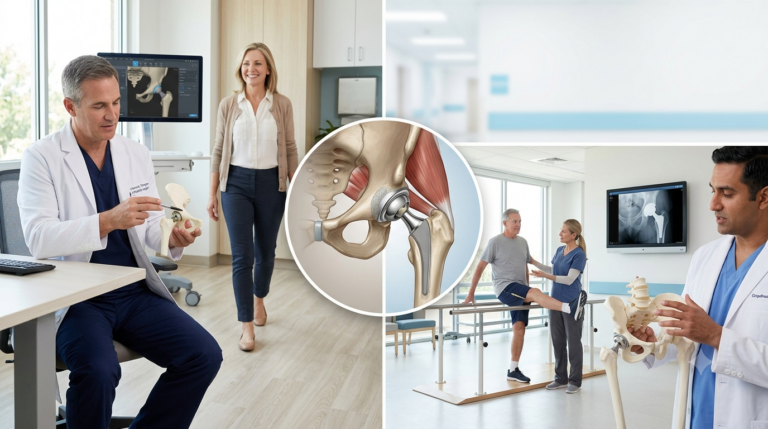
Physiotherapy: A structured programme typically involves 8–12 supervised sessions over the first 6–8 weeks, plus home exercises. Long-term strengthening is recommended for optimal stability and durability.
What Does Current Research Say About DAA Hip Replacement?
International joint registries — including the Australian Orthopaedic Association National Joint Replacement Registry and the Norwegian Arthroplasty Register — have tracked outcomes of thousands of anterior hip replacements over two decades. These data consistently show lower early complication rates, lower dislocation rates (0.5–2%), and higher patient satisfaction with the anterior approach compared to posterior approaches.
Functional outcome studies demonstrate that anterior hip replacement patients achieve faster return to walking, stairs, and community ambulation compared to traditional approaches. Quality-of-life measures show superior pain relief and functional capacity at 6 and 12 weeks post-operatively.
The American Academy of Orthopaedic Surgeons (AAOS) recognises anterior hip replacement as a valid technique for appropriately trained surgeons. Ongoing research is examining the role of robotic guidance, optimal implant sizing, and long-term durability of anterior-placed implants — outcomes that remain excellent through 20+ years of follow-up in published series.
Direct Anterior Hip Replacement vs Traditional Hip Replacement
| Aspect | Direct Anterior (DAA) | Traditional (Posterior/Lateral) |
| Incision | 4–6 cm between muscle planes | 8–12 cm, muscle-detaching |
| Muscle damage | None — muscles preserved | Abductor and/or external rotator damage |
| Pain level | Lower at 6–12 weeks | Higher initially; longer resolution |
| Walking timeline | Day 1–2 post-op | 3–7 days post-op |
| Dislocation risk | 0.5–2% in primary cases | 2–5% in primary cases |
| Hospital stay | 1–2 days | 2–3 days |
| Stairs by | 2–4 weeks | 4–8 weeks |
| Return to driving | 4–6 weeks | 6–8 weeks |
| Learning curve | Steep; requires fellowship training | Steep; widely taught |
| Long-term durability | Excellent; data to 20+ years | Excellent; data to 25+ years |
Signs You May Be a Good Candidate for DAA Hip Replacement
- You are under 70 years of age with reasonable bone density and no significant osteoporosis.
- You have no prior hip surgery (anterior hip is technically more challenging after prior surgery).
- You are motivated to comply with a structured physiotherapy programme post-operatively.
- You have a body mass index below 35 kg/m² (obesity increases technical difficulty).
- You want to return to activities, work, or sports quickly and are willing to invest in early mobilisation.
- You have no significant neurological disorders affecting balance or coordination (these increase fall risk).
- You are seeking lower pain and faster early recovery as primary goals.
7 Questions to Ask Before Choosing a Hip Replacement Clinic
- Will my surgeon personally perform my surgery, or will residents or fellows assist significantly? (Answer should clarify the surgeon’s direct role.)
- How do you manage post-operative pain, and what is your multimodal analgesia approach? (Should include regional blocks, medication regimens, and non-pharmacological strategies.)
- Who coordinates my physiotherapy, and how is it individualised to my pre-operative baseline? (Should identify a specific physiotherapy lead and assessment process.)
- What are your infection prevention protocols, and what is your surgical site infection rate? (Should be <1%.)
- How do you communicate with my general practitioner, and what information do I receive post-discharge? (Should include structured handover and patient education materials.)
- If complications arise, who is available for urgent consultation, and what is the protocol? (Should identify on-call coverage and contact procedures.)
- How do you measure patient satisfaction and functional outcomes, and can you share data for patients similar to me? (Should demonstrate commitment to measuring and improving outcomes.)
Frequently Asked Questions
Is Direct Anterior Hip Replacement better than traditional hip replacement?
DAA offers faster early recovery, lower dislocation risk, and better early pain control compared to posterior approaches. However, “better” depends on individual goals, anatomy, and surgeon expertise. Traditional approaches remain excellent choices in some patients, particularly those with prior hip surgery. The best approach is the one that matches your anatomy, goals, and the surgeon’s expertise.
Who is a good candidate for DAA hip replacement?
Ideal candidates are younger (under 75), have no prior hip surgery, reasonable bone quality, a BMI under 35, and motivation for active recovery. However, DAA can be performed in older patients and those with higher BMI when anatomy permits. Your surgeon should assess whether DAA is appropriate for your specific anatomy and life circumstances.
Is robotic surgery necessary for good outcomes?
No. Robotic systems improve accuracy when available, but excellent outcomes are achieved by experienced anterior surgeons using freehand technique. Robotics is a refinement, not a requirement. Ask your surgeon whether robotics would specifically benefit your anatomy.
How long is recovery after Direct Anterior Hip Replacement?
Early recovery is rapid: most patients walk independently by 1–2 weeks and return to light activities by 4–6 weeks. Full recovery—including strength and confidence—typically requires 3–4 months. Physiotherapy is essential throughout this period.
Will I walk the same day after surgery?
Most anterior hip replacement patients stand and take a few steps with physiotherapy support on post-operative day 1. Walking with crutches or a walker is typical within 24–48 hours. Unsupported walking progresses over the following weeks.
Schedule Your Personalized Consultation
If you are considering Direct Anterior Hip Replacement and want an individualized evaluation and personalized treatment plan, consult Dr. Abhinandan Punit to discuss your anatomy, recovery goals, and surgical options.