
Dr. Abhinandan Punit Bio

-
Dr. Abhinandan Punit (Best Shoulder surgeon & Knee for Replacement in JP Nagar), MS, DNB, MCh (Edinburgh), MSc Sports & Exercise Medicine
-
15+ years of surgical experience with 6,000+ orthopedic surgeries
-
Performs 200+ knee replacements annually, specializing in robotic techniques (MAKO, Cuvis, Cori)
-
Fellowship training in the UK and Australia
-
Founder of Elite Orthocare Multi-Specialty Clinic and consultant at Narayana Clinic & Hospitals
-
Member of ISHKS and ISTA, with published outcome research in peer-reviewed journals
Looking for Direct Anterior Hip Replacement Near Kanakapura Road? Read This First
Many patients searching for Direct Anterior Hip Replacement near Kanakapura Road are usually worried about pain, walking recovery, hospital stay, and long-term mobility. Modern DAA Hip Replacement focuses on muscle preservation and early rehabilitation, helping many patients regain walking confidence and daily movement faster compared to traditional hip replacement approaches.
What Is Direct Anterior Hip Replacement?
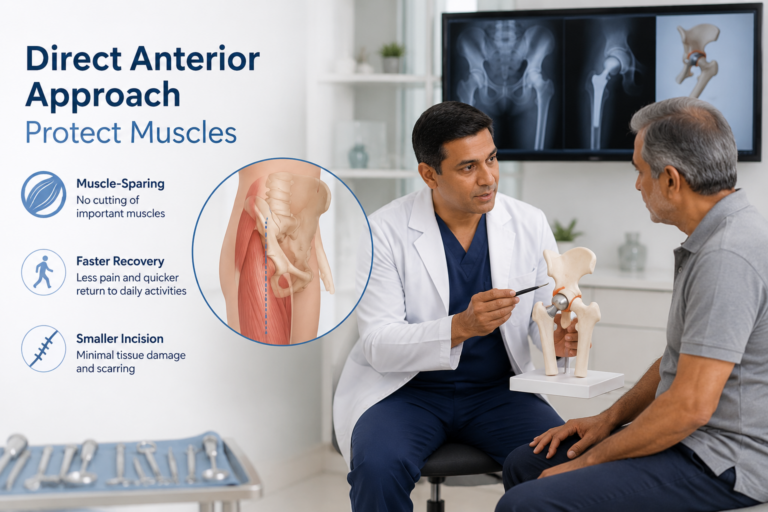
Direct Anterior Hip Replacement (DAA) is a minimally invasive hip replacement technique performed from the front of the hip joint. Instead of cutting major muscles, surgeons work through natural tissue spaces. This approach may help reduce muscle damage, improve early walking ability, and support faster recovery after surgery.
Why Are Patients Near Kanakapura Road Asking About DAA Hip Replacement?
Many active adults today want quicker recovery and fewer movement restrictions after surgery. Patients near Kanakapura Road are increasingly researching DAA Hip Replacement in Bangalore because they want to understand whether modern minimally invasive surgery can help them return to normal life earlier.
Common Concerns Patients Usually Have
- “Will I walk normally again?”
- “How painful is recovery?”
- “Will I need long bed rest?”
- “Can older adults recover safely?”
- “How soon can I climb stairs?”
- “Is DAA safer than traditional surgery?”
- “Will I become dependent after surgery?”
What Makes DAA Hip Replacement Different from Traditional Surgery?
The biggest difference is the surgical approach. In Direct Anterior Hip Replacement, the surgeon accesses the hip from the front without detaching major muscles. Traditional hip replacement approaches may involve more muscle handling, which can affect early mobility and recovery comfort.
DAA Hip Replacement vs Traditional Hip Replacement
| Factor | DAA Hip Replacement | Traditional Hip Replacement |
|---|---|---|
| Surgical approach | Front of hip | Side or back approach |
| Muscle cutting | Minimal muscle disruption | More muscle handling |
| Early walking | Usually earlier | Gradual recovery |
| Post-surgery stiffness | Often reduced | Moderate |
| Recovery confidence | Faster in many patients | Slower initially |
| Hospital stay | Frequently shorter | Variable |
| Movement precautions | Often fewer | More restrictions |
“Doctor, Will I Walk Normally Again After Surgery?”
This is one of the most common questions patients ask before hip replacement surgery. Many people delay treatment because they fear losing independence or mobility permanently.
In reality, modern rehabilitation protocols focus on early movement, walking support, and gradual confidence building. Many patients undergoing Direct Anterior Hip Replacement near Kanakapura Road begin assisted walking early under supervised physiotherapy programs.
Is DAA Hip Replacement Less Painful?
Pain experiences vary from patient to patient, but many individuals report better early comfort after DAA surgery because major hip muscles are not detached during the procedure. Recovery still requires rehabilitation, physiotherapy, and gradual strengthening over time.
How Soon Can Patients Walk After DAA Hip Replacement?
Several patients begin standing or assisted walking within the first few days after surgery depending on medical fitness and rehabilitation progress. Walking recovery improves gradually with physiotherapy, balance training, and muscle strengthening exercises.
Typical Recovery Milestones
- Standing with support during early recovery
- Assisted walking within initial recovery phase
- Improved flexibility over several weeks
- Better stair climbing confidence gradually
- Strength rehabilitation through physiotherapy
- Return to routine activities progressively
Who Is a Good Candidate for Direct Anterior Hip Replacement?
Patients with severe hip arthritis, AVN, stiffness, limping, or difficulty walking are commonly evaluated for DAA Hip Replacement Surgery. Active adults looking for faster mobility and earlier return to routine activities may also benefit after proper orthopedic assessment.
Is DAA Hip Replacement Suitable for Everyone?
No. Although Direct Anterior Hip Replacement offers several benefits, it may not be ideal for every patient. Factors like obesity, revision surgery, severe deformity, osteoporosis, or complex anatomy can influence whether DAA is the safest surgical option.
What Questions Should Patients Ask Before DAA Surgery?
Patients should understand recovery expectations, rehabilitation planning, and surgical experience before choosing a hip replacement approach.
Important Questions to Ask Before Surgery
- How many DAA surgeries has the surgeon performed?
- Is robotic assistance used during surgery?
- What is the rehabilitation protocol?
- Am I a suitable candidate for DAA?
- What are realistic recovery expectations?
- How soon can daily activities restart?
- What precautions are needed after surgery?
Real Patient Scenario from Kanakapura Road
“Doctor, my hip pain is manageable for now. Can I wait?”
This is a common situation many orthopedic surgeons hear regularly. Several patients delay treatment because pain improves temporarily with rest or medication. However, worsening stiffness, limping, sleep discomfort, and reduced walking capacity often continue progressing silently.
In some cases, delayed surgery may also affect muscle strength and overall movement confidence.
Why Do Patients Prefer Minimally Invasive Hip Replacement?
Patients often prefer minimally invasive techniques because they are searching for smoother recovery and earlier mobility. Modern hip replacement surgery focuses not only on pain relief but also on restoring confidence, independence, and long-term quality of life.
Why Patients Choose Dr. Abhinandan Punit for DAA Hip Replacement in Bangalore
Dr. Abhinandan Punit LinkedIn Profile
Dr. Abhinandan Punit is associated with Narayana Health, Bangalore and focuses on advanced hip replacement surgery, minimally invasive orthopedic procedures, and robotic-assisted joint replacement.
Credentials & Experience
- 15+ years of orthopedic experience
- 6000+ orthopedic procedures performed
- MCh Orthopaedics (Edinburgh, UK)
- Fellowship training in UK & Australia
- Specialized training in DAA Hip Replacement
- MAKO-certified robotic joint replacement surgeon
- Consultant at Narayana Health, Bangalore
- Founder of Elite Orthocare
Frequently Asked Questions About DAA Hip Replacement Near Kanakapura Road
Is Direct Anterior Hip Replacement safer than traditional surgery?
Both approaches can be safe when performed by experienced surgeons. The best technique depends on patient anatomy, hip condition, mobility goals, and surgical planning rather than marketing claims alone.
How long does DAA recovery usually take?
Many patients begin assisted walking early, but full recovery continues over several months. Strength, flexibility, balance, and confidence improve gradually through physiotherapy and rehabilitation.
Can older adults undergo DAA Hip Replacement?
Yes. Many older adults are evaluated for DAA Hip Replacement Surgery if they are medically fit and suitable candidates. Bone quality, mobility status, and overall health influence surgical planning.
Will I need physiotherapy after hip replacement surgery?
Yes. Physiotherapy is an important part of recovery after hip replacement surgery. Rehabilitation improves walking ability, flexibility, muscle strength, and long-term joint function.
Does DAA Hip Replacement leave a smaller scar?
The incision is commonly placed at the front of the hip and may appear smaller in many patients. However, scar size also depends on body structure, healing response, and surgical exposure requirements.
Can delaying hip replacement make recovery harder later?
In some patients, delayed treatment may worsen stiffness, limping, muscle weakness, and mobility limitations. Early orthopedic evaluation helps patients understand the right timing for surgery.
What are the risks of DAA Hip Replacement?
Like all surgeries, DAA hip replacement may involve risks such as infection, blood clots, stiffness, implant-related problems, or nerve irritation. Proper patient selection and rehabilitation are important for reducing complications.