
Knee pain has a way of creeping into everything. Walking to the kitchen, climbing a flight of stairs, sitting cross-legged on the floor — tasks that once felt automatic start needing extra thought. If you have reached the point where your doctor has mentioned surgery, you have probably also come across the term “robotic knee replacement” in your research. And if you live around Kanakapura Road or nearby parts of Bangalore, you have likely seen clinics advertising robotic knee replacement surgery as a faster, more precise option than traditional surgery. This is often the stage where patients start looking into surgeons like Dr. Abhinandan Punit, who has experience performing robotic knee replacement in this region.
Why Robotic Knee Replacement Is Gaining Popularity in This Area
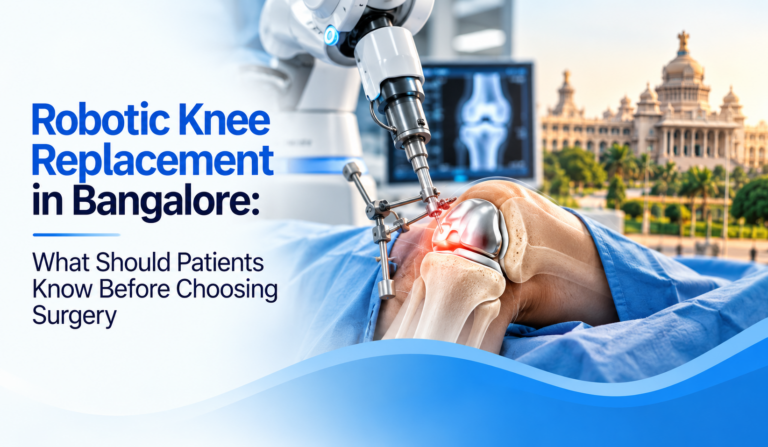
Robotic knee replacement uses a robotic arm, guided by the surgeon, to plan and carry out the surgery with a level of accuracy that is hard to match by hand alone. Before the operation, a CT scan creates a 3D map of your knee. This map is used to plan exactly how much bone to remove and where the implant should sit, based on your own joint shape rather than a generic template.
This is one reason robotic knee replacement surgery in Kanakapura has become popular among patients. People are willing to travel a bit further for a procedure that promises less tissue damage and a quicker return to walking. It’s part of a wider shift toward robotic knee replacement surgery in Bangalore as a whole, not just in this one neighbourhood.
That said, the robot does not operate on its own. It is a tool in the surgeon’s hands, not a replacement for skill. This makes the surgeon’s experience just as important as the technology.
Questions to Ask Before Your Surgery
1. Am I actually a good candidate for robotic knee replacement?
Not everyone needs robotic surgery, and not everyone benefits equally. Ask your surgeon whether your age, bone quality, weight, and the extent of your arthritis make you a suitable candidate, or whether a conventional approach might work just as well for you.
2. How many robotic knee replacements has the surgeon performed?
The robot assists, but the surgeon still makes every clinical decision. Ask about the surgeon’s overall surgical volume and specifically how many of those cases used robotic assistance. A surgeon who has done hundreds of these procedures will be far more comfortable handling anything unexpected during the operation.
3. Which robotic system will be used?
Several robotic systems are available in India, each with its own strengths. Ask which system your surgeon uses and why it is suitable for your particular case.
4. What does the recovery timeline actually look like?
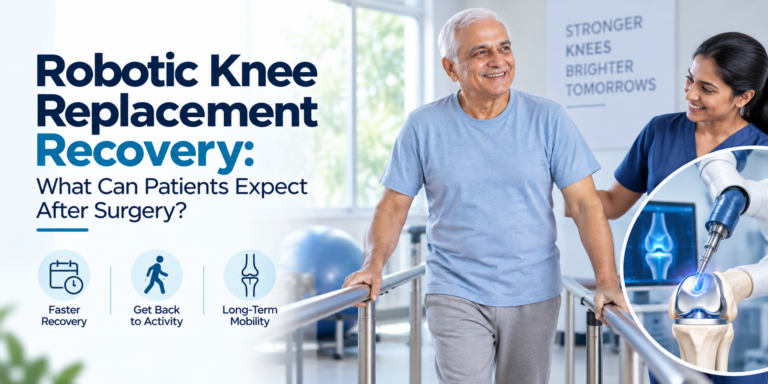
Ask for a realistic week-by-week picture, not just “you’ll recover faster.” Most patients can stand and take a few steps within a day of surgery, but full recovery, including strength and confidence in the knee, usually takes a few months of physiotherapy.
5. What are the risks and possible complications?
Every surgery carries risk, and robotic knee replacement is no exception. A trustworthy surgeon will talk you through infection risk, blood clots, stiffness, and what happens if a complication arises, rather than glossing over this part.
6. What is included in the total cost?
Ask whether the quoted cost includes the implant, hospital stay, physiotherapy sessions, and follow-up visits, or whether these are billed separately. This helps you avoid surprises later and plan your budget properly.
7. What does the follow-up and rehabilitation plan look like?
Surgery is only half the journey. Ask who will guide your physiotherapy, how often you will need follow-up visits, and what warning signs should bring you back to the clinic sooner.
8. Can I speak to a previous patient or see outcome data?
Many clinics are happy to share patient testimonials or connect you with someone who has already gone through the procedure. Hearing a first-hand account can tell you things that a brochure never will.
Robotic vs Traditional Knee Replacement: A Quick Comparison
In traditional knee replacement, the surgeon relies on manual instruments and their own judgment to align the implant. This works well in experienced hands, but there is naturally some variation from case to case.
Robotic-assisted surgery adds a layer of digital planning and real-time feedback on top of the surgeon’s expertise. Supporters of the robotic approach point to smaller incisions, more consistent implant alignment, and in many cases a shorter hospital stay. It is not magic, and outcomes still depend heavily on the surgeon operating the system — which is why it helps to research who is regarded as the best robotic knee replacement surgeon in Kanakapura before you commit to a clinic.
What to Expect on the Day of Surgery
You will usually be asked to arrive a few hours early for pre-surgery checks. The procedure itself typically takes one to two hours. Most patients are encouraged to sit up and even attempt a few assisted steps within 24 hours, which is one of the biggest differences patients notice compared to older surgical methods. Hospital stays for robotic knee replacement are often shorter, sometimes just two to three days, though this varies from patient to patient.
Conclusion
Choosing robotic knee replacement surgery in Kanakapura is a decision worth taking your time over. The technology can genuinely improve precision and recovery, but the outcome still depends on the surgeon behind it. Walk into your consultation with clear questions about experience, the robotic system used, recovery expectations, and cost, and you will be in a much better position to make the right choice for your knee. When you’re ready, you can book a consultation with Dr. Abhinandan Punit to discuss your options.
About Dr. Abhinandan Punit
Dr. Abhinandan Punit is an Orthopedic and Robotic Joint Replacement Surgeon with 15+ years of experience, 6,000+ successful orthopedic surgeries, and 700+ joint replacements performed annually. He has received international fellowship training in advanced joint reconstruction. He consults at Elite Orthocare, Kanakapura Road, Bangalore, and Narayana Clinic & Hospitals, Electronic City, Bangalore.
Useful Links:
- Official Website: doctorabhinandanpunit.com
- Hospital Bio: doctorabhinandanpunit.com/about
- LinkedIn: linkedin.com/in/dr-abhinandan-punit-aab063aa
Frequently Asked Questions (FAQs)
- What is robotic knee replacement surgery?
Robotic knee replacement is a surgical technique in which a robotic arm, guided by the surgeon, helps plan and carry out precise bone cuts and implant placement based on a 3D scan of the patient’s knee.
- Is robotic knee replacement surgery in Kanakapura available for older patients?
Yes, age alone does not rule out robotic knee replacement. Suitability depends more on overall health, bone quality, and the extent of arthritis than age itself. A thorough pre-surgery evaluation will confirm candidacy.
- How long does recovery take after robotic knee replacement?
Most patients start walking with support within a day of surgery. Full recovery, including regaining strength and range of motion, typically takes two to three months with regular physiotherapy.
- Does the robot perform the surgery on its own?
No. The robotic system assists the surgeon by providing real-time guidance and precision, but the operating surgeon controls every decision and movement during the surgery.
- Is robotic knee replacement more expensive than traditional surgery?
Robotic knee replacement can cost more than conventional surgery because of the technology involved. It is best to ask for a detailed cost breakdown during consultation.
6. How do I choose a robotic knee replacement surgeon in Kanakapura?
Look for a surgeon with experience in robotic-assisted knee replacement, relevant training, and a strong record of joint replacement procedures. Dr. Abhinandan Punit is an Orthopedic and Robotic Joint Replacement Surgeon in Bangalore with experience in robotic knee replacement.