
Many patients with advanced knee arthritis delay seeking treatment because they hope the pain will improve with rest, medication, or exercise. However, persistent knee pain and reduced mobility can affect everyday life over time. Dr. Abhinandan S. Punit, an Orthopaedic and Robotic Joint Replacement Surgeon in Bangalore with 15+ years of experience and 6,000+ orthopaedic surgeries, helps patients understand their condition and available treatment options, including robotic knee replacement when medically appropriate.
What Is Robotic Knee Replacement Surgery?
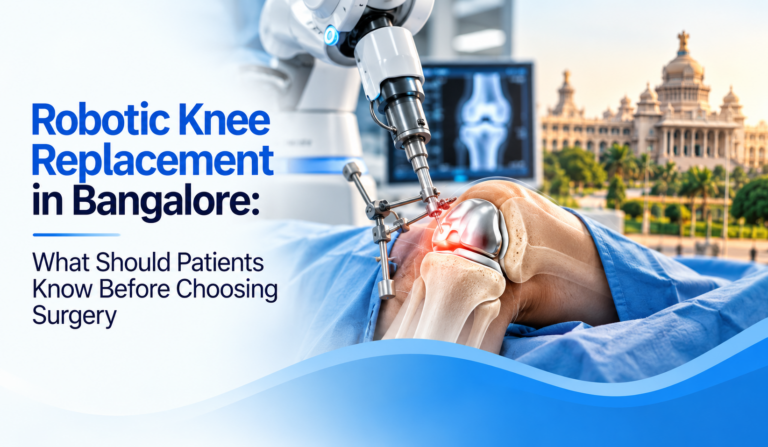
Robotic knee replacement surgery is a surgical procedure in which a surgeon uses robotic-assisted technology for detailed planning and guidance during knee joint replacement. It helps the surgeon assess knee anatomy, plan implant positioning, and perform bone preparation with computer-assisted guidance. The surgeon remains in control throughout the operation, and the suitability of this approach depends on each patient’s condition.
Why Do Patients Often Delay Knee Replacement Surgery?
Many patients postpone knee replacement surgery because they believe their knee pain is a normal part of ageing or worry about surgery and recovery. Some continue relying on painkillers, home remedies, or activity restrictions without seeking a detailed assessment. Although these approaches may provide temporary relief, persistent symptoms can affect mobility, independence, sleep, and quality of life.
Common reasons patients delay treatment include:
- Fear of surgery, anesthesia, pain, or possible complications.
- Belief that knee pain is a normal part of ageing.
- Concerns about recovery time and time away from work.
- Dependence on painkillers or temporary relief from medication.
- Uncertainty about whether knee replacement is medically necessary.
- Financial concerns or difficulty arranging family support.
- Hope that exercise, rest, or lifestyle changes will resolve symptoms.
Understanding the cause of knee pain and discussing treatment options early can help patients make informed decisions rather than waiting until daily activities become severely restricted.
What Are the Signs That You Should Not Ignore?
Persistent knee symptoms may indicate that arthritis or joint damage needs further assessment. Not every patient with knee pain requires surgery, but ongoing symptoms that interfere with daily activities should not be ignored. An orthopaedic evaluation can help identify the cause, assess joint damage, and determine whether non-surgical treatment or knee replacement should be considered.
Important signs to discuss with an orthopaedic surgeon include:
- Knee pain that continues despite prescribed treatment.
- Difficulty walking, standing, or climbing stairs.
- Knee stiffness that limits bending or straightening.
- Swelling or discomfort that repeatedly returns.
- Pain that interrupts sleep or affects daily routines.
- Reduced ability to perform work or household activities.
If knee pain is accompanied by sudden severe swelling, fever, redness, or an inability to bear weight after an injury, seek prompt medical assessment.
What Happens When You Delay Knee Replacement?
Delaying an assessment does not necessarily mean that knee arthritis will worsen at a predictable rate. However, when significant joint damage and symptoms remain untreated, patients may experience increasing difficulty with walking, standing, exercise, and everyday activities. Prolonged pain can also reduce physical activity and affect general fitness, which may make preparation for surgery and rehabilitation more challenging.
Patients who wait may experience:
- Increasing difficulty completing everyday activities independently.
- Reduced walking distance due to pain or stiffness.
- Less participation in exercise and social activities.
- Disturbed sleep because of persistent knee discomfort.
- Reduced leg strength from prolonged inactivity.
- Greater dependence on family members for daily support.
These outcomes are not inevitable. An early consultation can help patients understand their condition, explore available treatments, and plan the next steps according to their needs.
Does Every Patient With Knee Pain Need Robotic Knee Replacement?
No, robotic knee replacement surgery is not necessary for every patient with knee pain or arthritis. Treatment depends on the severity of joint damage, pain levels, mobility limitations, response to non-surgical care, overall health, and individual goals. Many patients can manage symptoms with physiotherapy, medication, activity modification, or other treatments without undergoing surgery.
Knee replacement may be considered when:
- Imaging shows advanced knee arthritis or significant joint damage.
- Persistent pain affects walking, sleep, or daily activities.
- Non-surgical treatments have not provided adequate relief.
- Knee stiffness or deformity substantially limits function.
- The patient is medically suitable and understands the recovery process.
A surgeon should assess the patient’s symptoms, physical examination, imaging, medical history, and expectations before recommending surgery.
How Can Early Consultation Help Patients With Knee Arthritis?
An early orthopaedic consultation helps identify the cause and severity of knee problems before symptoms significantly affect daily life. It also gives patients time to understand available treatment options, ask questions, improve general fitness where possible, and arrange practical support if surgery becomes necessary. Consulting early does not mean committing to knee replacement.
During an assessment, the surgeon may:
- Review the patient’s pain, symptoms, and medical history.
- Examine knee movement, stability, swelling, and alignment.
- Review X-rays or other imaging when indicated.
- Discuss non-surgical options and previous treatment outcomes.
- Explain whether knee replacement may be appropriate.
- Discuss surgical approaches, risks, and rehabilitation if required.
This process helps patients make decisions based on their medical condition rather than fear, assumptions, or pressure to undergo surgery.
What Can Patients Expect During Robotic Knee Replacement Recovery?
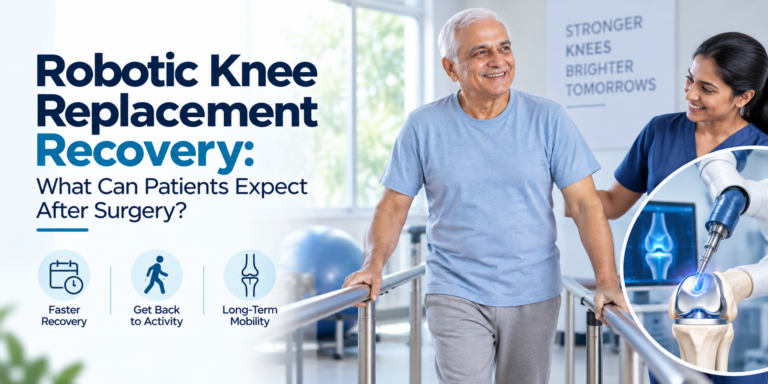
Recovery after robotic knee replacement varies according to a patient’s health, knee condition, physical fitness, and rehabilitation progress. Many patients begin standing or walking with assistance soon after surgery, as advised by their care team. Physiotherapy supports gradual improvement in movement, strength, balance, and confidence. Full recovery can take several months, and progress is different for each individual.
Patients may generally expect:
- Early assisted movement under medical supervision.
- A physiotherapy plan focused on knee mobility and strength.
- Gradual improvement in walking and everyday activities.
- Follow-up appointments to assess healing and function.
- Continued exercises at home as recommended by the physiotherapist.
For more details, read about robotic knee replacement recovery.
Why Consult Dr. Abhinandan Punit for Robotic Knee Replacement in Bangalore?
Dr. Abhinandan S. Punit is a Senior Consultant and Clinical Lead in Joint Replacement and an Orthopaedic and Robotic Joint Replacement Surgeon in Bangalore. He has 15+ years of clinical and surgical experience and has performed 6,000+ orthopaedic surgeries. His qualifications include MS Orthopaedics, DNB Orthopaedics, MCh Orthopaedics from the University of Edinburgh, and MSc Sports & Exercise Medicine from the University of South Wales.
With advanced training in robotic joint replacement and sports medicine, he evaluates patients based on their symptoms, imaging, medical history, mobility, and treatment goals. He practices at Elite Orthocare & Multi-Speciality Clinic on Kanakapura Road and Narayana Health City, Bangalore. Learn more about Dr. Abhinandan Punit and the available robotic knee replacement surgery options in Bangalore.
Conclusion: Do Not Let Fear Delay the Right Knee Care
Living with persistent knee pain can gradually affect mobility, independence, sleep, and everyday activities. Although knee replacement is not necessary for everyone, delaying an orthopaedic assessment may leave patients uncertain about the cause of their symptoms and the treatment options available. Seeking advice early can help patients understand their condition and plan care according to their individual needs.
Dr. Abhinandan S. Punit, an Orthopaedic and Robotic Joint Replacement Surgeon in Bangalore with 15+ years of experience and 6,000+ orthopaedic surgeries, provides assessment and treatment planning for patients with knee arthritis. If knee pain is affecting your daily life, you can book a consultation with Dr. Abhinandan Punit to discuss your symptoms and suitable treatment options.
Frequently Asked Questions
Should I wait until my knee pain becomes severe before considering knee replacement?
No. You do not need to wait until knee pain becomes unbearable to seek medical advice. If pain, stiffness, or reduced mobility continues to affect daily activities despite treatment, consult an orthopaedic surgeon. An assessment can help determine whether you need further non-surgical care or whether knee replacement should be considered.
How painful is robotic knee replacement?
Some pain and discomfort are expected after robotic knee replacement, particularly during the first few days and physiotherapy. Pain is usually managed with prescribed medicines, ice, movement, and rehabilitation. Discomfort generally improves as healing progresses. Persistent, severe, or worsening pain should be reported to the treating surgeon for assessment.
What are the disadvantages of robotic knee surgery?
Robotic knee surgery can have limitations, including higher treatment costs, dependence on specialised technology, and limited suitability for some patients. It still involves the usual risks of knee replacement surgery, such as infection, bleeding, blood clots, stiffness, and implant-related complications. Robotic assistance does not eliminate surgical risks or guarantee better results for every patient.
Can I avoid knee replacement with physiotherapy and medication?
Some patients manage knee arthritis with physiotherapy, prescribed medication, weight management, activity modification, and other non-surgical treatments. These approaches may reduce pain and improve function, particularly in earlier stages of arthritis. When joint damage is advanced and symptoms remain limiting despite treatment, a surgeon may discuss knee replacement as one of the available options.
What is the success rate of robotic knee replacement surgery?
Robotic knee replacement can provide good pain relief and functional improvement for appropriately selected patients. However, a single success-rate number does not apply to every patient or hospital. Outcomes depend on factors such as the patient’s condition, surgical technique, implant, rehabilitation, overall health, and long-term follow-up.
Whom should I consult for robotic knee replacement in Bangalore?
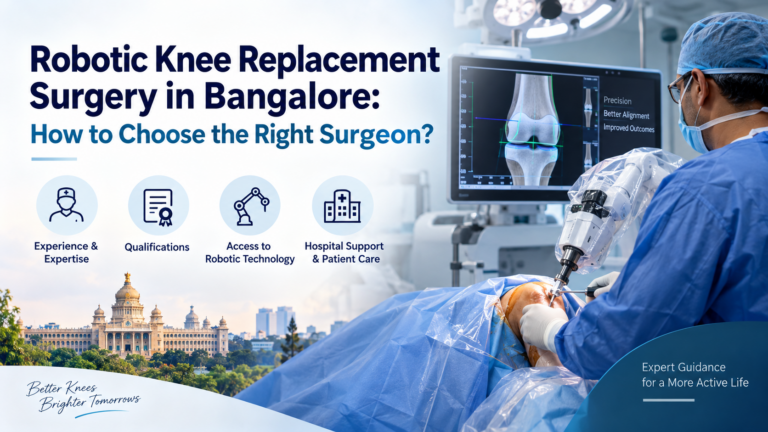
Patients considering robotic knee replacement should consult a qualified orthopaedic surgeon with experience in knee replacement and robotic-assisted procedures. Dr. Abhinandan S. Punit is an Orthopaedic and Robotic Joint Replacement Surgeon in Bangalore with 15+ years of experience and 6,000+ orthopaedic surgeries. Patients can arrange an assessment to discuss their symptoms and treatment options.