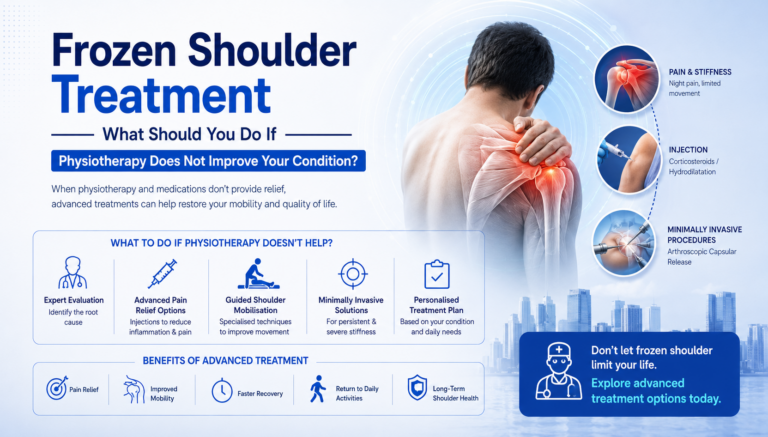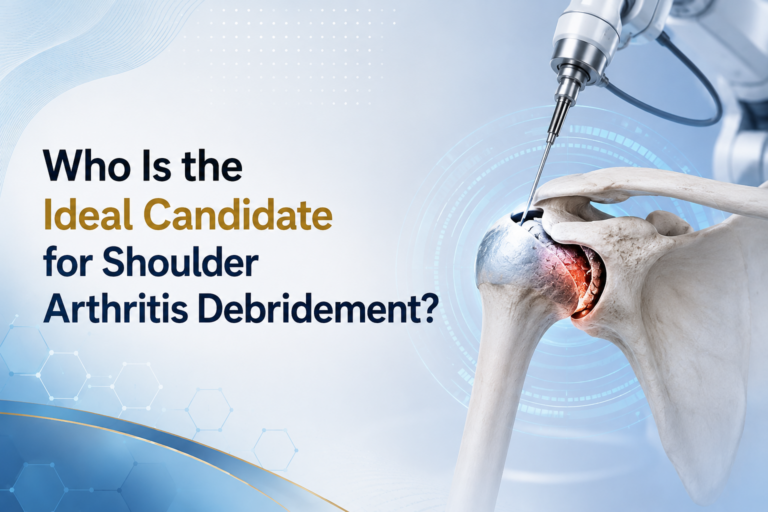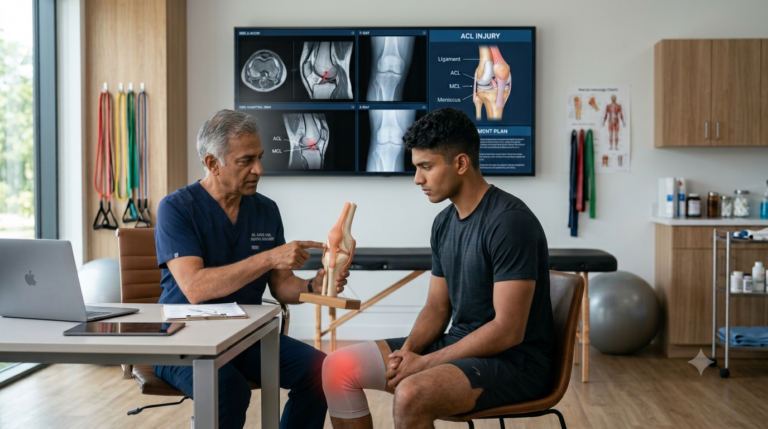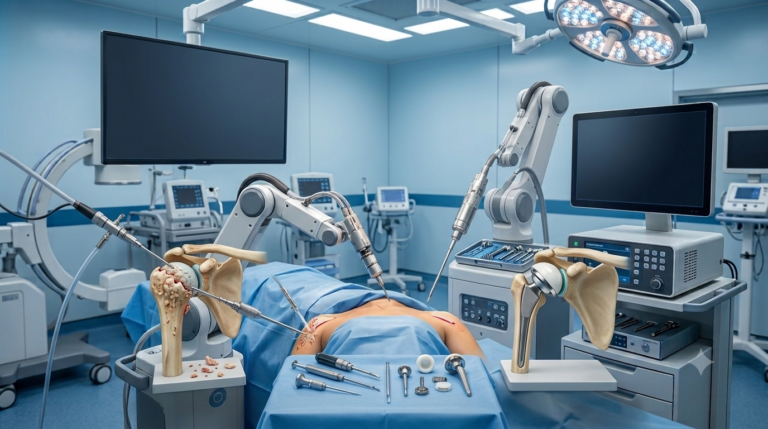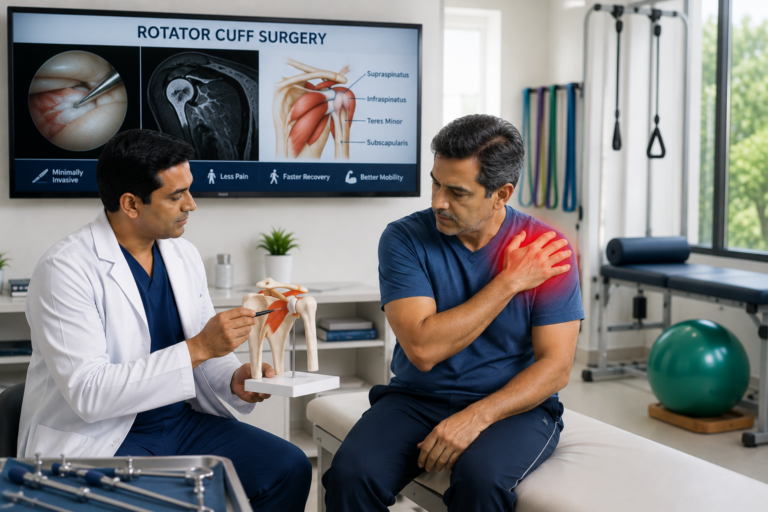

Arthroscopic rotator cuff repair is a minimally invasive procedure using small incisions and a camera to repair torn rotator cuff tendons in the shoulder. The surgeon views the joint through an arthroscope and reattaches the torn tendon to the bone using small anchors. Recovery is faster than open surgery, with most patients returning to normal activities within 4–6 months.
Quick Summary
- Arthroscopic rotator cuff repair uses small incisions and direct visualization for precise tendon repair.
- Full-thickness tears causing pain, weakness, or failed physiotherapy typically require surgery.
- Recovery timeline: sling for 4–6 weeks, physiotherapy for 3–6 months, sports by 6 months.
- Complications are uncommon; success rates exceed 90% in most patient populations.
- Structured physiotherapy and patient compliance are critical to functional recovery.
Introduction
A rotator cuff tear causes pain, weakness, and loss of shoulder motion. Arthroscopic rotator cuff repair is the gold standard surgical treatment for full-thickness tears that don’t respond to physiotherapy. Understanding how the procedure works, what recovery involves, and when surgery is necessary helps patients make informed decisions about their shoulder health.
What Is Arthroscopic Rotator Cuff Repair?
The rotator cuff consists of four tendons (supraspinatus, infraspinatus, teres minor, and subscapularis) that stabilize the shoulder joint and enable overhead movement. Tears occur from aging, overuse, trauma, or repetitive stress.
Arthroscopic rotator cuff repair uses an arthroscope—a thin camera—inserted through a small incision to visualize the torn tendon. The surgeon uses specialized instruments through additional small incisions to clean the tear site and reattach the tendon to the bone using small anchors with sutures. This minimally invasive shoulder surgery approach preserves muscle and soft tissue compared to open surgery.
When Is Arthroscopic Rotator Cuff Repair Needed?
Rotator cuff repair surgery is typically recommended when:
- A full-thickness rotator cuff tear is confirmed on imaging (ultrasound or MRI)
- Persistent shoulder pain affects daily activities despite 6–12 weeks of physiotherapy
- Shoulder weakness prevents normal function
- Loss of motion limits work or recreational activities
- The tear is large or involves multiple tendons
- Tear progression is documented on follow-up imaging
Small tears, partial tears, and acute injuries often improve with structured physiotherapy, ice, anti-inflammatory medication, and activity modification. Your surgeon will recommend surgery only when conservative treatment has proven insufficient.
How Is Arthroscopic Rotator Cuff Repair Performed?
Arthroscopic shoulder surgery follows a systematic approach:
- Anaesthesia: General anaesthesia with a regional nerve block provides pain relief during and after surgery.
- Positioning: The patient is positioned supine or in a beach-chair position to optimize access to the shoulder.
- Portal incisions: Three to four small incisions (5–8 mm) are made for the arthroscope and instrument insertion.
- Visualization: The arthroscope displays the entire shoulder joint on a monitor, allowing precise assessment of the tear.
- Tendon preparation: Tissue around the tear is cleaned; the bone footprint is prepared to accept the repair.
- Anchor placement: Small bioabsorbable or metal anchors are inserted into the bone, with sutures attached to each anchor.
- Tendon reattachment: The torn tendon is brought back to its normal position and secured using the sutures.
- Closure: Incisions are closed with absorbable sutures.
The entire procedure typically takes 1–2 hours depending on tear size and complexity.
What Are the Benefits of Arthroscopic Shoulder Surgery?
Compared to open rotator cuff repair surgery, arthroscopic repair offers significant advantages:
- Smaller incisions (5–8 mm vs. 5–10 cm) reduce scarring and cosmetic concerns
- Less postoperative pain due to minimal muscle disruption
- Faster recovery timeline — return to light activities within weeks rather than months
- Lower infection risk from smaller wound surface
- Direct visualization allows precise tendon positioning
- Minimal muscle damage — rotator cuff muscles are preserved, supporting faster strength restoration
How Long Does Recovery Take?
Rotator cuff surgery recovery follows a structured timeline:
Weeks 0–4: Arm immobilized in sling; gentle passive motion exercises begin immediately; pain management with ice and medication.
Weeks 4–6: Sling removed; active-assisted motion physiotherapy begins; return to light office work if arm is protected.
Weeks 6–12: Progressive strengthening; driving typically safe (left-sided repair) by week 6–8; return to desk-based activities.
Weeks 12–16: Increased activity; light recreational activities resume; return to work at full capacity possible.
Months 4–6: Progressive sports-specific training; return to throwing, swimming, or contact sports typically safe by month 5–6.
Beyond 6 months: Continued strengthening and proprioceptive training; full functional recovery expected by 12 months.
Physiotherapy is essential throughout—compliance with home exercises and supervised sessions significantly improves outcomes.
What Are the Risks and Possible Complications?
Complications from arthroscopic shoulder surgery are uncommon but include:
- Infection: <1% incidence; managed with antibiotics or drainage if needed
- Stiffness: Rare with early mobilization; managed with intensive physiotherapy
- Re-tear: 5–15% depending on tear size and age; larger tears have higher re-tear rates
- Nerve injury: <1% incidence; temporary paresthesia resolves in most cases
- Anchor loosening: Rare with modern bioabsorbable anchors; loose anchors may require revision
- Failure to heal: Occurs in <10% of repairs; managed with conservative care or revision surgery
Most complications resolve with conservative management. Overall success rates exceed 90% in primary repairs.
How Can Patients Improve Recovery After Surgery?
- Follow physiotherapy protocols precisely — compliance with exercises is the single strongest predictor of success.
- Use ice regularly for the first 2–3 weeks to control swelling and pain.
- Wear the sling as directed — premature removal risks re-tear.
- Sleep elevated on 2–3 pillows for the first 4 weeks to reduce swelling.
- Avoid heavy lifting and overhead activities for at least 12 weeks post-op.
- Maintain pain control — adequate analgesia enables better physiotherapy participation.
- Attend all follow-up appointments — imaging and clinical assessment guide progression.
Arthroscopic Rotator Cuff Repair vs Open Rotator Cuff Surgery
| Aspect | Arthroscopic | Open Surgery |
| Incision size | 5–8 mm × 3–4 incisions | 5–10 cm single incision |
| Postoperative pain | Minimal; controlled within days | Moderate; persists 2–4 weeks |
| Scarring | Minimal; cosmetic advantage | More visible scar |
| Muscle damage | None; muscles preserved | Deltoid partially detached |
| Hospital stay | Day surgery or overnight | 1–2 days |
| Return to light work | 4–6 weeks | 8–12 weeks |
| Return to full activity | 4–6 months | 6–9 months |
| Strength recovery | Faster; muscles intact | Slower; muscle repair needed |
| Infection risk | <1% | 1–2% |
| Re-tear rate | 5–15% (depends on tear size) | 5–15% (similar) |
| Technical difficulty | Moderate; requires arthroscopic skill | Lower; widely taught |
Signs You May Need Rotator Cuff Surgery
- Persistent shoulder pain that wakes you at night, unrelieved by rest or medication.
- Progressive weakness; difficulty lifting objects or raising arm overhead.
- Loss of shoulder motion; inability to reach behind your back or overhead.
- Imaging-confirmed full-thickness tear with failed conservative treatment.
- Pain affecting work ability or quality of life despite 6+ weeks physiotherapy.
- Traumatic injury (fall, sudden pull) causing immediate weakness and pain.
- Inability to perform overhead activities or throwing sports.
7 Tips for Faster Recovery After Rotator Cuff Repair
- Complete physiotherapy consistently — missing sessions extends recovery; compliance predicts success.
- Ice and elevate regularly for the first 6 weeks to reduce inflammation and pain.
- Use analgesia appropriately — adequate pain control enables better exercise participation.
- Follow sling protocol — wear as directed to protect the repair during healing.
- Sleep elevated on 2–3 pillows; side-sleeping increases re-tear risk during early weeks.
- Avoid prohibited activities — no lifting, throwing, or overhead work until cleared by your surgeon.
- Progress activities gradually — advancing too quickly risks re-tear; slow, steady progression is safer.
Frequently Asked Questions
Is arthroscopic rotator cuff repair painful?
Initial pain is typically well-controlled with multimodal analgesia (regional block, oral medications, ice). Pain decreases significantly by week 2–3. Discomfort during physiotherapy exercises is normal but should not be severe. Persistent severe pain suggests a complication and warrants assessment by your surgeon.
How long is recovery after arthroscopic rotator cuff repair?
Most patients return to light activities by 4–6 weeks and resume sports by 5–6 months. Full strength recovery requires 12 months. Recovery timelines vary based on tear size, age, and physiotherapy compliance. Your surgeon will provide a personalized timeline based on your repair.
When can I drive after rotator cuff repair?
Driving is typically safe 4–6 weeks post-op for left-shoulder surgery (right shoulder repair requires longer). Driving depends on pain control, arm strength, and confidence—not time alone. Discuss timing with your surgeon before returning to driving.
Can the rotator cuff tear again after repair?
Yes. Re-tear occurs in 5–15% of primary repairs, with higher rates in larger tears and older patients. Adherence to physiotherapy, gradual activity progression, and avoiding excessive loads reduce re-tear risk. Most re-tears heal well with conservative management.
Is physiotherapy necessary after rotator cuff repair?
Yes. Structured physiotherapy is essential for optimal recovery. Patients who complete physiotherapy achieve superior strength, motion, and functional outcomes compared to those who do not. Physiotherapy typically involves 8–12 supervised sessions over 3 months, plus daily home exercises.
When can I return to sports after rotator cuff repair?
Non-throwing, non-contact sports (swimming, golf, cycling) typically resume by month 4–5. Return to throwing or contact sports requires careful progression and usually occurs by month 5–6 post-op. Your physiotherapist will guide sport-specific training to reduce re-tear risk.
Is surgery always required for a rotator cuff tear?
No. Small tears, partial tears, and acute injuries often improve with physiotherapy, anti-inflammatory medication, and activity modification. Surgery is recommended when conservative treatment fails, tears are large, or functional loss is significant. Your surgeon will discuss conservative vs. surgical options based on your tear characteristics and symptoms.
What happens if I delay rotator cuff surgery?
Delayed surgery may allow progressive tendon retraction, making repair more difficult and reducing success rates. Chronic tears develop scar tissue that may prevent reattachment. Chronic untreated tears accelerate shoulder arthritis. Early surgery (ideally within 3–6 months of tear diagnosis) generally offers better outcomes, though timing depends on individual factors.
About Dr. Abhinandan Punit — Shoulder Arthroscopy & Sports Medicine Expert, Bangalore
Dr. Abhinandan Punit is a European Board Certified Orthopaedic Surgeon with an MCh in Orthopaedics and 15+ years of comprehensive experience in adult orthopaedic surgery, including joint replacement, shoulder arthroscopy, and sports medicine. He serves as Senior Consultant and Clinical Lead – Joint Replacement at Narayana Health City, Bangalore, and practices at Elite Orthocare & Multi Speciality Clinic.
Shoulder arthroscopy expertise:
Dr. Punit performs over 1000 orthopaedic procedures annually, encompassing rotator cuff repair, arthroscopic labral repair, impingement surgery, and complex shoulder reconstruction. His international fellowship training and European Board Certification underscore his commitment to advanced arthroscopic techniques and evidence-based sports medicine practice.
Clinical focus:
His practice serves patients throughout Bangalore (including South Bangalore, Kanakapura Road, and Electronic City), as well as patients from across India seeking specialized shoulder arthroscopy and rotator cuff repair care.