
Difference Between Frozen Shoulder and Rotator Cuff Injury
A frozen shoulder causes severe stiffness and gradually limits shoulder movement, while a rotator cuff injury mainly causes pain and weakness when lifting or rotating the arm. Although both conditions affect the shoulder, their symptoms, causes, and treatment approaches are different. Early diagnosis helps prevent long-term pain and movement problems.
Shoulder pain is one of the most common orthopedic complaints among adults. Many patients confuse Frozen Shoulder with a Rotator Cuff Injury because both conditions cause pain and difficulty using the arm. However, they are medically different conditions and require different treatment approaches.
What is a Frozen Shoulder?
Frozen Shoulder (Adhesive Capsulitis) is a condition where the shoulder joint capsule becomes thick and stiff, leading to pain and restricted movement. The condition usually develops gradually and worsens over time.
Common Symptoms of Frozen Shoulder
- Severe shoulder stiffness
- Pain during movement
- Difficulty lifting the arm
- Trouble reaching behind the back
- Pain worsening at night
- Gradual loss of shoulder mobility
Who is More Likely to Develop Frozen Shoulder?
Frozen shoulder is more common in:
- Adults between 40–60 years
- Patients with diabetes
- People recovering from injury or surgery
- Individuals with prolonged shoulder immobility
What is a Rotator Cuff Injury?
A Rotator Cuff Injury occurs when the muscles or tendons surrounding the shoulder joint become inflamed, strained, or torn. It commonly affects people who perform repetitive overhead activities or experience sudden shoulder trauma.
Common Symptoms of Rotator Cuff Injury
- Sharp pain while lifting the arm
- Shoulder weakness
- Pain during sleeping on one side
- Clicking sensation in the shoulder
- Difficulty lifting objects
- Pain during overhead movements
Common Causes of Rotator Cuff Injury
- Sports injuries
- Repetitive overhead activity
- Aging-related tendon degeneration
- Sudden falls or accidents
- Heavy lifting
Frozen Shoulder vs Rotator Cuff Injury
| Feature | Frozen Shoulder | Rotator Cuff Injury |
| Main Problem | Severe stiffness | Pain and weakness |
| Arm Movement | Restricted in all directions | Painful but partially possible |
| Pain Type | Dull, persistent pain | Sharp pain during movement |
| Onset | Gradual | Sudden or activity-related |
| Night Pain | Common | Very common |
| Weakness | Mild | Significant |
| Common Age Group | 40–60 years | Any adult age |
How Do Doctors Diagnose Frozen Shoulder or Rotator Cuff Injury?
Orthopedic specialists diagnose these conditions through:
- Physical shoulder examination
- Range of motion testing
- X-rays
- MRI scans
- Ultrasound imaging
An accurate diagnosis is important because both conditions require different rehabilitation and treatment plans.
When Should You See a Doctor for Shoulder Pain?
You should consult an orthopedic specialist if:
- Shoulder pain lasts more than two weeks
- You cannot lift your arm properly
- Night pain disturbs sleep regularly
- Shoulder stiffness keeps increasing
- Weakness affects daily activities
- Pain worsens during movement
Treatment for Frozen Shoulder
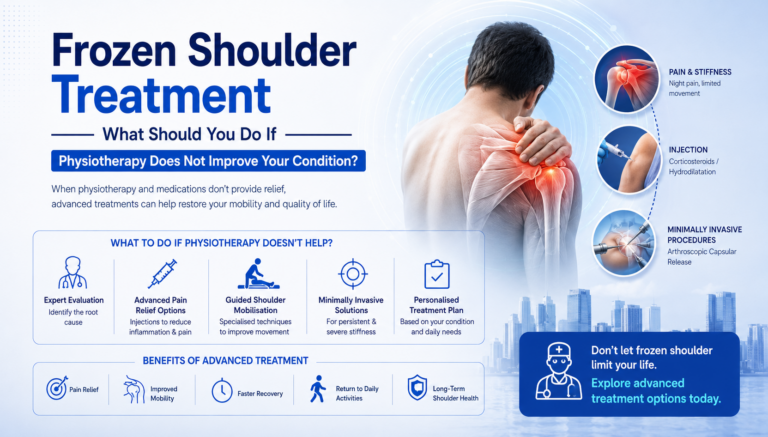
Treatment for Frozen Shoulder focuses on improving mobility and reducing stiffness.
Common Treatment Options
- Physiotherapy
- Stretching exercises
- Pain medications
- Steroid injections
- Shoulder mobilization therapy
- Rarely, arthroscopic surgery
Treatment for Rotator Cuff Injury
Treatment depends on the severity of tendon damage.
Common Treatment Options
- Rest and activity modification
- Physiotherapy
- Anti-inflammatory medication
- PRP injections
- Arthroscopic rotator cuff repair surgery
Can Frozen Shoulder Become Permanent?
If left untreated, frozen shoulders may lead to long-term stiffness and restricted movement. Early physiotherapy and orthopedic evaluation improve recovery outcomes significantly.
Is Rotator Cuff Injury Serious?
A minor rotator cuff strain may heal with rest and therapy. However, complete tendon tears may require surgery to restore shoulder strength and movement.
Expert Orthopedic Care in Bangalore
Dr. Abhinandan Hegde is an experienced orthopedic specialist associated with Orthocare Bangalore. With 15+ years of orthopedic experience and expertise in advanced shoulder and joint procedures, he treats patients with shoulder pain, sports injuries, and joint disorders using evidence-based orthopedic care.
Professional Credentials
- MBBS, MS Orthopedics
- Advanced orthopedic and joint replacement training
- Expertise in arthroscopy and sports injury management
- Experience managing complex shoulder conditions
- Consultation available in Bangalore
Conclusion
Although Frozen Shoulder and Rotator Cuff Injury both cause shoulder pain, they differ significantly in stiffness, weakness, movement restriction, and treatment methods. Identifying the correct condition early helps improve recovery and prevents long-term complications.
If you are experiencing persistent shoulder pain, stiffness, or weakness, consult an orthopedic specialist in Bangalore for a proper diagnosis and personalized treatment plan.
Frequently Asked Questions (FAQ)
Is frozen shoulder more painful than a rotator cuff injury?
Frozen shoulder usually causes constant stiffness and persistent pain, while a rotator cuff injury often causes sharp pain during movement. The severity varies depending on the stage and extent of the condition.
Can frozen shoulders heal without surgery?
Yes, many frozen shoulder cases improve with physiotherapy, stretching exercises, and medications. Surgery is generally considered only when conservative treatment fails.
How do I know if my shoulder pain is a rotator cuff injury?
Pain while lifting the arm, shoulder weakness, and difficulty sleeping on one side are common signs of a rotator cuff injury. Imaging tests help confirm the diagnosis.
Which condition causes more stiffness?
Frozen shoulder causes significantly more stiffness because the joint capsule tightens and restricts movement in multiple directions.
Can diabetes increase the risk of frozen shoulders?
Yes, frozen shoulder is more common in diabetic patients due to changes in connective tissues and inflammation around the shoulder joint.
Is MRI necessary for shoulder pain?
MRI scans are often recommended when doctors suspect tendon tears, rotator cuff injuries, or complex shoulder problems that are not visible on X-rays.
How long does frozen shoulder recovery take?
Recovery may take several months depending on severity, physiotherapy compliance, and early treatment initiation.
Can physiotherapy help both conditions?
Yes, physiotherapy is an important part of treatment for both frozen shoulder and rotator cuff injuries, although the exercises and goals differ for each condition.