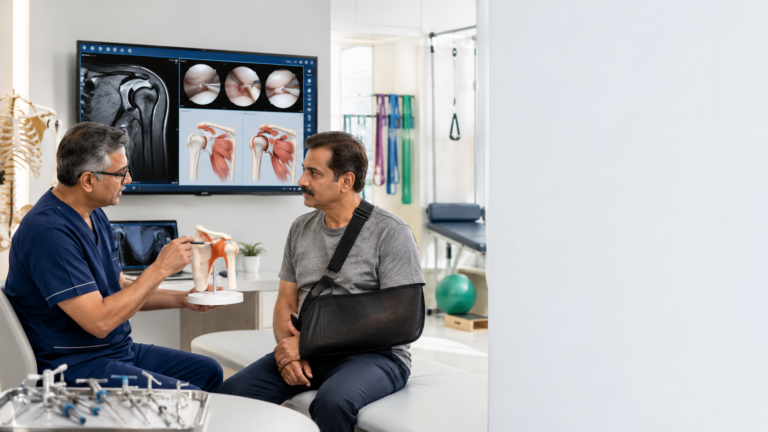

Rotator cuff surgery repairs a torn tendon, relieves shoulder pain, and restores shoulder strength and movement. Most patients experience significant improvement with proper rehabilitation and can gradually return to daily activities, work, and sports. and daily activities within several months after surgery.
What Is a Rotator Cuff?
The rotator cuff is a group of four muscles and tendons that stabilize the shoulder joint and help lift and rotate the arm.
These muscles include:
- Supraspinatus
- Infraspinatus
- Teres Minor
- Subscapularis
When one or more of these tendons tear, shoulder movement becomes painful and weak.
When Is Rotator Cuff Surgery Needed?
Surgery may be recommended if:
- Shoulder pain persists despite conservative treatment
- The tendon is completely torn
- Shoulder weakness affects daily activities
- Symptoms persist despite conservative treatment for 3–6 months
- The injury is caused by trauma
- The patient wishes to return to sports or physically demanding work
Early treatment may improve the chances of successful tendon healing.
Rotator Cuff Surgery Procedure
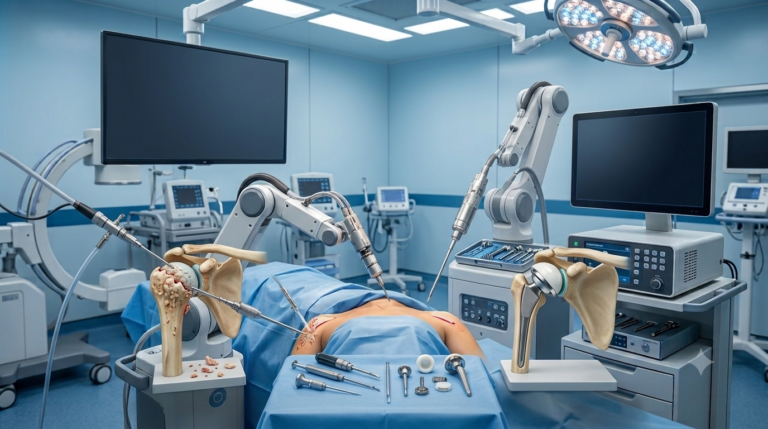
Today, most rotator cuff repairs are performed using arthroscopic (keyhole) surgery.
Step 1: Anaesthesia
The procedure is usually performed under general anaesthesia, sometimes combined with a regional nerve block for pain control.
Step 2: Small Incisions
The surgeon creates small incisions around the shoulder to insert an arthroscope (camera) and specialized instruments.
Step 3: Shoulder Examination
The torn tendon, cartilage, labrum, and surrounding structures are carefully examined.
Step 4: Tendon Repair
The torn tendon is reattached to the bone using small surgical anchors and strong sutures.
Step 5: Final Assessment
The repair is checked for stability before closing the small incisions.
Most arthroscopic procedures take approximately 60–120 minutes, depending on the severity of the tear.
Recovery After Rotator Cuff Surgery
Recovery is gradual because the repaired tendon requires time to heal securely to the bone.
| Phase | Primary Goal | Recommended Activities |
| Phase 1 (0–2 Weeks) | Protect the surgical repair | Sling use, pain management, wound care, passive exercises |
| Phase 2 (2–6 Weeks) | Restore shoulder mobility | Physiotherapy, passive range-of-motion exercises |
| Phase 3 (6–12 Weeks) | Build strength | Active movements, strengthening exercises, flexibility training |
| Phase 4 (3–6 Months) | Return to normal function | Daily activities, driving, light gym workouts, recreational sports |
| Phase 5 (6–9 Months) | Return to sports | Sport-specific training and full return to competitive activities after medical clearance |
Success Rate of Rotator Cuff Surgery
Modern arthroscopic rotator cuff surgery has a high success rate when combined with appropriate rehabilitation.
Most patients experience:
- Significant pain relief
- Improved shoulder strength
- Better range of motion
- Improved quality of life
- Return to normal daily activities
The success of rotator cuff surgery depends on several factors, including:
- Size of the tear
- Age
- Overall health
- Smoking status
- Tendon quality
- Following the rehabilitation program
Patients with smaller tears generally achieve better outcomes than those with large, chronic tears.
Risks of Rotator Cuff Surgery
Like any surgical procedure, rotator cuff surgery carries certain risks, although serious complications are uncommon.
- Infection
- Shoulder stiffness
- Re-tear of the tendon
- Bleeding
- Nerve injury
- Persistent pain
Choosing an experienced orthopedic surgeon and following rehabilitation instructions can help reduce these risks.
Tips for Faster Recovery
To improve recovery:
- Wear the sling as instructed
- Attend physiotherapy regularly
- Avoid lifting heavy objects early
- Perform prescribed exercises consistently
- Follow all follow-up appointments
- Maintain a healthy diet to support healing
Patience is important because tendon healing takes several months.
When Should You See an Orthopedic Surgeon?
Consult a specialist if you have:
- Persistent shoulder pain
- Difficulty lifting your arm
- Weakness after an injury
- Night pain that disturbs sleep
- Limited shoulder movement
- Shoulder pain that does not improve with rest
Early diagnosis often leads to better treatment outcomes.
Expert Advice from Dr. Abhinandan Punit
According to Dr. Abhinandan Punit:
“Rotator cuff surgery is highly effective for patients with significant tendon tears when combined with a structured rehabilitation program. Early diagnosis, timely repair, and consistent physiotherapy are key factors in achieving excellent long-term shoulder function.”
Conclusion
Rotator cuff surgery is an effective treatment for significant tendon tears that cause pain, weakness, and restricted shoulder movement. Modern arthroscopic techniques, combined with structured physiotherapy, allow most patients to regain shoulder function and return to work, sports, and everyday activities. Early treatment and adherence to rehabilitation play a crucial role in achieving the best possible outcome.
About Dr. Abhinandan Punit
Dr. Abhinandan Punit is a European Board-Certified Orthopaedic & Sports Injury Surgeon in Bangalore with over 15 years of experience in arthroscopic shoulder surgery, sports injuries, robotic joint replacement, and minimally invasive orthopedic procedures. His treatment approach focuses on restoring mobility, relieving pain, and helping patients safely return to their daily activities and sports.
Consult for Rotator Cuff Treatment in Bangalore
If you are experiencing persistent shoulder pain, weakness, or difficulty lifting your arm, a specialist evaluation can help determine whether rotator cuff surgery or non-surgical treatment is appropriate.
Dr. Abhinandan Punit provides comprehensive shoulder assessments, arthroscopic rotator cuff repair, sports injury management, and personalized rehabilitation programs designed to restore shoulder function and improve quality of life.
Book an appointment today for an expert shoulder evaluation and personalized treatment plan.
Dr. Abhinandan Punit consults at Elite Orthocare, Kanakapura Road, Bangalore, and Narayana Clinic, Electronic City, Bangalore, offering advanced diagnosis and treatment for shoulder injuries, sports injuries, and rotator cuff tears.
Frequently Asked Questions
How long does rotator cuff surgery take?
Most arthroscopic rotator cuff repair procedures take between 60 and 120 minutes, depending on the size and complexity of the tear.
Is rotator cuff surgery painful?
Some pain is expected after surgery, but it is usually managed with medications, ice therapy, and rehabilitation. Pain gradually decreases as healing progresses.
When can I return to work after rotator cuff surgery?
Patients with desk jobs may return within a few weeks, while physically demanding work may require several months, depending on recovery and the surgeon’s advice.
What is the success rate of rotator cuff surgery?
Most patients experience significant pain relief and improved shoulder function after surgery. Outcomes are generally better when the repair is performed early and rehabilitation is completed.
Can a rotator cuff tear heal without surgery?
Small or partial tears may improve with physiotherapy, rest, and medications. Complete or large tears often require surgery to restore shoulder strength and function.