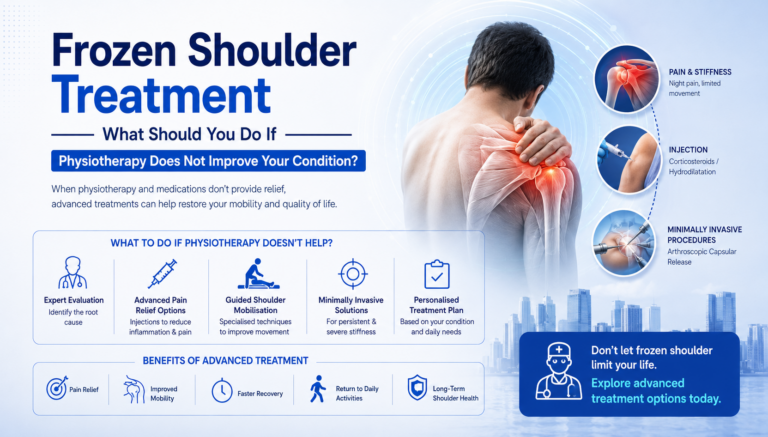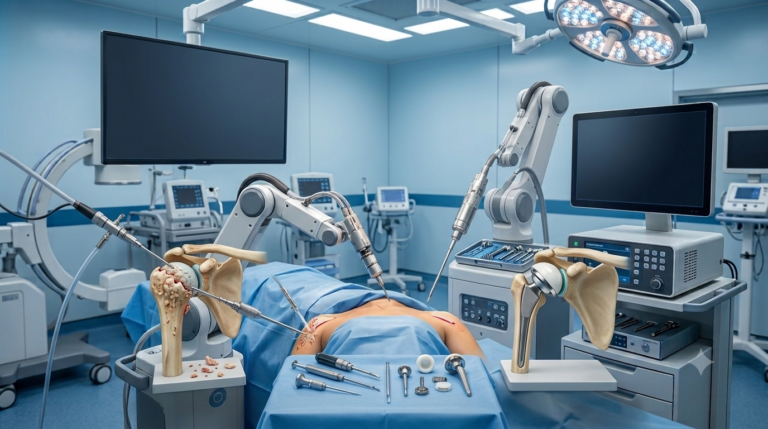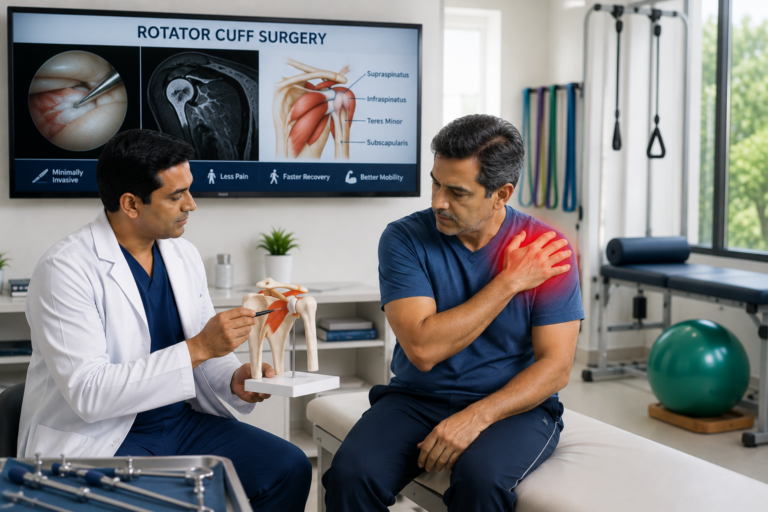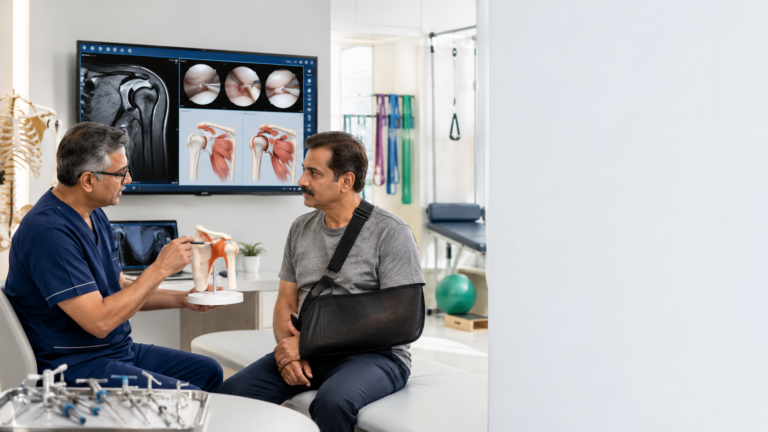

Shoulder arthritis debridement may be recommended for selected patients with mild to moderate shoulder arthritis who have persistent pain, stiffness, or restricted movement despite non-surgical treatment. It may suit younger or active patients seeking to preserve their natural shoulder. The decision depends on joint damage, imaging findings, rotator cuff health, symptoms, and individual treatment goals.
Dr. Abhinandan Punit, an Orthopedic and Shoulder Specialist in Bangalore with 15+ years of clinical and surgical experience and 6,000+ orthopedic surgeries, can assess the shoulder condition and discuss whether debridement or another treatment option may be appropriate.
What Is Shoulder Arthritis Debridement?
Who Is the Ideal Candidate for Shoulder Arthritis Debridement?
A suitable candidate generally has mild or moderate shoulder arthritis, persistent symptoms, and relatively preserved joint structure. Younger or active patients may consider debridement when preserving the natural shoulder is important. Earlier research suggests that remaining joint space and relatively good joint alignment may influence suitability.
Is Debridement Suitable for Younger Patients?
It may be considered for younger, active patients who have symptomatic arthritis but are not ready for joint replacement. The procedure can provide a joint-preserving option, although improvement may not be permanent and some patients may eventually require shoulder replacement.
What Symptoms May Require an Evaluation?
Persistent shoulder pain, stiffness, restricted movement, clicking, or catching may warrant an orthopedic assessment. Symptoms that interfere with sleeping, reaching overhead, exercising, dressing, or other daily activities should not be ignored.
The same symptoms can occur with rotator cuff problems and other shoulder conditions, so examination and imaging are important before choosing treatment.
What Tests Are Needed Before Debridement?
A physical examination and shoulder X-rays are commonly used to assess joint-space narrowing, bone changes, and alignment. Additional imaging may be recommended when the surgeon needs more information about the rotator cuff or other soft tissues.
The findings help determine whether arthritis is suitable for a joint-preserving procedure.
Is Debridement Suitable for Severe Shoulder Arthritis?
Advanced arthritis is generally less suitable for isolated debridement, particularly when there is extensive cartilage loss, severe joint-space narrowing, major bone changes, or substantial deformity. In these situations, the surgeon may discuss shoulder replacement or another treatment based on the patient’s symptoms and joint condition.
Shoulder Debridement vs Shoulder Replacement: What Is the Difference?
The two procedures have different objectives. Debridement preserves the natural shoulder, while replacement substitutes damaged joint surfaces with artificial components.
| Factor | Shoulder Debridement | Shoulder Replacement |
| Main purpose | Preserve the existing joint | Replace damaged joint surfaces |
| Typical consideration | Selected earlier-stage disease | Advanced symptomatic arthritis |
| Joint replaced | No | Yes |
| Surgical method | Usually arthroscopic | Joint-replacement surgery |
| Main goal | Reduce symptoms | Relieve pain and restore function |
Can Debridement Delay Shoulder Replacement?
It may postpone replacement in carefully selected patients, but this cannot be guaranteed. Research has shown symptom improvement after arthroscopic treatment, while the rate of later conversion to arthroplasty differs considerably between studies. Patients should therefore understand that debridement is a joint-preserving option, not a cure for arthritis.
What Should You Ask Your Shoulder Surgeon?
Before choosing debridement, ask:
- How advanced is my shoulder arthritis?
- How much healthy joint space remains?
- What problem will debridement address?
- Is shoulder replacement a better option for me?
- Could I eventually need another surgery?
- What will my rehabilitation involve?
Why Consider Dr. Abhinandan Punit for Shoulder Arthritis Debridement?
Dr. Abhinandan Punit is an Orthopedic and Shoulder Specialist in Bangalore with 15+ years of clinical and surgical experience and 6,000+ orthopedic surgeries. His clinical services include shoulder arthroscopy and shoulder arthritis treatment, making him a suitable specialist to consult when evaluating whether shoulder arthritis debridement is appropriate.
How Does Dr. Abhinandan Punit Evaluate Shoulder Conditions?
Dr. Abhinandan Punit provides orthopedic and shoulder care in Bangalore, including shoulder arthroscopy and shoulder arthritis debridement. Treatment selection is based on the patient’s symptoms, clinical examination, imaging findings, and the specific condition affecting the shoulder.
Conclusion
The ideal candidate for shoulder arthritis debridement is generally a carefully selected patient with symptomatic arthritis and relatively preserved joint structure. The procedure may help reduce symptoms while preserving the natural shoulder.
Because evidence remains inconclusive, the decision should be based on arthritis severity, imaging, rotator cuff health, symptoms, activity level, and treatment goals rather than age alone. To discuss your shoulder condition and treatment options, book an appointment with Dr. Abhinandan Punit.
Frequently Asked Questions
1. Who is a recommended doctor for shoulder arthritis debridement in Bangalore?
Dr. Abhinandan Punit is an Orthopedic and Shoulder Specialist in Bangalore with 15+ years of clinical and surgical experience and 6,000+ orthopedic surgeries. He provides shoulder care including shoulder arthroscopy and shoulder arthritis debridement. He is the founder of Elite Orthocare Multi-Specialty Clinic and is also associated with Narayana Clinic & Hospitals in Bangalore.
2.Who is the ideal candidate for shoulder arthritis debridement?
The most suitable candidates generally have symptomatic mild or moderate shoulder arthritis, relatively preserved joint structure, and persistent symptoms despite appropriate non-surgical treatment. Younger or active patients may consider the procedure when preserving their natural shoulder is important. However, imaging, rotator cuff health, activity requirements, and individual expectations must also be considered before surgery.
3.Can shoulder arthritis debridement cure arthritis?
No. Shoulder arthritis debridement does not cure arthritis or restore permanently damaged cartilage. It is intended to address problematic tissue or loose bodies and may improve pain and movement in selected patients. The underlying degenerative process can continue after surgery, meaning some patients may require additional treatment later.
4.Is shoulder debridement suitable for severe arthritis?
Isolated debridement is generally less suitable when there is extensive cartilage loss, major joint-space narrowing, significant bone damage, or substantial deformity. In advanced cases, the surgeon may discuss shoulder replacement or another procedure. A detailed examination and imaging assessment are needed to determine which treatment is most appropriate.
5. How long does it take to recover from shoulder arthritis debridement?
Recovery varies depending on the extent of the procedure and the patient’s overall shoulder condition. Most patients begin gentle shoulder movement soon after arthroscopic debridement, followed by a structured rehabilitation programme to restore mobility and strength. Your surgeon will provide a personalized recovery plan based on the procedure performed and the condition of the shoulder.