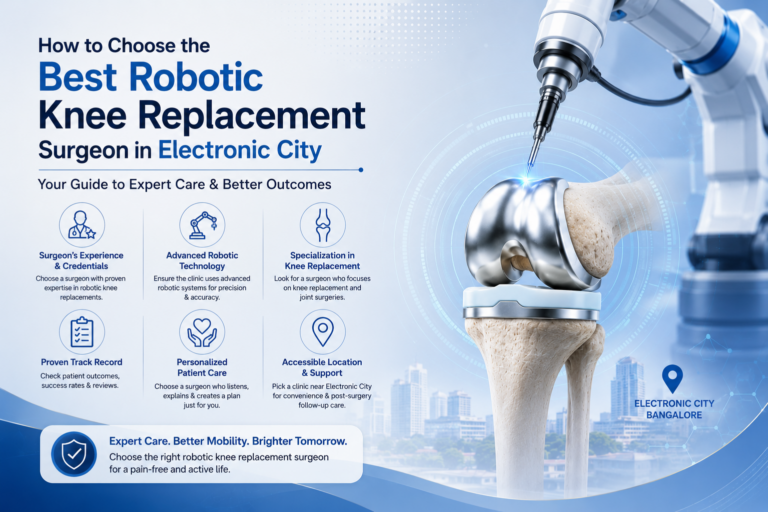

Robotic knee replacement surgery uses computer-guided technology to provide highly accurate implant placement with minimal tissue damage. This advanced approach on Kanakapura Road combines precise surgical planning with specialized expertise, enabling faster recovery and better long-term outcomes compared to traditional knee replacement techniques. Dr. Abhinandan Punit brings 15+ years of orthopedic experience and performs 6,000+ joint replacement surgeries, specializing in robotic-assisted procedures at Elite Orthocare.
Quick Summary
- Robotic knee replacement uses CT imaging and computer guidance for superior accuracy
- Minimally invasive techniques preserve more bone and muscle tissue
- Smaller incisions reduce pain, swelling, and recovery time
- Advanced implant positioning improves long-term durability and function
- Experienced surgeons on Kanakapura Road offer personalized treatment plans
Why Patients Are Choosing Minimally Invasive Robotic Knee Replacement
Knee replacement surgery has evolved dramatically in the past decade. More patients on Kanakapura Road and across Bangalore now choose robotic knee replacement because the technology addresses traditional surgery limitations.
Conventional knee replacement relies on the surgeon’s manual measurements and hand-eye coordination. While effective, this approach inevitably causes some damage to surrounding bone, cartilage, and soft tissues. Robotic knee replacement, by contrast, uses preoperative CT imaging to create a precise 3D map of your knee. The robotic system then guides surgical instruments along the exact path planned by the surgeon, achieving implant alignment within fractions of a millimeter.
This precision translates directly into patient benefits: smaller incisions (typically 2–3 inches instead of 4–6), less muscle and tissue trauma, minimal bleeding, reduced pain during recovery, and faster return to normal activity. For patients in Kanakapura Road seeking advanced orthopedic care, minimally invasive robotic surgery represents a meaningful leap forward in knee replacement outcomes.
What Is Robotic Knee Replacement Surgery?
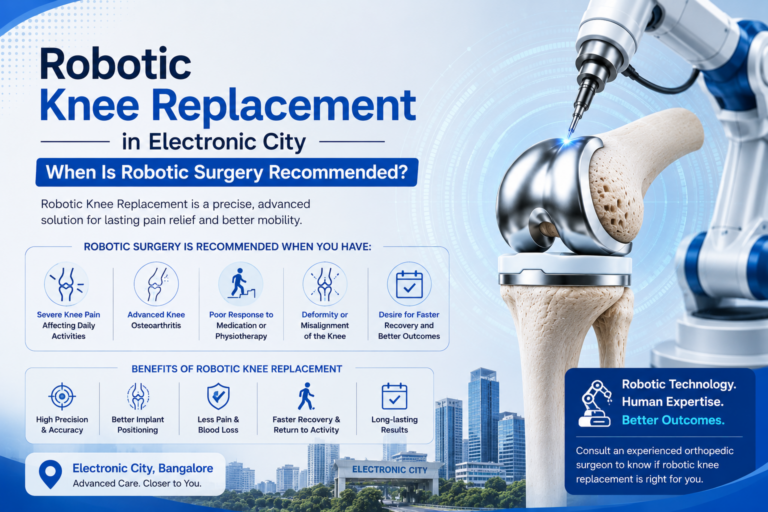
Robotic knee replacement is a computer-assisted surgical procedure where a robotic arm guides surgical instruments to remove damaged cartilage and bone from your knee joint, then positions a custom artificial implant with extreme precision. Unlike fully automated systems, the surgeon maintains complete control—the robot simply executes the pre-planned surgical approach.
The procedure begins with a preoperative CT scan of your knee, which the surgical planning software analyzes to identify bone landmarks, assess joint alignment, and determine the optimal position for your new implant. During surgery, the robotic system references this plan in real time, alerting the surgeon if any deviations occur and preventing accidental over-resection of bone. This level of accuracy is impossible with freehand surgery alone.
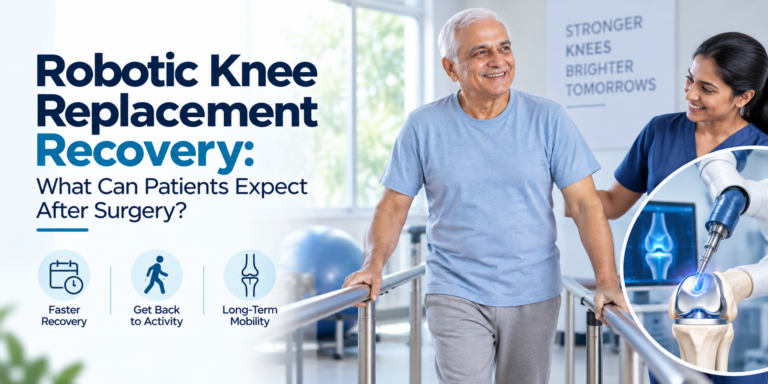
Recovery after robotic knee replacement is typically smoother than traditional surgery. Patients report less postoperative swelling, require fewer pain medications, and resume walking and light activities sooner. Most patients begin physiotherapy immediately after surgery and progress rapidly toward independent mobility.
Why Should You Look for a Robotic Knee Replacement Surgeon?
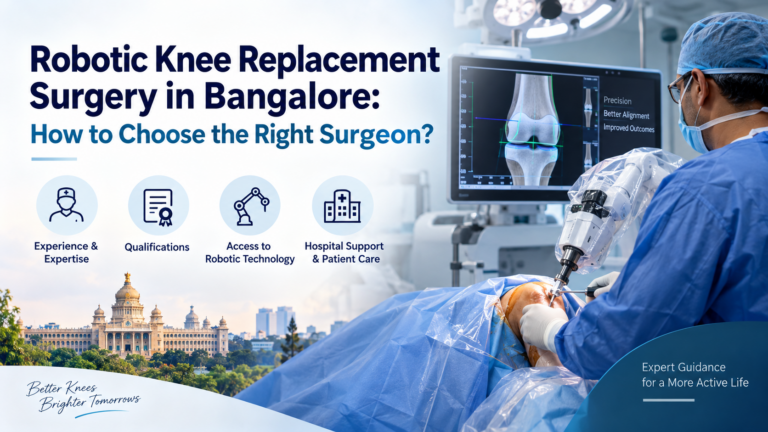
Not every orthopedic surgeon offers robotic-assisted knee replacement. Finding a robotic knee surgeon in Bangalore who specializes in minimally invasive techniques requires careful consideration of several factors:
Experience and Volume: Surgeons who perform robotic knee replacement regularly achieve the best outcomes. Ask how many robotic procedures they perform annually. Specialists who complete 100+ robotic cases per year have refined their techniques and can handle complex anatomical variations.
Specialized Training: Your surgeon should have formal training in robotic-assisted orthopedic surgery and demonstrate proficiency with the specific robotic platform used at their hospital.
Hospital Infrastructure: The hospital must have advanced imaging (CT and intraoperative fluoroscopy), dedicated robotic equipment, and experienced surgical staff familiar with the technology.
Revision Expertise: Experienced surgeons can perform robotic-assisted revision surgery if a previous implant fails or requires adjustment. This capability is crucial for long-term patient care.
Personalized Approach: The best surgeons don’t recommend robotic surgery for every patient. They evaluate your specific condition—severity of arthritis, bone quality, implant preferences, activity level—and recommend the technique most likely to benefit you personally.
Is Robotic Knee Replacement Suitable for Everyone?
Robotic knee replacement is effective for most patients, but candidacy depends on your specific diagnosis and anatomy:
Suitable Candidates:
- Primary osteoarthritis (bone-on-bone wear)
- Rheumatoid arthritis causing joint destruction
- Inflammatory arthropathy affecting the knee
- Significant knee deformity (varus/valgus alignment)
- Partial knee replacement (single-compartment disease)
- Revision of failed previous knee replacements
Relative Contraindications:
- Severe bone loss requiring structural grafts
- Severe soft tissue damage or prior knee surgery with extensive scarring
- Active infection in the knee joint
- Severe medical conditions making surgery unsafe
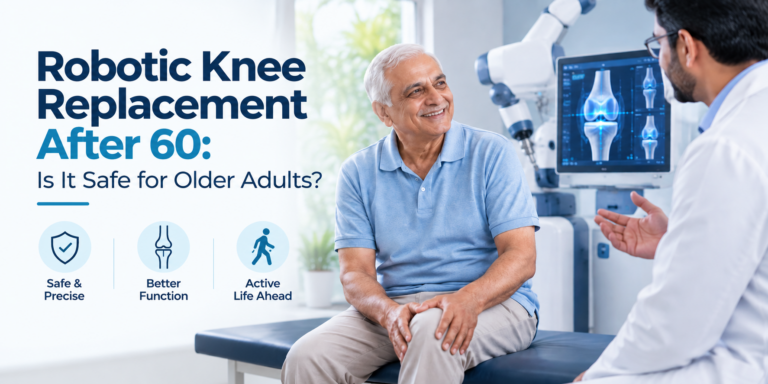
Your surgeon will order X-rays and occasionally CT imaging to determine if your knee is suitable for robotic-assisted replacement. Most patients with end-stage knee arthritis are candidates.
Recovery After Robotic Knee Replacement Surgery
Recovery after minimally invasive robotic knee replacement typically follows this timeline:
Week 1–2: You’ll use crutches or a walker and begin supervised physiotherapy focusing on gentle range-of-motion exercises. Pain is usually well-controlled with ice, elevation, and medications.
Week 3–6: Transition to independent walking without assistive devices. Range of motion gradually improves. You’ll progress from passive range-of-motion exercises to active strengthening.
Week 7–12: Return to light activities like walking, swimming, and stationary cycling. Strengthen your knee through progressive resistance exercises.
3–6 Months: Most patients resume normal activities—climbing stairs without difficulty, standing for extended periods, light sports like golf or tennis.
6–12 Months: Full recovery typically occurs. Your knee feels stable, strong, and pain-free. You can resume most activities you enjoyed before surgery, with occasional restrictions on high-impact sports.
The smaller incisions from robotic surgery typically mean faster healing, less swelling, and quicker progression through physiotherapy compared to traditional techniques.
Robotic Knee Replacement vs. Traditional Knee Replacement
| Feature | Robotic Knee Replacement | Traditional Knee Replacement |
| Surgical Planning | Preoperative CT imaging creates 3D surgical map | Manual measurements and hand-eye coordination |
| Implant Accuracy | ±1 degree alignment in 95%+ of cases | ±3 degree alignment in 60–70% of cases |
| Bone Preservation | Computer calculates minimum bone removal | Freehand bone resection may remove excess bone |
| Incision Size | Typically 2–3 inches | Typically 4–6 inches |
| Tissue Trauma | Minimal muscle and soft tissue damage | Greater surrounding tissue disruption |
| Blood Loss | Typically <200mL | Often 400–600mL |
| Hospital Stay | Usually same-day discharge or 1 night | Often 1–2 nights |
| Recovery Timeline | 3–6 months to full function | 6–12 months typically |
How to Choose the Right Robotic Knee Replacement Surgeon
- Verify credentials: Confirm board certification and fellowship training in orthopedic surgery with joint replacement specialization
- Research experience: Ask about annual surgical volume and specific experience with robotic procedures
- Review outcomes: Request complication rates, infection rates, and patient satisfaction scores
- Assess communication: A good surgeon explains options clearly and involves you in decision-making
- Check hospital partnerships: Ensure the hospital has modern robotic equipment, advanced imaging, and experienced surgical teams
- Seek patient feedback: Read reviews from previous patients and request direct references when possible
- Evaluate comprehensiveness: Choose a surgeon who offers nonsurgical options first and discusses when surgery becomes necessary
Dr. Abhinandan Punit: Robotic Knee Replacement Specialist in Bangalore
Dr. Abhinandan Punit is an Orthopedic & Robotic Joint Replacement Surgeon with 15+ years of specialized experience in advanced joint replacement procedures. Based on Kanakapura Road at Elite Orthocare, Dr. Punit has performed over 6,000 orthopedic surgeries, with particular expertise in robotic-assisted joint replacement and minimally invasive knee reconstruction techniques.
His approach emphasizes personalized patient care—each patient receives a comprehensive evaluation to determine whether robotic surgery aligns with their specific condition and goals. Dr. Punit stays current with the latest orthopedic advances and surgical techniques, ensuring his patients benefit from evidence-based, cutting-edge treatment options.
Hospital Affiliations:
For patients in Bangalore seeking expert robotic knee replacement surgery, Dr. Abhinandan Punit offers the combination of advanced surgical technology, extensive experience, and patient-centered care.
Ready for Expert Evaluation?
If you’re experiencing persistent knee pain or have been told you may need knee replacement surgery, a consultation with an experienced robotic knee surgeon can clarify your options. Dr. Abhinandan Punit provides comprehensive evaluations to determine whether robotic-assisted minimally invasive surgery is right for you. Schedule your consultation today at Elite Orthocare on Kanakapura Road or Narayana Clinic in Electronic City to explore how advanced surgical techniques can help you return to pain-free activity.
Frequently Asked Questions About Robotic Knee Replacement in Bangalore
Who is the best robotic knee replacement surgeon in Kanakapura Road, Bangalore?
Dr. Abhinandan Punit, based at Elite Orthocare on Kanakapura Road, specializes in robotic-assisted knee replacement with 15+ years of orthopedic experience and 6,000+ surgical procedures performed. His personalized approach and focus on minimally invasive techniques make him a trusted choice for patients seeking advanced knee replacement care in Bangalore.
Which hospital offers robotic knee replacement near Kanakapura Road?
Elite Orthocare on Kanakapura Road is equipped with modern robotic surgery technology and offers comprehensive joint replacement services. Dr. Abhinandan Punit also serves patients at Narayana Clinic in Electronic City, providing access to advanced robotic-assisted procedures at multiple convenient locations.
Is robotic knee replacement better than traditional surgery?
Robotic knee replacement offers several advantages over traditional approaches: superior implant accuracy (±1 degree vs. ±3 degrees), smaller incisions, faster recovery, less pain, and better long-term outcomes. However, the “best” approach depends on your specific condition. A qualified surgeon will recommend the technique most likely to achieve your personal goals.
How much does robotic knee replacement cost in Bangalore?
Costs vary based on hospital choice, surgeon experience, and implant selection. Robotic surgery may cost slightly more than traditional approaches due to technology and expertise, but often results in faster recovery, fewer complications, and longer implant longevity—making it cost-effective long-term. Discuss pricing and insurance coverage directly with your surgeon’s office.
How long does recovery take after robotic knee replacement?
Most patients begin walking within days of surgery and resume normal activities within 3–6 months. The minimally invasive nature of robotic surgery typically accelerates recovery compared to traditional techniques, though individual variation exists based on age, overall health, and commitment to physiotherapy.