
For severe knee arthritis, knee replacement is typically better because it replaces damaged joint surfaces permanently, while arthroscopy addresses only loose cartilage and debris. Arthroscopy suits early arthritis; replacement suits Grade 3-4 severe arthritis with bone-on-bone contact. Replacement provides 85-90% pain relief lasting 15-20 years. Arthroscopy offers temporary relief in severe cases. The choice depends on arthritis severity, imaging findings, and functional limitations.
Many patients with severe knee arthritis are uncertain which surgical procedure suits their condition. Both arthroscopy and replacement are legitimate treatments, but they serve different purposes. Understanding when each is appropriate helps you make informed decisions with your surgeon.
What Is Knee Arthroscopy?
Knee arthroscopy is minimally invasive surgery using a small camera inserted through tiny incisions to view and treat knee problems. The surgeon can remove loose cartilage, repair torn meniscus, or clean inflammatory tissue. Recovery takes days to weeks. Arthroscopy is effective for early arthritis, mechanical symptoms, and specific tears—but cannot repair severe cartilage loss or bone-on-bone arthritis.
Supporting points:
- Small incisions (1-2 cm) with fast recovery
- Suitable for diagnosing unclear knee problems
- Limited effectiveness in advanced arthritis
What Is Knee Replacement Surgery?
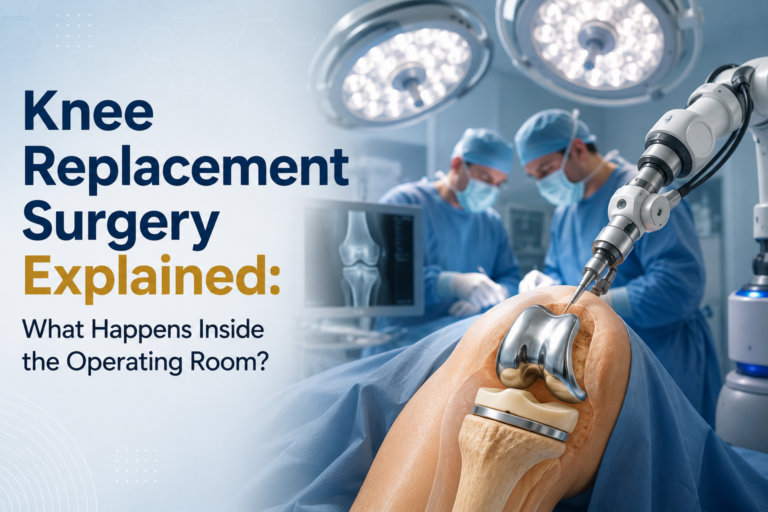
Knee replacement is major surgery removing damaged cartilage and bone, then implanting prosthetic components made of metal and plastic. The surgeon creates a 4-6 inch incision and precisely aligns new joint surfaces. Modern robotic guidance enhances accuracy. Hospital stay is 1-2 nights; full recovery takes 6-12 months. Replacement provides durable pain relief and restores function for 15-20+ years.
Supporting points:
- Addresses severe arthritis comprehensively
- Consistent outcomes across patient populations
- Implants designed for long-term durability
How Are Knee Arthroscopy and Knee Replacement Different?
Arthroscopy uses cameras and small instruments through tiny incisions. Replacement removes damaged bone and implants prosthetic components through larger incisions. Arthroscopy recovery is days; replacement recovery is months. Arthroscopy suits specific problems; replacement suits widespread joint destruction. Arthroscopy outcomes vary; replacement outcomes are consistent.
The fundamental difference: arthroscopy is diagnostic and minimally interventional; replacement is definitive surgical reconstruction.
When Is Knee Arthroscopy Recommended?
Knee arthroscopy is recommended for:
- Early-stage osteoarthritis (mild cartilage damage, bone spurs)
- Meniscal tears (torn cartilage cushioning the joint)
- Loose bodies (cartilage fragments in the joint)
- Mechanical symptoms (clicking, locking, catching)
- Synovitis (joint lining inflammation)
- Ligament injuries (ACL, MCL tears)
Arthroscopy is not effective for bone-on-bone arthritis or severe cartilage loss.
When Is Knee Replacement Surgery Recommended?
Knee replacement is recommended for:
- Severe osteoarthritis (Grade 3-4 with bone-on-bone contact on X-ray)
- Chronic pain unrelieved by conservative treatment
- Significant functional limitation (cannot walk, climb stairs, perform daily tasks)
- Advanced cartilage loss (imaging shows extensive damage)
- Failed arthroscopy (previous procedure did not improve symptoms)
- Inflammatory arthritis with progressive joint destruction
Replacement suits patients aged 50+ seeking durable, long-term relief.
Why Is Knee Replacement Usually Preferred for Severe Knee Arthritis?
Arthroscopy cannot regrow cartilage or regenerate bone—it only removes damaged tissue. In severe arthritis, widespread cartilage loss and bone exposure require joint surface replacement. Studies show replacement achieves 85-90% pain relief lasting 15-20 years, compared to 20-30% temporary relief from arthroscopy in severe cases.
Key advantage: Replacement directly addresses the root problem (joint destruction), while arthroscopy addresses only symptoms.
How Does an Orthopedic Surgeon Decide Which Procedure Is Right for You?
Your surgeon evaluates arthritis severity on imaging, pain duration, functional limitations, your age, and medical conditions. They’ll review X-rays or MRI showing cartilage thickness and joint space narrowing. They’ll examine range of motion, stability, and strength. They’ll ask about activity level and expectations.
This assessment guides the recommendation: mild-moderate arthritis with mechanical problems often suggests arthroscopy; severe arthritis with chronic pain points toward replacement.
Why Do Patients Consult Dr. Abhinandan Punit for Knee Arthritis Treatment?
Dr. Abhinandan Punit brings 15+ years of clinical orthopedic experience and expertise in both arthroscopic and replacement procedures. He holds European Board Certification in Orthopaedic Surgery plus advanced degrees: MS Orthopaedics, DNB Orthopaedics, MCh Orthopaedics from University of Edinburgh—training emphasizing evidence-based procedure selection.
As Senior Consultant & Clinical Lead – Joint Replacement at Narayana Health City and Elite Orthocare, Dr. Punit oversees comprehensive knee programs. He’s certified in robotic system and performs 700+ joint replacements annually, providing extensive experience with diverse arthritis presentations. His approach prioritizes selecting the truly appropriate procedure—not defaulting to minimally invasive options regardless of pathology.
When Should You See an Orthopedic Surgeon?
Schedule evaluation if you have:
- Persistent knee pain for 6+ weeks despite rest and medication
- Pain limiting walking distance or stair climbing
- Swelling, stiffness, or reduced range of motion
- Clicking, popping, or locking sensations
- Knee instability or “giving way” feeling
- Pain disrupting sleep or affecting quality of life
Early evaluation clarifies whether conservative treatment might help or whether surgery offers better outcomes.
Questions to Ask Before Choosing Surgery
- What grade of arthritis is shown on my imaging? (Helps you understand severity.)
- Why do you recommend this specific procedure for my condition? (Ensures recommendation matches your pathology.)
- What are your complication rates and patient satisfaction scores? (Indicates surgeon experience and outcomes.)
- How many of these procedures have you performed? (Higher volume correlates with better outcomes.)
- What is the expected pain relief and recovery timeline? (Sets realistic expectations for your specific case.)
Comparison Table: Knee Replacement Surgery vs Knee Arthroscopy
| Feature | Knee Arthroscopy | Knee Replacement Surgery |
Purpose |
Remove loose cartilage; repair specific tears; clean inflammation |
Remove damaged joint surfaces; replace with implants |
Ideal Candidate |
Early-moderate arthritis; specific mechanical problems |
Severe arthritis; chronic pain; functional limitation |
Severity of Arthritis |
Grade 1-2 mild-moderate cartilage damage |
Grade 3-4 severe cartilage loss; bone-on-bone contact |
Procedure |
Minimally invasive; small incisions; camera-guided |
Major surgery; 4-6 inch incision; implant placement |
Hospital Stay |
Same-day or next-day discharge |
1-2 nights in hospital |
Recovery |
2-4 weeks return to normal activities |
3-6 weeks light activities; 6-12 months full recovery |
Pain Relief |
20-30% in severe arthritis; 60-80% in early arthritis |
85-90% significant relief |
Long-Term Results |
Variable; may need repeat procedure; eventual replacement possible |
Consistent; implants last 15-20+ years |
Book a Consultation
If you’re experiencing persistent knee pain or severe arthritis, schedule an evaluation with Dr. Abhinandan Punit. He’ll assess your condition, review imaging, and recommend the most appropriate treatment—whether arthroscopy, replacement, or conservative care. At Elite Orthocare or Narayana Health City in Bangalore, Dr. Punit combines 15+ years of experience with evidence-based decision-making.
Frequently Asked Questions
Q1: Is knee arthroscopy effective for severe arthritis?
Knee arthroscopy provides limited benefit for severe arthritis. It removes loose cartilage fragments and reduces mechanical symptoms temporarily, but cannot reverse extensive cartilage loss or bone damage. Studies show patients with Grade 3-4 severe arthritis achieve only 20-30% pain improvement from arthroscopy compared to 85-90% from replacement. Effectiveness decreases as arthritis severity increases.
Q2: Can knee arthroscopy delay knee replacement?
Arthroscopy might delay replacement for 1-2 years in early-to-moderate arthritis, but evidence doesn’t support this strategy in severe cases. Some research suggests performing arthroscopy in severe arthritis followed later by replacement may complicate replacement surgery due to prior scarring. If imaging and clinical findings indicate replacement, proceeding directly often yields better outcomes than sequential procedures.
Q3: Which procedure provides better long-term pain relief?
Knee replacement provides superior long-term pain relief. Approximately 90% of patients report significant pain reduction lasting 15-20+ years. Arthroscopy effectiveness varies by condition treated and typically provides temporary relief in severe arthritis. If your goal is sustained pain relief beyond 2-3 years, replacement offers more predictable and durable results. Arthroscopy excels for specific mechanical problems in early arthritis.
Q4: Who is a good candidate for knee replacement surgery?
Good candidates have severe osteoarthritis confirmed on imaging, chronic pain unrelieved by conservative treatment (physical therapy, medications, injections), and significant functional limitation affecting daily activities. Age alone doesn’t exclude candidacy—healthy patients aged 50+ are suitable because modern implants last 15-20+ years. Candidates should tolerate surgery and commit to post-operative rehabilitation.
Q5: Can robotic knee replacement improve outcomes?
Robotic-assisted knee replacement enhances precision in implant positioning and alignment, potentially improving long-term implant durability and outcomes. Patients report equivalent or slightly improved pain relief and faster functional recovery with robotic surgery compared to manual techniques. However, the surgeon’s skill and patient adherence to rehabilitation matter equally to technology benefits.
Q6: When should I consult Dr. Abhinandan Punit?
Consult Dr. Punit if you have persistent knee pain, imaging shows significant arthritis, or conservative treatment has failed. Early consultation provides clarity about whether your condition suits arthroscopy, replacement, or continued conservative management. Dr. Punit practices at Elite Orthocare (Kanakapura Road) and Narayana Health City in Bangalore, emphasizing evidence-based procedure selection and comprehensive patient education.