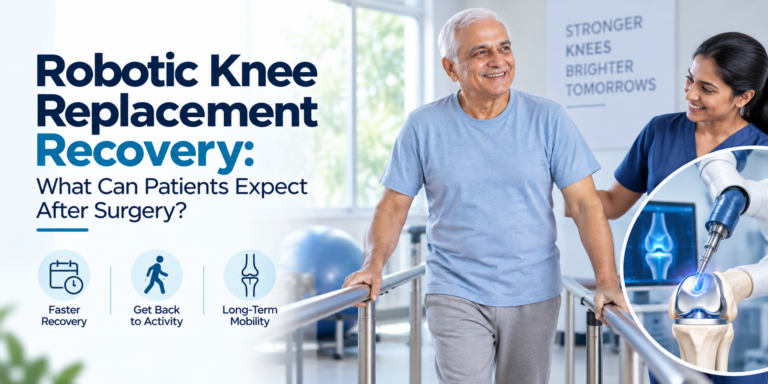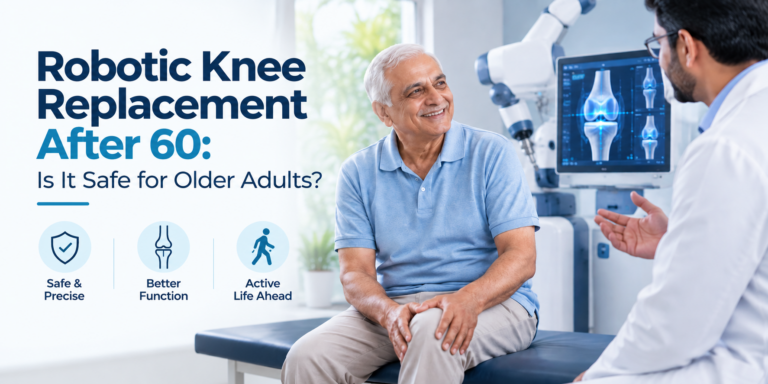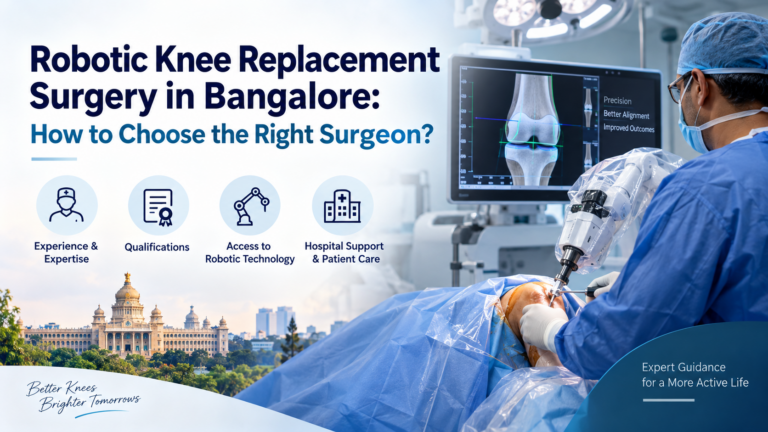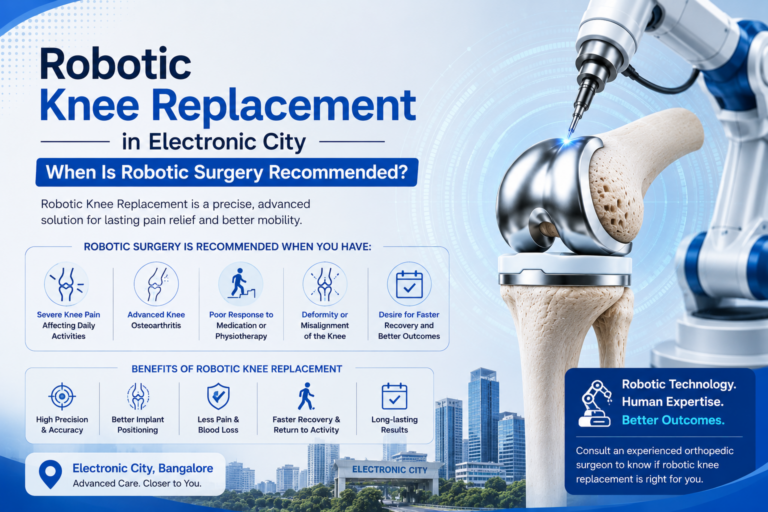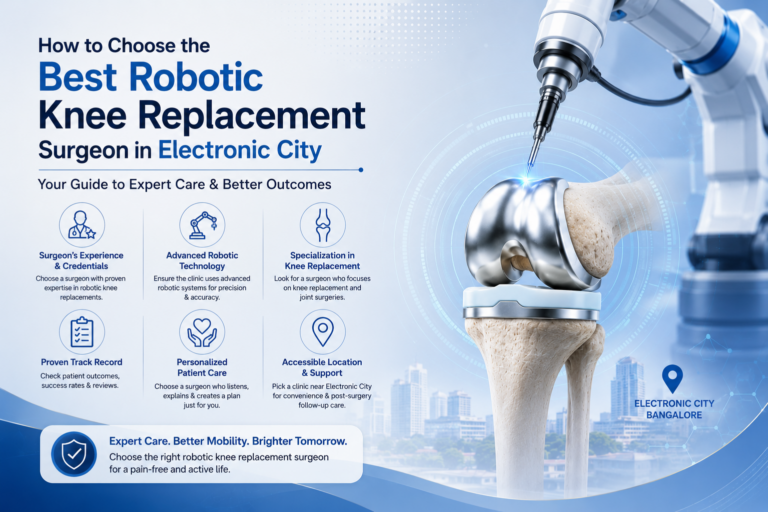

A good robotic knee replacement candidate has advanced knee arthritis causing functional limitations, positive imaging findings, reasonable overall health, and realistic expectations about recovery. Suitability depends on symptom severity, bone quality, age (ideally 45-75), activity level, and orthopedic evaluation. Dr. Abhinandan Punit evaluates each patient individually to determine if robotic-assisted surgery fits their needs.
Introduction
Severe knee arthritis affects millions of people, but not everyone needs surgery, and not every patient benefits from robotic-assisted procedures. The decision to pursue robotic knee replacement surgery is deeply personal and should be based on clear medical criteria, not just pain or discomfort. This guide helps you understand whether you might be a suitable candidate and what signs warrant a professional orthopedic evaluation. Understanding these criteria empowers you to have informed conversations with your surgeon.
What Is Robotic Knee Replacement Surgery?
Robotic knee replacement surgery is a computer-guided surgical technique where an orthopedic surgeon uses robotic systems to assist with precise implant positioning. The surgeon maintains complete control while robotic technology provides real-time guidance based on your individual knee anatomy, resulting in highly accurate component alignment compared to manual techniques.
Robotic knee replacement combines preoperative imaging with intraoperative precision. CT scans create a detailed 3D map of your knee joint, and the surgeon develops a personalized surgical plan. During the procedure, the robotic arm guides bone cutting and implant placement to exact specifications. This precision distinguishes robotic surgery from traditional approaches where alignment depends primarily on surgeon experience and manual judgment.
The procedure typically takes 60-90 minutes and uses minimally invasive techniques to access your knee joint. Most patients experience shorter hospital stays and faster functional recovery compared to traditional methods.
Who Is a Good Candidate for Robotic Knee Replacement Surgery?
Good candidates for robotic knee replacement have advanced degenerative joint disease limiting daily function, positive diagnostic imaging, medical clearance for surgery, and realistic expectations. Ideal candidates are 45-75 years old with specific knee pathology suitable for robotic guidance, though younger and older patients may qualify depending on individual circumstances.
Key Characteristics of Good Candidates:
Medical Factors:
- Advanced knee arthritis (Grade 3-4 osteoarthritis on imaging)
- Pain limiting daily activities despite conservative treatment
- Positive imaging findings (X-rays, MRI, or CT showing structural damage)
- Reasonable bone quality adequate for implant fixation
- No active knee infections or inflammatory joint diseases
Lifestyle Factors:
- Desire to return to an active lifestyle
- Willingness to commit to post-operative rehabilitation
- Realistic expectations about outcomes and recovery timeline
- Ability to attend physical therapy sessions regularly
Age and Activity Level:
- Typically 45-75 years old (though not absolute)
- Active individuals wanting to maintain fitness
- Patients with physically demanding occupations
- Those planning 30+ years of implant lifespan
Specific Candidates Who Benefit Most:
- Younger, active patients wanting optimal long-term outcomes
- Patients with previous knee surgery or unusual anatomy
- Those with complex alignment issues requiring precision
- Active individuals in sports or demanding professions
- Patients seeking to avoid future revision surgery
What Signs Should You Not Ignore?
Persistent knee pain lasting over 6-8 weeks, swelling unresponsive to rest and medication, difficulty climbing stairs or walking long distances, and feelings of instability warrant orthopedic evaluation. These signs indicate potential need for professional assessment and possible knee replacement surgery.
Six Signs Indicating You Should Seek Evaluation:
- Chronic pain unresponsive to medication – Pain that persists despite NSAIDs, rest, or injections for more than 6-8 weeks suggests progressive joint damage requiring professional assessment.
- Significant swelling that limits movement – Persistent swelling causing stiffness and reduced range of motion indicates advanced degenerative changes.
- Difficulty with basic activities – Struggling with stairs, getting in/out of vehicles, or walking without pain significantly impacts quality of life.
- Knee giving way or instability – Feeling like your knee might buckle or give way during normal activities suggests structural damage.
- Morning stiffness lasting over 30 minutes – Severe morning stiffness that takes longer than 30 minutes to resolve indicates progressive arthritis.
- Failed conservative treatment – After 6-8 weeks of physical therapy, rest, or injections without improvement, surgical evaluation becomes appropriate.
Who May Not Be a Suitable Candidate?
Patients with active infections, severe medical comorbidities making surgery risky, severe bone loss, inflammatory arthropathies, or low functional demands may not be suitable for robotic knee replacement. Poor candidates include those unable to comply with rehabilitation, unrealistic outcome expectations, or medical contraindications to anesthesia and surgery.
Relative Contraindications:
Medical Factors:
- Active knee or systemic infection
- Severe cardiovascular disease or uncontrolled diabetes
- Bleeding disorders or medications preventing safe surgery
- Severe cognitive impairment affecting rehabilitation compliance
- Inadequate bone stock due to severe damage or bone loss
- Active inflammatory joint diseases (like rheumatoid arthritis) not controlled medically
Lifestyle Factors:
- Inability or unwillingness to participate in rehabilitation
- Unrealistic expectations (expecting instant pain relief or full activity within weeks)
- Active substance abuse issues
- Non-compliance with medical recommendations
Age Considerations:
- Very elderly patients (80+) with multiple comorbidities
- Young patients (under 45) with minimal symptoms (surgery may be premature)
- Patients unlikely to survive 15+ years to benefit from modern implants
Anatomical Factors:
- Severe bone loss from infection or previous surgery
- Massive ligament insufficiency
- Ankylosis (severe joint stiffness)
- Untreated inflammatory conditions affecting bones
How Does an Orthopedic Surgeon Decide If You Need Robotic Knee Replacement?
Orthopedic surgeons evaluate candidates through clinical examination, imaging studies (X-rays, MRI, CT), functional assessment, medical history review, and discussion of expectations. They determine if robotic knee replacement surgery is appropriate by assessing pain severity, imaging findings, activity level, medical fitness, and likelihood of surgical success in your specific case.
Five-Step Evaluation Process:
- Clinical History and Symptom Assessment – The surgeon asks about pain onset, duration, severity, activities causing pain, previous treatments tried, and how arthritis affects daily life. This conversation reveals functional limitations and realistic expectations.
- Physical Examination – The surgeon performs systematic testing including range of motion, stability tests (evaluating ligaments), gait assessment, and palpation identifying specific pain locations. This determines if symptoms match imaging findings and suggests structural pathology.
- Imaging Studies – X-rays show bone alignment and arthritis severity; MRI reveals cartilage and soft tissue damage; CT scans (for robotic planning) create precise 3D anatomy maps. Imaging confirms clinical suspicion and guides surgical decision-making.
- Medical Fitness Assessment – The surgeon reviews your overall health, previous surgeries, current medications, and comorbidities. Blood work may be ordered to ensure you’re medically suitable for anesthesia and surgery.
- Expectations and Goals Discussion – The surgeon clarifies realistic outcomes, explains the recovery timeline (typically 3-6 months for full return to function), discusses risks, and confirms your understanding of commitment required for rehabilitation.
What Are the Benefits of Choosing the Right Time for Surgery?
Surgery at the optimal time prevents further joint degeneration, avoids unnecessary prolonged disability, maximizes implant lifespan, and allows better recovery when you’re physically and mentally prepared. Delaying appropriate surgery risks complications from severe arthritis, while premature surgery may not be necessary.
Benefits of Timely Surgical Decision:
- Prevents cascade damage – Progressive arthritis damages surrounding bone, cartilage, and ligaments; appropriate timing halts this progression
- Preserves bone quality – Better bone stock allows more secure implant fixation and superior long-term outcomes
- Optimizes recovery – Patients in better functional status before surgery recover more completely
- Maximizes implant lifespan – Modern implants designed for 15-20 years; optimal timing ensures you benefit fully
- Improves quality of life – Appropriate surgery timing eliminates years of avoidable pain and disability
- Reduces revision risk – Well-timed surgery on appropriate candidates has lower failure rates
Why Do Patients Consult Dr. Abhinandan Punit in Bangalore?
Patients consult Dr. Abhinandan Punit for comprehensive robotic knee replacement evaluation because of his extensive experience, advanced training, and personalized approach to determining surgical candidacy. His 15+ years managing complex knee cases and certification in MAKO, CORI, and Cuvis robotic systems provides specialized expertise for appropriate candidate selection.
Dr. Abhinandan Punit, an European Board Certified Orthopedic Surgeon with 15+ years of clinical experience, brings unique qualifications to candidate evaluation. His credentials include MS and DNB in Orthopaedics, MCh from the University of Edinburgh (UK), and MSc in Sports & Exercise Medicine, along with advanced international fellowships in UK, Europe, and Australia.
Why Patients Choose Dr. Abhinandan Punit:
- Honest assessments – He clearly explains whether robotic surgery fits your situation or if conservative treatment remains appropriate
- Experience-based decisions – With 700+ joint replacement surgeries annually, he recognizes patterns and matches technology to patient needs
- Multiple robotic system expertise – Certified in MAKO, CORI, and Cuvis systems, providing options and optimal technique selection
- Comprehensive evaluation – His clinical lead position at Narayana Health City and senior consultant role at Elite Orthocare means access to complete diagnostic capabilities
- Patient-centered approach – He prioritizes realistic expectations and informed decision-making over surgery volume
Patients at both Elite Orthocare (Kanakapura Road) and Narayana Health City benefit from his commitment to determining true surgical candidacy.
When Should You Schedule an Orthopedic Consultation?
Schedule an orthopedic consultation when knee pain persists beyond 6-8 weeks despite conservative treatment, when pain limits daily activities significantly, or when you notice progressive difficulty walking and climbing stairs. Early evaluation prevents unnecessary disability and helps determine if robotic knee replacement or other treatments suit your situation.
Clear Indicators to Schedule a Consultation:
- Persistent knee pain unresponsive to rest, ice, and NSAIDs for 6+ weeks
- Swelling, stiffness, or reduced range of motion affecting daily function
- Difficulty performing activities you value (work, hobbies, sports, or basic self-care)
- Limping significantly or changing gait patterns to avoid pain
- Feeling of instability or your knee giving way
- Previous imaging (X-ray, MRI) showing arthritis or structural damage
- Desire to understand whether knee arthritis treatment options include robotic surgery
An orthopedic evaluation clarifies your diagnosis, explains treatment options, and helps you make informed decisions about whether surgical intervention is appropriate for your specific situation.
Book an Orthopedic Consultation
If you’re experiencing persistent knee pain, advanced arthritis, or functional limitations affecting your quality of life, schedule a consultation with Dr. Abhinandan Punit to determine whether robotic knee replacement surgery is appropriate for you. At Elite Orthocare (Kanakapura Road) or Narayana Health City, Bangalore, he provides thorough evaluation and personalized recommendations to guide your treatment decisions.
FAQ Section
1. Who is a good candidate for robotic knee replacement surgery?
Ideal candidates have advanced knee arthritis causing functional limitations, positive imaging findings, reasonable overall health, and realistic expectations. Typically 45-75 years old and motivated to return to active living, good candidates commit to post-operative rehabilitation. Factors like previous knee surgery, complex anatomy, or high activity demands make robotic surgery particularly beneficial. Your orthopedic surgeon determines individual candidacy through comprehensive evaluation of your symptoms, imaging, health status, and goals.
2. How do I know if I need robotic knee replacement?
You may need robotic knee replacement if severe knee pain persists despite conservative treatment (rest, physical therapy, injections) for 6-8 weeks, if pain limits important daily activities, if imaging shows advanced arthritis, and if you’re experiencing functional decline affecting quality of life. Difficulty walking, climbing stairs, or activities you value suggests professional evaluation is warranted. An orthopedic surgeon determines if robotic surgery is appropriate versus other treatment options.
3. Can younger patients undergo robotic knee replacement?
Yes, younger patients (40s-50s) can undergo robotic knee replacement if they have severe arthritis with significant functional impairment and positive imaging findings. Younger patients often benefit most from robotic precision because they’ll live with implants 30+ years. However, younger patients require strong justification for surgery because bone remodeling and activity level affect long-term implant survival. Your surgeon evaluates whether your age and activity level make robotic surgery appropriate now versus waiting.
4. Is robotic knee replacement suitable for elderly patients?
Robotic knee replacement can benefit elderly patients (75-80+) with advanced arthritis and good health status, though advanced age alone isn’t a contraindication. Elderly patients require careful medical evaluation to ensure fitness for anesthesia and surgery. Robotic precision’s benefits (fewer complications, faster recovery) can be particularly valuable for older patients wanting to maintain independence. Your surgeon assesses overall health, medications, and comorbidities to determine suitability regardless of age.
5. Can robotic knee replacement help severe knee arthritis?
Robotic knee replacement specifically benefits severe knee arthritis because precision implant positioning improves biomechanics and reduces abnormal wear patterns. Robotic guidance helps manage complex anatomies and previous surgical changes common in severe cases. Success depends on adequate bone quality, no active infection, and realistic expectations. Severely arthritic knees often represent ideal robotic surgery candidates because precision technology addresses the anatomical complexity these cases present.
6. When should I consult Dr. Abhinandan Punit?
Consult Dr. Abhinandan Punit when persistent knee pain limits daily activities, when conservative treatment hasn’t worked after 6-8 weeks, or when you want expert evaluation of whether robotic knee replacement suits your specific condition. His expertise at Elite Orthocare (Kanakapura Road) and Narayana Health City provides comprehensive assessment including advanced imaging and honest guidance about whether robotic surgery, other treatments, or conservative management best fits your situation.