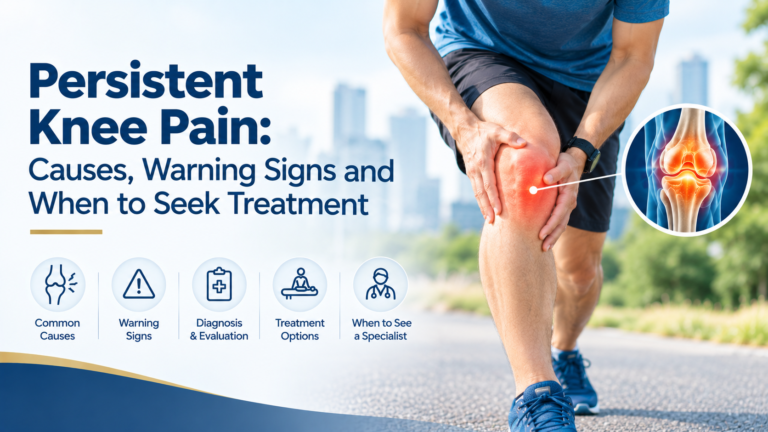

Knee pain that keeps getting worse may be caused by osteoarthritis, an untreated injury, inflammation or repeated strain on the joint. If pain starts limiting walking, climbing stairs or sleeping, it is worth seeking medical evaluation. Identifying the cause early helps determine the right treatment and whether non-surgical care may be appropriate.
Dr. Abhinandan Punit is an orthopedic and joint replacement surgeon in Bangalore with 15+ years of experience and 6,000+ orthopedic surgeries. Patients can consult him at Elite Orthocare on Kanakapura Road or Narayana Clinic in Electronic City.
Why Does Knee Pain Get Worse Over Time?
Knee pain can gradually worsen when the underlying condition continues to affect the joint. Osteoarthritis, previous injuries, tendon problems and repetitive strain can all contribute to persistent symptoms. The cause cannot be confirmed from pain alone; a clinical examination helps determine what may be happening.
For some people, symptoms develop gradually. Others notice worsening pain after exercise, a fall or a sudden twisting movement. Understanding when the pain started and what makes it worse can help guide treatment.
What Are the Common Reasons for Worsening Knee Pain?
1. Osteoarthritis Is Progressing
Osteoarthritis develops when the protective cartilage in a joint gradually breaks down. It may cause pain during walking, stiffness after rest and difficulty using stairs. Symptoms can become more limiting over time, although the progression varies between individuals.
2. An Old Knee Injury Is Causing Problems
Previous ligament or meniscus injuries can continue to cause symptoms, even after the initial injury has settled. Some injuries may also contribute to joint instability or later arthritis. Repeated pain, swelling or a feeling that the knee is unreliable deserves assessment.
3. Repeated Activities Are Irritating the Knee
Long periods of standing, sudden increases in exercise or repeated bending may aggravate certain knee conditions. This does not necessarily mean the joint is permanently damaged. Adjusting aggravating activities and getting appropriate advice can help identify a manageable activity level.
4. The Cause of Pain Has Not Been Identified
Not all knee pain comes from arthritis. Tendon irritation, bursitis, meniscus problems and other conditions can produce similar symptoms. Continuing the same treatment without understanding the cause may delay appropriate care, particularly when the pain is persistent or worsening.
When Should You Seek Treatment for Worsening Knee Pain?
Consider booking an orthopedic evaluation if:
- Knee pain continues for several weeks or repeatedly returns.
- You need to stop frequently while walking because of discomfort.
- Pain or swelling is interfering with work, sleep or daily activities.
- You experience repeated episodes of locking or instability.
- Your symptoms are not improving with appropriate initial care.
Seek urgent medical assessment if you cannot bear weight, develop severe pain or sudden swelling after an injury, or have a hot, red knee accompanied by fever or feeling unwell. These symptoms may require prompt investigation.
Can Worsening Knee Pain Be Treated Without Surgery?
Yes, many causes of knee pain can initially be managed without surgery. Treatment depends on the diagnosis, severity of symptoms and overall health.
Options may include:
- Physiotherapy: Exercises selected to improve strength, flexibility and joint function.
- Activity modification: Temporarily adjusting movements that aggravate pain while maintaining appropriate activity.
- Medication: Suitable pain relief based on medical history and professional advice.
- Weight management: Where appropriate, reducing excess weight may help decrease the load on the knee.
- Further treatment: Injections or other interventions may be considered for selected conditions after assessment.
If symptoms continue to worsen despite appropriate treatment, a specialist can reassess the diagnosis and discuss the next steps.
Does Worsening Knee Pain Mean You Need Knee Replacement?
No. Increasing pain does not automatically mean knee replacement is necessary. The decision depends on the underlying condition, joint damage, mobility, the effect on daily life and the response to non-surgical treatment.
Knee replacement may be considered when advanced arthritis causes substantial pain and functional limitations despite appropriate treatment. An X-ray is useful, but it should be considered alongside the patient’s symptoms and clinical examination.
What Happens During a Knee Pain Evaluation?
An orthopedic specialist will usually ask when the pain began, which activities aggravate it, whether there was an injury and what treatments you have tried. The knee may be examined for swelling, movement, alignment and stability.
X-rays or other investigations may be recommended when appropriate. This helps distinguish conditions that may respond to conservative treatment from those requiring more specialized care.
Where Can Patients in Electronic City Seek Knee Pain Treatment?
Patients experiencing persistent or worsening knee pain can seek an orthopedic assessment to understand the cause and available treatment options.
Dr. Abhinandan Punit provides orthopedic and joint replacement consultations at Narayana Clinic, Electronic City, and Elite Orthocare, Kanakapura Road, Bangalore. The consultation can help patients understand their diagnosis, discuss suitable treatments and determine whether further investigation is needed.
Conclusion
Worsening knee pain should not be ignored, especially when it starts affecting walking, sleep or everyday activities. The right treatment depends on identifying the underlying cause, which may include arthritis, an old injury or repeated strain. If you experience persistent knee pain in Electronic City or near Kanakapura Road, Bangalore, consult an orthopedic specialist to understand your condition and explore suitable treatment options. Dr. Abhinandan Punit provides orthopedic consultations to help patients make informed decisions about their knee health and recovery.
Frequently Asked Questions
Why does my knee pain keep getting worse?
Worsening knee pain may be related to osteoarthritis, an old injury, repeated strain or another joint condition. The cause depends on your symptoms and medical history. If the pain persists, returns frequently or limits everyday activities, arrange an evaluation rather than assuming it is simply due to age.
Can knee pain get worse even without an injury?
Yes. Conditions such as osteoarthritis can develop gradually without a specific injury. Repetitive activity and certain inflammatory conditions can also cause worsening symptoms. Persistent pain or swelling should be assessed to identify the cause and determine whether treatment or further investigation is needed.
Should I keep walking if my knee hurts?
This depends on the cause and severity of the pain. Avoid activities that significantly aggravate symptoms, but do not assume complete inactivity is always necessary. Gentle movement may be appropriate for some conditions. Stop and seek medical advice if pain is severe, swelling increases or you cannot bear weight.
When should I see a knee specialist in Electronic City?
Consider an orthopedic consultation if knee pain persists for several weeks, repeatedly returns or affects walking and daily activities. Seek urgent care for severe pain, sudden swelling after an injury, inability to bear weight or a hot, red knee with fever.
Does worsening knee pain always mean arthritis?
No. Arthritis is one possible cause, but knee pain can also result from tendon problems, meniscus injuries, ligament damage or inflammation. A specialist can review your symptoms, examine the joint and recommend investigations if needed. Treatment should address the actual cause rather than pain alone.