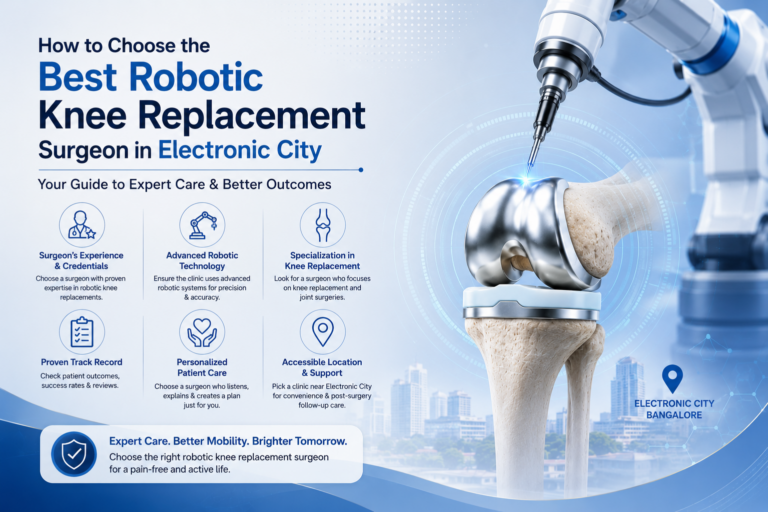

Advanced robotic knee replacement surgery uses image-guided technology to perform precise joint replacement with minimal tissue damage. Patients choose experienced robotic surgeons because they combine superior accuracy with faster recovery and better long-term outcomes. Dr. Abhinandan Punit, certified in MAKO, CORI, and Cuvis systems with 700+ annual procedures, offers this advanced technology in Bangalore
Introduction
Knee arthritis affects millions worldwide, and when conservative treatments fail, joint replacement becomes necessary. Traditional knee replacement surgery has helped countless patients, but robotic technology now offers significant advantages: superior accuracy, smaller incisions, less tissue trauma, and faster recovery. However, robotic surgery outcomes depend heavily on surgeon expertise and technology selection. Understanding how robotic systems work and what to look for in a surgeon helps patients make informed decisions about their orthopedic care in Bangalore.
What Is Advanced Robotic Knee Replacement Surgery?
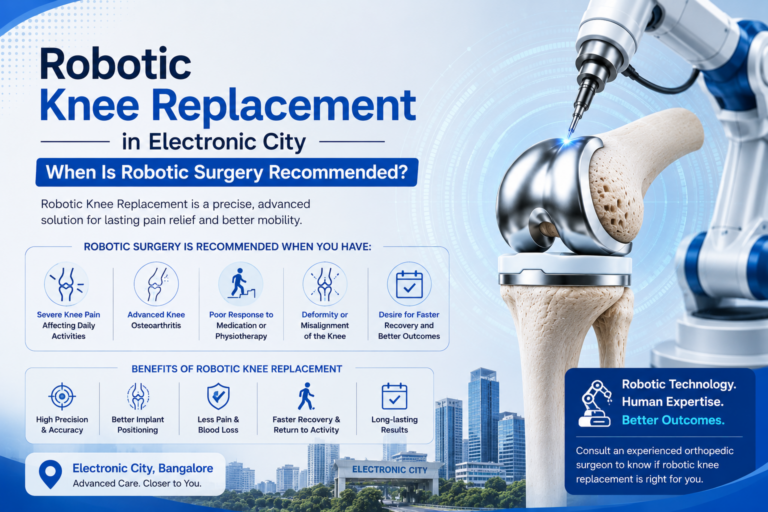
Advanced robotic knee replacement surgery combines surgeon expertise with image-guided robotic assistance to perform precise joint replacement. During the procedure, 3D imaging maps your knee anatomy, and the robotic system helps position and align implants with millimeter precision. The surgeon maintains complete control while the system prevents deviation from the planned surgical path. This technology enables smaller incisions, reduced bone cutting, and implant positioning tailored to your unique knee anatomy—factors that directly impact long-term implant survival and patient satisfaction.
Definition: Robotic-assisted knee replacement is a computer-aided surgical technique where surgeons use real-time imaging and robotic guidance to perform total or partial knee arthroplasty with enhanced precision compared to traditional freehand surgical methods.
Who Can Benefit from Robotic Knee Replacement?
Robotic knee replacement benefits patients with various knee conditions:
- Advanced osteoarthritis: Severe wear-and-tear affecting one or multiple knee compartments
- Rheumatoid arthritis: Inflammatory arthritis causing progressive joint destruction
- Post-traumatic arthritis: Arthritis developing after previous knee injuries or fractures
- Partial knee arthritis: Compartmentalized arthritis affecting only one knee section (unicompartmental knee replacement)
- Failed previous surgery: Revision cases requiring precise implant alignment
- Young, active patients: Individuals who need long-term implant durability and optimal alignment for activities
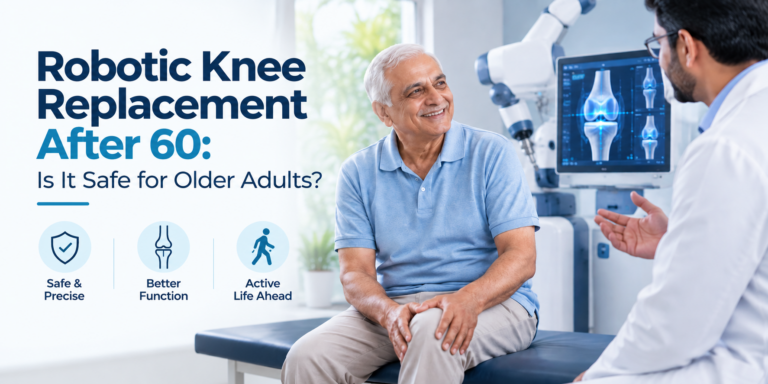
Dr. Abhinandan Punit evaluates each patient individually to determine if robotic-assisted surgery offers advantages for their specific situation. Not every patient requires robotic technology, and appropriate patient selection ensures optimal outcomes.
How Does Robotic Technology Improve Knee Replacement Surgery?
Robotic systems improve knee replacement surgery through several mechanisms:
- Precision imaging: 3D CT or X-ray imaging creates detailed knee anatomy maps before surgery, enabling custom surgical planning
- Real-time navigation: During surgery, the system continuously tracks instruments and implants, providing feedback to maintain alignment
- Bone conservation: Computer-assisted positioning minimizes unnecessary bone removal, preserving maximum bone stock
- Soft tissue protection: Smaller incisions and reduced tissue trauma decrease inflammation and accelerate recovery
- Consistency: Robotic systems deliver consistent implant positioning, reducing variability inherent in freehand surgery
- Data documentation: Complete surgical data documentation enables precise outcome measurement and comparison with long-term results
These advantages translate to better implant alignment, improved range of motion, reduced pain, and potentially longer implant lifespan—critical factors for younger, active patients.
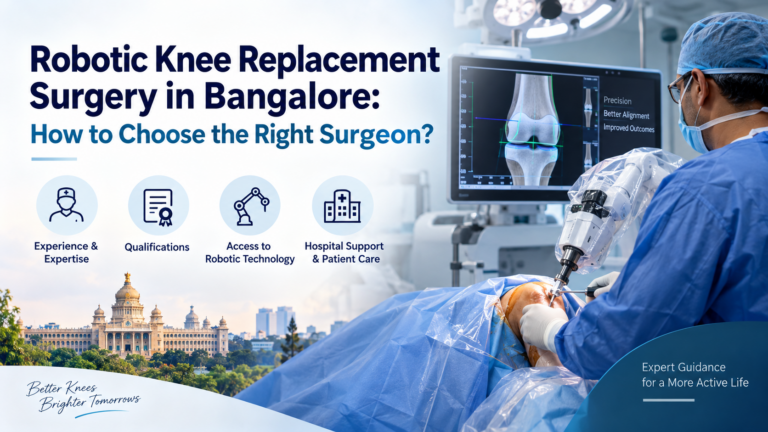
What Should Patients Look for in a Robotic Knee Replacement Surgeon?
When choosing a robotic knee replacement surgeon, consider these factors:
- Formal training and certification: Verify certification in specific robotic systems (MAKO, CORI, Cuvis, etc.)
- High surgical volume: Surgeons performing 500+ robotic procedures annually develop refined technique and exceptional outcomes
- Peer-reviewed publications: Evidence of contributions to orthopedic literature demonstrates commitment to advancing the field
- Institutional credentials: Academic appointments and leadership roles indicate recognition by peers
- International training: Fellowship training in orthopedic centers of excellence ensures knowledge of global best practices
- Post-operative rehabilitation protocols: Comprehensive prehabilitation and rehabilitation programs optimize recovery
Surgeon experience matters more than the technology itself—experienced robotic surgeons achieve significantly better outcomes than those with limited robotic experience, even using the same technology.
Why Do Many Patients Choose Dr. Abhinandan Punit?
Dr. Abhinandan Punit combines extensive orthopedic training with specialized expertise in robotic joint replacement. His qualifications include:
Educational Background:
- European Board Certified Orthopaedic Surgeon
- MS Orthopaedics and DNB Orthopaedics (India)
- MCh Orthopaedics from University of Edinburgh (UK)
- MSc in Sports & Exercise Medicine
- International fellowships in UK, Europe, and Australia
Surgical Expertise:
- Certified in MAKO, CORI, and Cuvis robotic systems
- Performs 700+ joint replacement surgeries annually
- Senior Consultant & Clinical Lead for Joint Replacement at Narayana Health City
- Combines robotic precision with personalized patient management
Clinical Practice: Dr. Abhinandan Punit practices at Elite Orthocare (Kanakapura Road) and Narayana Health City, providing patients with access to advanced robotic technology within Bangalore. His approach prioritizes patient education, comprehensive pre-operative evaluation, and structured post-operative rehabilitation—ensuring patients understand their surgery and actively participate in recovery.
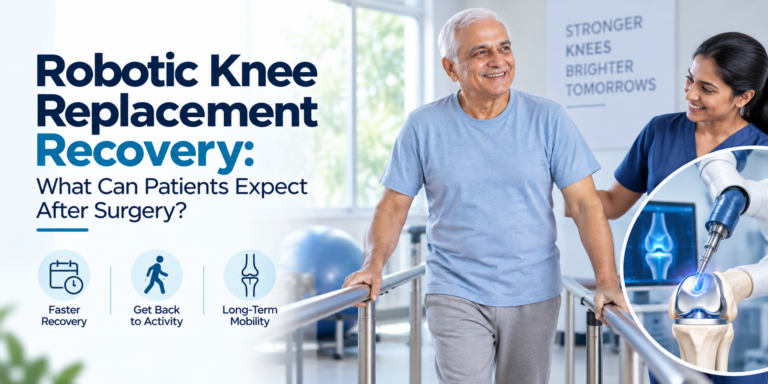
What Can You Expect During Recovery?
Recovery from robotic knee replacement differs slightly from traditional knee replacement:
- Immediate post-operative period (days 1-7): Pain management, swelling control, and gentle range-of-motion exercises begin immediately
- Early rehabilitation (weeks 1-6): Physical therapy focuses on restoring knee flexion and extension while managing swelling
- Progressive strengthening (weeks 6-12): Weight-bearing exercises, muscle strengthening, and balance training intensify
- Gradual activity progression (3-6 months): Return to walking, swimming, cycling, and low-impact activities
- Full functional recovery (6-12 months): Most patients achieve maximum improvement, including return to recreational activities and sports
Smaller surgical incisions from robotic procedures often translate to reduced inflammation, less pain, faster swelling resolution, and quicker rehabilitation progress compared to traditional approaches. Individual recovery varies based on pre-operative fitness, age, and post-operative rehabilitation compliance.
Robotic Knee Replacement vs Traditional Knee Replacement
| Feature | Robotic Surgery | Traditional Surgery |
|---|---|---|
| Accuracy | Millimeter-level precision with real-time feedback | Depends on surgeon’s manual technique |
| Incision Size | Smaller incisions (often 2-4 inches) | Larger incisions (typically 8-10 inches) |
| Tissue Damage | Minimal soft tissue trauma | More muscle and tissue disruption |
| Recovery Time | Faster initial recovery (2-6 weeks) | Longer initial recovery (4-8 weeks) |
| Implant Alignment | Highly consistent positioning within 1-2mm | Variable, depending on surgeon experience |
| Pain Levels | Often lower post-operative pain | Generally higher initial pain |
| Cost | Higher initial cost | Lower initial cost |
| Long-term Outcomes | Superior alignment may improve longevity | Good outcomes, implant lifespan depends on alignment |
When Should You Consult an Orthopedic Surgeon?
Consult Dr. Abhinandan Punit if you experience:
- Persistent knee pain: Pain lasting several months despite conservative treatment
- Functional limitations: Difficulty walking, climbing stairs, or performing daily activities
- Imaging confirmation: X-rays or MRI showing significant cartilage loss or joint damage
- Failed conservative care: No improvement from physical therapy, injections, or medications
- Desire for active lifestyle: Want to return to sports or recreational activities after recovery
- Pre-operative evaluation: Ready to learn if robotic knee replacement is appropriate for your condition
Early consultation allows thorough evaluation of your specific situation and realistic discussion of surgical and non-surgical options before deciding on treatment.
Book a Consultation
If persistent knee pain or advanced arthritis is limiting your quality of life, professional evaluation is the first step toward relief. Dr. Abhinandan Punit offers comprehensive knee assessment at Elite Orthocare (Kanakapura Road) and Narayana Health City, Bangalore. Schedule your evaluation to discuss whether robotic knee replacement or another treatment approach is appropriate for your specific condition and goals.
FAQ Section
1. Is robotic knee replacement better than traditional surgery?
Robotic knee replacement offers significant advantages including superior implant alignment, smaller incisions, reduced tissue damage, and faster recovery. However, “better” depends on individual patient factors. For appropriate candidates, robotic surgery typically provides better outcomes, particularly regarding implant positioning and long-term survival. Dr. Abhinandan Punit evaluates each patient to determine if robotic technology offers meaningful advantages for their specific condition and goals.
2. How long does robotic knee replacement last?
Most modern knee replacements last 15-20+ years, with proper care and activity management. Robotic surgery’s superior alignment may extend implant longevity by improving force distribution and reducing excessive wear. Younger patients may outlive their implant, requiring revision surgery. Following post-operative rehabilitation and activity guidelines significantly impacts implant durability and long-term outcomes.
3. Who is eligible for robotic knee replacement?
Most patients with advanced osteoarthritis, rheumatoid arthritis, or post-traumatic arthritis are candidates for robotic knee replacement. Exceptions include severe bone loss requiring reconstruction, certain anatomical variations, or medical conditions making surgery unsafe. Dr. Abhinandan Punit performs comprehensive evaluation including imaging and medical history to determine surgical eligibility and optimal approach for individual patients.
4. Is robotic knee replacement painful?
Robotic knee replacement typically causes less post-operative pain than traditional surgery due to smaller incisions and reduced soft tissue trauma. However, some discomfort is normal during early recovery. Proper pain management, ice therapy, elevation, and early mobilization minimize pain and accelerate healing. Most patients transition from stronger to milder pain medications within 2-3 weeks post-surgery.
5. How long is recovery?
Initial recovery (returning to basic daily activities) typically takes 4-6 weeks. Functional recovery (returning to walking, driving, and light activities) takes 2-3 months. Full recovery including maximum strength and range of motion takes 6-12 months. Individual recovery varies based on age, pre-operative fitness, rehabilitation compliance, and overall health. Structured physical therapy significantly accelerates recovery progress.
6. When should I consult Dr. Abhinandan Punit?
Consult Dr. Abhinandan Punit if knee pain significantly affects your daily life despite conservative treatment, imaging shows advanced arthritis, or you desire improved function and relief. Early consultation provides professional evaluation of your condition, realistic expectations about surgery and recovery, and exploration of all available options—ensuring you make fully informed treatment decisions aligned with your goals.