
Knee Replacement Surgery Procedure: Step-by-Step Guide from Diagnosis to Recovery
Knee replacement surgery procedure involves removing damaged knee joint surfaces and replacing them with artificial implants to reduce pain and improve movement. The process includes diagnosis, pre-surgical evaluation, anesthesia, implant placement, rehabilitation, and recovery. Most patients undergo surgery when severe arthritis or joint damage affects daily activities and quality of life.
What Is Knee Replacement Surgery?
Knee replacement surgery is a procedure in which damaged cartilage and bone inside the knee joint are replaced with artificial components made of metal and medical-grade plastic. The goal is to relieve chronic pain, improve joint function, and help patients return to daily activities with better mobility.
For patients with advanced arthritis, severe knee damage, or long-term joint pain that does not improve with medication, physiotherapy, or injections, knee replacement surgery may be an effective treatment option.
According to Dr. Abhinandan Punit, Orthopedic & Robotic Joint Replacement Surgeon, the procedure is recommended only after a thorough evaluation and when conservative treatments are no longer providing adequate relief.
Who May Need Knee Replacement Surgery?
Patients may be candidates for knee replacement surgery if they experience:
- Persistent knee pain despite non-surgical treatment
- Difficulty walking short distances
- Pain while climbing stairs
- Knee stiffness affecting movement
- Sleep disturbance due to knee pain
- Advanced osteoarthritis on X-rays
- Reduced quality of life because of knee problems
These symptoms commonly affect older adults but can also occur in younger individuals with severe joint damage.
How Is Knee Replacement Surgery Diagnosed and Planned?
Before recommending knee replacement surgery, the orthopedic surgeon performs a detailed evaluation. This helps determine whether surgery is necessary and identifies the most suitable treatment approach.
The assessment typically includes:
- Medical history review
- Physical examination
- Knee X-rays
- Advanced imaging when required
- Blood investigations
- Fitness assessment for anesthesia
At clinics such as Elite Orthocare on Kanakapura Road and Narayana Clinic in Electronic City, Bangalore, treatment planning focuses on understanding the patient’s symptoms, activity level, and long-term goals.
What Happens Before Knee Replacement Surgery?
Before surgery, patients undergo a pre-operative preparation process to improve safety and recovery outcomes.
Common pre-surgery steps include:
- Medical fitness evaluation
- Blood and cardiac investigations
- Medication review
- Anesthesia consultation
- Home recovery planning
- Patient education regarding rehabilitation
This preparation helps reduce complications and allows patients to understand the recovery journey before surgery.
What Happens During the Knee Replacement Surgery Procedure?
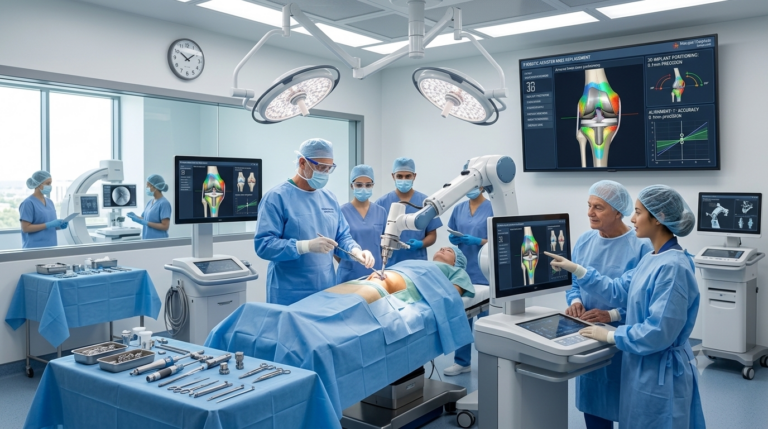
The knee replacement surgery procedure generally follows several well-defined steps.
Step 1: Administration of Anesthesia
The procedure begins with anesthesia. Most patients receive spinal anesthesia, although general anesthesia may be used in selected cases.
The choice depends on the patient’s health condition and the anesthesiologist’s recommendation.
Step 2: Surgical Incision
A carefully planned incision is made over the knee to access the damaged joint surfaces.
The surgeon exposes the affected area while preserving important muscles and soft tissues whenever possible.
Step 3: Removal of Damaged Bone and Cartilage
The worn-out cartilage and damaged bone surfaces are removed from the knee joint.
This creates a smooth and stable surface for implant placement.
Step 4: Preparation of the Knee Joint
Specialized surgical instruments are used to accurately shape the bone.
Proper alignment is critical because it affects implant longevity, knee function, and overall patient outcomes.
Step 5: Placement of Artificial Knee Implants
The artificial components are positioned on the prepared bone surfaces.
These implants recreate the natural movement of the knee joint while reducing pain caused by arthritis or joint degeneration.
Step 6: Testing Joint Stability and Motion
The surgeon checks:
- Knee alignment
- Implant positioning
- Range of motion
- Joint stability
Adjustments are made if necessary before final closure.
Step 7: Closure of the Surgical Site
Once the implant is secured, the incision is closed using sutures or staples.
A sterile dressing is applied to protect the surgical area.
How Long Does Knee Replacement Surgery Take?
Most knee replacement surgeries take approximately 60 to 120 minutes, depending on:
- Severity of joint damage
- Surgical complexity
- Type of implant used
- Whether robotic assistance is utilized
Additional preparation and recovery room time may extend the total hospital stay on the day of surgery.
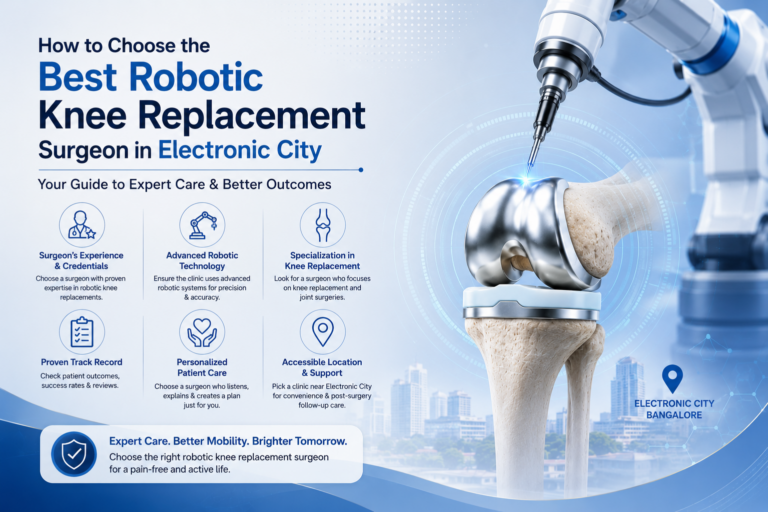
What Is the Difference Between Traditional and Robotic Knee Replacement?
| Feature | Traditional Knee Replacement | Robotic Knee Replacement |
|---|---|---|
| Surgical Planning | Standard measurements | Personalized digital planning |
| Implant Positioning | Manual technique | Computer-assisted precision |
| Bone Preparation | Conventional instruments | Robotic-guided instruments |
| Alignment Accuracy | Good | Enhanced precision |
| Soft Tissue Balancing | Manual assessment | Data-guided balancing |
| Technology Used | Standard systems | MAKO, CORI, Cuvis platforms |
| Recovery Experience | Effective recovery | May support smoother early recovery |
Dr. Abhinandan Punit has over 15 years of orthopedic experience, has performed 6,000+ orthopedic surgeries, and specializes in advanced robotic joint replacement technologies including MAKO, CORI, and Cuvis robotic systems.
What Happens Immediately After Knee Replacement Surgery?
Most patients begin supervised movement within the first 24 hours after surgery.
Early rehabilitation often includes:
- Standing with assistance
- Walking short distances
- Knee bending exercises
- Pain management
- Blood clot prevention measures
- Physiotherapy guidance
Early movement helps improve circulation and supports recovery.
How Long Does Recovery Take After Knee Replacement Surgery?
Recovery varies among individuals, but a general timeline includes:
| Recovery Stage | Expected Timeline | Common Activities |
| Hospital Recovery | 1–3 days | Walking with support |
| Early Recovery | 2–6 weeks | Daily activities |
| Strength Recovery | 6–12 weeks | Improved mobility |
| Functional Recovery | 3–6 months | Regular walking |
| Continued Improvement | Up to 12 months | Maximum benefit achieved |
When Should You See an Orthopedic Surgeon for Knee Pain?
You should consult an orthopedic specialist if:
- Knee pain persists for several months.
- Walking becomes difficult.
- Medications no longer provide relief.
- Daily activities are affected.
- Knee deformity develops.
- Sleep is disturbed due to pain.
- Conservative treatments have failed.
Looking for a Knee Replacement Surgeon in Bangalore?
If you have been advised to consider knee replacement surgery or are seeking a second opinion for knee arthritis treatment, consult Dr. Abhinandan Punit. With 15+ years of orthopedic experience, 6,000+ surgeries performed, and expertise in robotic knee replacement technologies including MAKO, CORI, and Cuvis, he helps patients understand their treatment options and recovery expectations.
Appointments are available at Elite Orthocare, Kanakapura Road, and Narayana Clinic, Electronic City, Bangalore.
📍 Elite Orthocare – Kanakapura Road
📍 Narayana Clinic – Electronic City, Bangalore
📞 Call/WhatsApp: +91 86182 92628
Frequently Asked Questions About Knee Replacement Surgery Procedure
Is knee replacement surgery painful?
Patients do not feel pain during surgery because anesthesia is used. After surgery, some discomfort is expected, but modern pain management techniques, medications, and physiotherapy help control symptoms. Most patients report gradual improvement in pain levels during recovery.
How long do knee replacement implants last?
Modern knee replacement implants often last 15–20 years or longer, depending on patient age, activity level, body weight, implant design, and overall health. Regular follow-up with an orthopedic surgeon helps monitor implant performance over time.
Can I walk after knee replacement surgery?
Yes. Most patients begin standing and walking with assistance within 24 hours after surgery. Early movement is encouraged because it improves circulation, reduces complications, and supports faster recovery under physiotherapy supervision.
Is robotic knee replacement better than traditional surgery?
Robotic knee replacement provides enhanced surgical planning and implant positioning accuracy. However, the suitability of robotic technology depends on individual patient factors. An orthopedic surgeon evaluates each case before recommending the most appropriate surgical approach.
What is the success rate of knee replacement surgery?
Knee replacement surgery is considered one of the most successful orthopedic procedures. Many patients experience significant pain relief and improved mobility when surgery is performed for appropriate indications and followed by proper rehabilitation.
How many days do I stay in the hospital after knee replacement?
Hospital stay typically ranges from one to three days, depending on overall health, mobility progress, pain control, and recovery milestones. Some patients may be discharged earlier when medically appropriate.