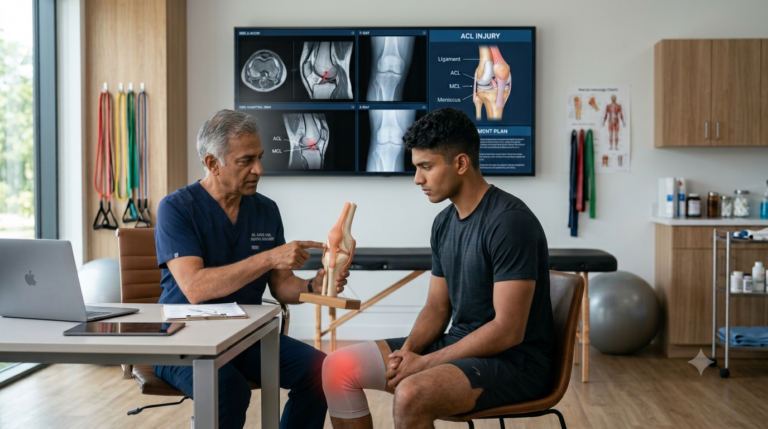

What Is ACL Reconstruction Surgery?
ACL Reconstruction Surgery is a minimally invasive procedure used to replace a torn ACL ligament and restore knee stability. Most patients recover within 6–9 months with proper physiotherapy and rehabilitation.
Quick Overview
- Procedure: ACL ligament reconstruction
- Surgery Type: Arthroscopic / minimally invasive
- Walking: Within a few days after surgery
- Sports Return: Usually 6–9 months
- Physiotherapy: Essential for recovery
What Is ACL Reconstruction Surgery?
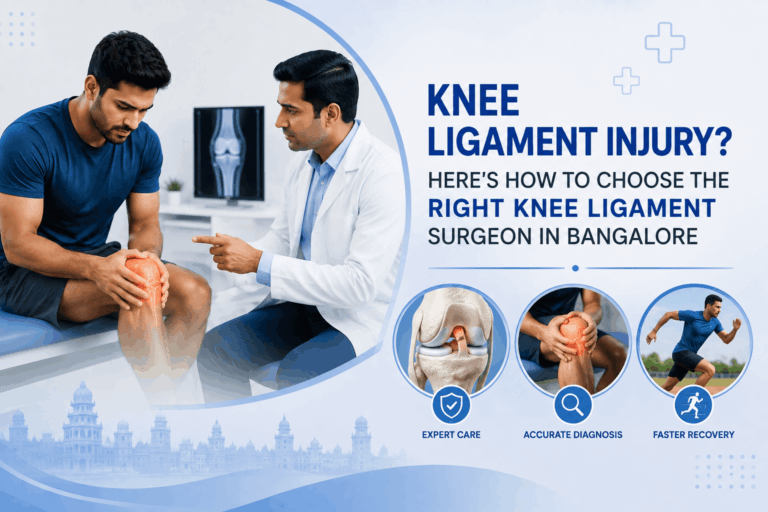
ACL Reconstruction Surgery is a procedure used to repair a torn anterior cruciate ligament (ACL) in the knee. The ACL is one of the main ligaments that helps stabilise the knee joint during walking, running, jumping, and sports activities.
Doctors usually recommend ACL Reconstruction Surgery for patients with complete ACL tears, knee instability, or difficulty returning to sports and physical activities.
What Causes an ACL Injury?
ACL injuries commonly occur due to:
- Sudden twisting movements
- Sports injuries
- Landing incorrectly after jumping
- Direct impact to the knee
- Road accidents or falls
Athletes involved in football, basketball, cricket, and running sports are at higher risk of ACL injuries.
Common Symptoms of an ACL Tear
Patients with an ACL injury may experience:
- Sudden knee pain
- Swelling in the knee
- A popping sound during injury
- Knee instability
- Difficulty walking or turning
- Reduced range of motion
Some people feel that the knee “gives way” while walking or climbing stairs.
How Is an ACL Tear Diagnosed?
Doctors diagnose ACL injuries through:
- Physical examination
- Medical history review
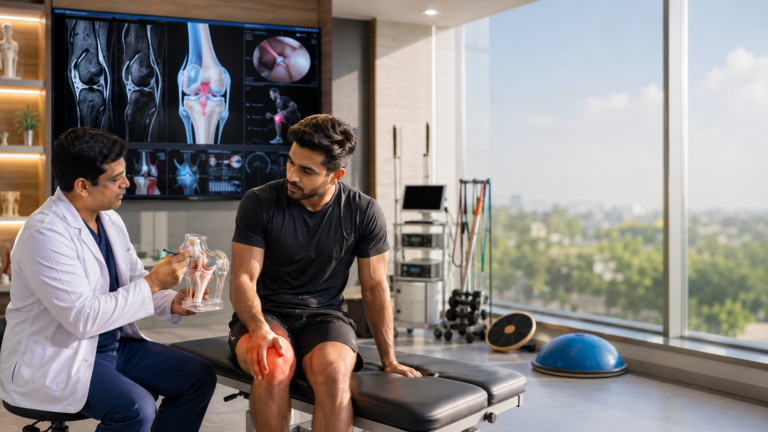
- MRI scan
- X-rays if needed
MRI scans help confirm the severity of the ligament tear and identify damage to surrounding structures.
Who May Need ACL Reconstruction Surgery?
Doctors may recommend surgery if:
- The ACL is completely torn
- Knee instability affects daily activities
- Sports participation becomes difficult
- Physiotherapy alone does not improve symptoms
- Multiple knee ligaments are injured
Young athletes and active adults often benefit most from reconstruction surgery.
What Happens During ACL Reconstruction Surgery?
During ACL Reconstruction Surgery, the damaged ACL is replaced using a tendon graft taken either from the patient’s body or from donor tissue.
The procedure generally includes:
- Administering anaesthesia
- Making small incisions around the knee
- Removing the torn ligament
- Placing the new graft in the correct position
- Fixing the graft with special screws or implants
Most ACL surgeries are performed using minimally invasive arthroscopic techniques.
Types of ACL Grafts Used in Surgery
Surgeons may use different graft options, including:
- Hamstring tendon graft
- Patellar tendon graft
- Quadriceps tendon graft
- Donor tissue graft (allograft)
The choice depends on the patient’s condition, activity level, and surgeon recommendation.
Benefits of ACL Reconstruction Surgery
Some important benefits include:
- Improved knee stability
- Better movement and joint function
- Reduced risk of repeated knee injuries
- Return to sports and physical activities
- Improved confidence while walking or running
ACL reconstruction surgery helps improve knee stability, movement, and confidence during daily activities and sports.
ACL Reconstruction Surgery Recovery Time
The recovery period after ACL Reconstruction Surgery varies from person to person. Recovery depends on:
- Severity of the injury
- Type of graft used
- Physiotherapy participation
- Overall health and fitness
Most patients:
- Begin walking with support within days
- Start physiotherapy early during recovery
- Gradually improve over several weeks
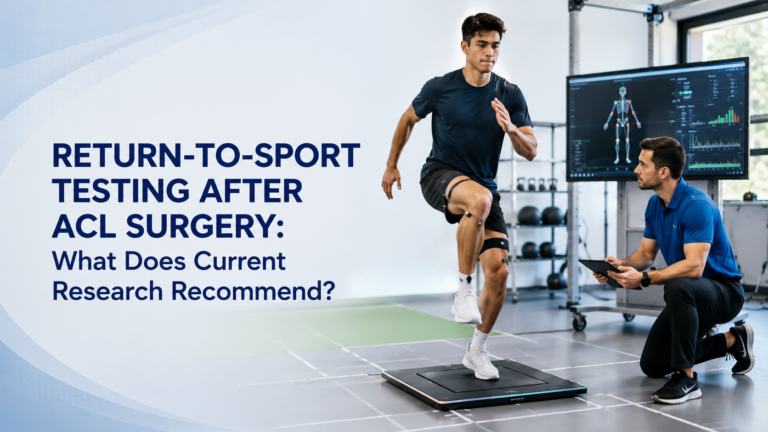
- Return to sports after several months
Full recovery may take around 6–9 months depending on rehabilitation progress.
ACL Recovery Timeline
| Recovery Stage | Expected Progress |
| Week 1 | Walking with support |
| Week 4–6 | Better knee movement |
| Month 3 | Light activities resume |
| Month 6–9 | Return to sports |
Importance of Physiotherapy After ACL Surgery
Physiotherapy is a critical part of recovery after surgery. Rehabilitation helps:
- Restore knee movement
- Improve muscle strength
- Reduce stiffness
- Improve balance and stability
- Support safe return to activities
Regular exercises and guided rehabilitation improve long-term surgical outcomes.
Risks and Complications of ACL Surgery
Although ACL surgery is generally safe, some risks may include:
- Infection
- Knee stiffness
- Swelling
- Blood clots
- Graft failure
- Persistent instability
Following post-surgery rehabilitation instructions can help reduce complications.
Tips for Faster ACL Recovery
To improve healing after surgery:
- Follow physiotherapy regularly
- Avoid high-impact activities early
- Use knee braces if advised
- Maintain a healthy diet
- Attend follow-up appointments
- Perform strengthening exercises consistently
Proper rehabilitation is essential for successful recovery.
Can ACL Injuries Be Prevented?
The risk of ACL injuries may be reduced by:
- Strengthening leg muscles
- Improving flexibility
- Practising proper sports techniques
- Wearing supportive footwear
- Performing warm-up exercises before sports
Athletes should also focus on balance and conditioning programs.
When Should You See a Doctor for an ACL Injury?
Patients should seek medical evaluation if they experience persistent knee pain, swelling, instability, or difficulty walking after a sports injury or sudden twisting movement. Early diagnosis and treatment may help prevent further knee damage and improve recovery outcomes.
About Dr. Abhinandan S Punit
Dr. Abhinandan S Punit is a European Board-Certified Orthopaedic Surgeon based in Bangalore with over 15 years of experience in sports injury treatment, ACL reconstruction, robotic joint replacement, and minimally invasive orthopaedic procedures.
He specialises in advanced knee ligament surgery and rehabilitation-focused recovery programs designed to restore mobility and improve quality of life.
CTA – Don’t Ignore ACL Knee Instability
If your knee:
- feels unstable while walking,
- suddenly gives way during movement,
- becomes swollen after sports activity,
- or causes repeated pain and difficulty while running or turning,
an orthopaedic evaluation may help identify an ACL injury before the condition worsens.
Book a Consultation with Dr. Abhinandan S Punit
✔ ACL injury and knee stability assessment
✔ Sports injury and ligament evaluation
✔ Arthroscopic ACL reconstruction guidance
✔ Rehabilitation and recovery planning
📍 Elite Orthocare – Kanakapura Road
📍 Narayana Clinic – Electronic City, Bangalore
📞 Call / WhatsApp: +91 86182 92628
Frequently Asked Questions
How long does ACL Reconstruction Surgery recovery take?
Most patients recover gradually over 6–9 months depending on rehabilitation and activity level.
Can I walk after ACL surgery?
Most patients begin walking with support within a few days after surgery.
Is physiotherapy necessary after ACL surgery?
Yes, physiotherapy is essential for restoring knee strength, flexibility, and stability after surgery.
Can athletes return to sports after ACL surgery?
Many athletes can safely return to sports after completing proper rehabilitation and recovery training.
When can I return to sports after ACL surgery?
Most patients return to sports within 6–9 months after proper rehabilitation and strength recovery.
Conclusion
ACL Reconstruction Surgery is an effective treatment for restoring knee stability and function after a severe ACL tear. Modern arthroscopic techniques, combined with physiotherapy and rehabilitation, help many patients return to sports and daily activities successfully. Early diagnosis, proper treatment planning, and consistent recovery exercises play an important role in achieving the best long-term results.
Patients experiencing knee instability, sports-related knee injuries, or repeated knee pain should consider an orthopaedic evaluation for proper diagnosis and treatment planning.