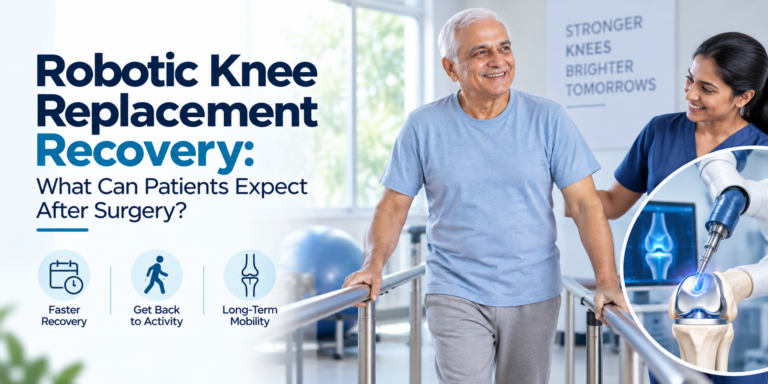

Walking after knee replacement usually begins within 24 hours of surgery with the support of a walker or physiotherapist. Most patients gradually improve their walking ability over several weeks through regular physiotherapy, strengthening exercises, and following their surgeon’s recovery plan.
When Can You Start Walking After Knee Replacement?
Most patients begin walking after knee replacement within 24 hours of surgery.
Initially, walking is done with:
- A walker
- Crutches
- Assistance from a physiotherapist
Early walking helps improve circulation, reduce stiffness, and speed up recovery.
Walking Timeline After Knee Replacement
| Timeline | Recovery Goal | Activities |
| First 24 Hours | Begin safe mobility | Stand with assistance, walk short distances, start gentle knee exercises and supervised physiotherapy. |
| Week 1 | Reduce pain and improve mobility | Increase walking distance, continue using a walker, manage pain and swelling, and attend daily physiotherapy. |
| Weeks 2–6 | Build strength and confidence | Transition from a walker to a cane, improve balance, and walk longer distances. |
| Weeks 6–12 | Restore independence | Walk independently, climb stairs more comfortably, perform daily activities, and increase walking endurance. |
| After 3 Months | Return to normal activities | Resume shopping, outdoor walking, light recreational activities, and low-impact exercise as advised by your surgeon. |
Benefits of Walking After Knee Replacement
Regular walking after knee replacement improves blood circulation, reduces stiffness, strengthens the muscles supporting the knee, improves flexibility, and lowers the risk of blood clots. Walking also helps patients regain confidence and return to everyday activities more quickly.
When Will You Walk Normally After Knee Replacement?
Most patients begin walking with a walker within 24 hours after surgery. Many transition to a cane between 2 and 6 weeks and are able to walk independently by 6 to 12 weeks. Full walking confidence and endurance often continue to improve for 3 to 12 months, depending on age, overall health, and commitment to physiotherapy.
Tips for Walking Safely After Knee Replacement
To walk safely during recovery:
- Follow your physiotherapist’s advice
- Use a walker or cane until recommended otherwise
- Wear supportive footwear
- Walk on flat, even surfaces
- Increase walking distance gradually
- Avoid sudden twisting movements
- Rest if pain or swelling increases
Walking too much too soon may increase pain and swelling, so always increase your activity gradually under your surgeon’s guidance.
Common Challenges During Recovery
Some patients experience:
- Swelling
- Knee stiffness
- Mild pain
- Fatigue
- Difficulty climbing stairs
- Fear of falling
These symptoms usually improve with rehabilitation and regular exercise.
When Should You Contact Your Doctor?
Seek medical attention if you experience:
- Severe pain that worsens
- Increasing swelling
- Redness around the incision
- Fever
- Difficulty bearing weight
- Sudden calf pain or swelling
Prompt evaluation helps identify possible complications early.
Physiotherapy and Walking Recovery
Physiotherapy plays an essential role in improving walking after knee replacement. A structured rehabilitation program helps restore strength, improve balance, and normalize walking patterns.
A rehabilitation program may include:
- Range-of-motion exercises
- Quadriceps strengthening
- Hamstring strengthening
- Balance training
- Gait (walking) training
- Stair-climbing practice
Following your rehabilitation plan improves long-term outcomes.
Expert Advice from Dr. Abhinandan Punit
According to Dr. Abhinandan Punit:
“Early walking after knee replacement is an essential part of recovery. However, patients should progress gradually under professional guidance to improve strength, restore normal movement, and reduce the risk of complications.”
About Dr. Abhinandan Punit
Dr. Abhinandan Punit is a European Board-Certified Orthopaedic & Robotic Joint Replacement Surgeon in Bangalore with over 15 years of experience and 6,000+ orthopaedic procedures performed. He specializes in robotic knee replacement, minimally invasive joint surgery, sports injury treatment, and rehabilitation-focused care to help patients regain mobility and return to active lifestyles.
Consult for Knee Replacement Recovery in Bangalore
If you have recently undergone knee replacement surgery or are preparing for the procedure, expert guidance can help you recover safely and regain confidence while walking.
Dr. Abhinandan Punit provides comprehensive post-operative care, personalized rehabilitation plans, and long-term recovery support to help patients restore mobility and improve quality of life.
Book an appointment today for a personalized knee replacement recovery plan.
Conclusion
Walking after knee replacement is one of the most important steps toward regaining mobility and independence. Starting early, following your physiotherapy program, and increasing activity gradually can help improve recovery and long-term knee function. Always follow your orthopaedic surgeon’s advice to ensure a safe and successful recovery.
Frequently Asked Questions
How soon can I walk after knee replacement?
Most patients begin walking within 24 hours after surgery using a walker or with assistance from a physiotherapist. Early walking promotes circulation, reduces stiffness, and supports recovery.
How long should I use a walker after knee replacement?
Many patients use a walker for the first few weeks before progressing to a cane. The exact timeline depends on balance, strength, and your surgeon’s recommendations.
Is it normal to have pain while walking after knee replacement?
Yes. Mild discomfort during walking is common during the early stages of recovery. However, severe or worsening pain should be evaluated by your orthopaedic surgeon.
How much should I walk each day after knee replacement?
Walking should increase gradually based on your recovery and physiotherapy plan. Short, frequent walks are generally recommended instead of long-distance walking during the early weeks.
Can walking too much delay recovery?
Yes. Excessive walking during the early recovery period may increase swelling, pain, and fatigue. It is important to balance activity with adequate rest and follow your rehabilitation program.