
The shoulder is a flexible joint that helps you lift, rotate and move your arm in different directions. Its bones, muscles, tendons and ligaments work together to provide movement and stability. Dr. Abhinandan S. Punit, an Orthopaedic and Robotic Joint Replacement Surgeon in Bangalore with 15+ years of experience and 6,000+ orthopaedic surgeries, explains how shoulder anatomy relates to common problems and treatment options.
What Is Shoulder Anatomy?
Shoulder anatomy refers to the bones, muscles, tendons, ligaments and joints that work together to support arm movement and stability. These structures allow you to perform everyday activities such as lifting objects, reaching overhead, rotating your arm and getting dressed. Problems affecting any of these structures can cause shoulder pain, stiffness or weakness.
Understanding shoulder anatomy helps explain why different injuries produce different symptoms and require different treatments.
What Are the Main Shoulder Muscles?
Shoulder muscles provide the strength and control needed to lift, rotate and move your arm. They also help stabilise the shoulder joint during everyday activities and exercise.
The major shoulder muscles include:
- Deltoid: Helps lift the arm forward, sideways and backward.
- Supraspinatus: Helps initiate arm lifting and supports shoulder stability.
- Infraspinatus: Helps rotate the upper arm outward.
- Teres Minor: Supports outward arm rotation and shoulder stability.
- Subscapularis: Helps rotate the arm inward and stabilise the joint.
- Trapezius: Supports shoulder blade movement and upper back stability.
These muscles work together to maintain coordinated movement. Injury or weakness in one or more muscles can affect how comfortably you move your arm.
What Is the Rotator Cuff and Why Is It Important?
The rotator cuff is a group of four muscles and their tendons surrounding the shoulder joint. It helps keep the upper arm bone properly positioned within the shoulder socket and supports controlled arm rotation.
A rotator cuff injury may cause pain, weakness and difficulty lifting your arm. It can develop due to ageing, repeated overhead movements, sports injuries or sudden trauma.
Common symptoms include:
- Pain while lifting or lowering the arm.
- Weakness when carrying or lifting objects.
- Difficulty reaching overhead or behind the back.
- Shoulder pain that becomes worse at night.
Treatment depends on the type and severity of the injury. Some patients may improve with physiotherapy and other non-surgical treatments, while significant tears may require surgical evaluation.
Read more about shoulder arthroscopy and advanced shoulder surgery in Bangalore.
What Are the Common Causes of Shoulder Pain?
Shoulder pain can develop because of an injury, inflammation, repeated movements or changes in the joint over time. The problem may affect the muscles, tendons, ligaments, bones or cartilage.
Common causes include:
- Rotator cuff tear: Damage to the tendons surrounding the shoulder joint.
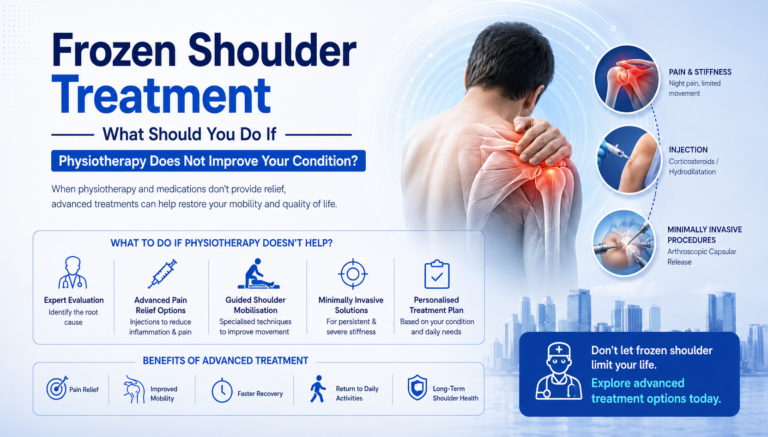
- Frozen shoulder: Stiffness that gradually restricts shoulder movement.
- Shoulder impingement: Compression of soft tissues during certain arm movements.
- Shoulder dislocation: Occurs when the upper arm bone moves out of its socket.
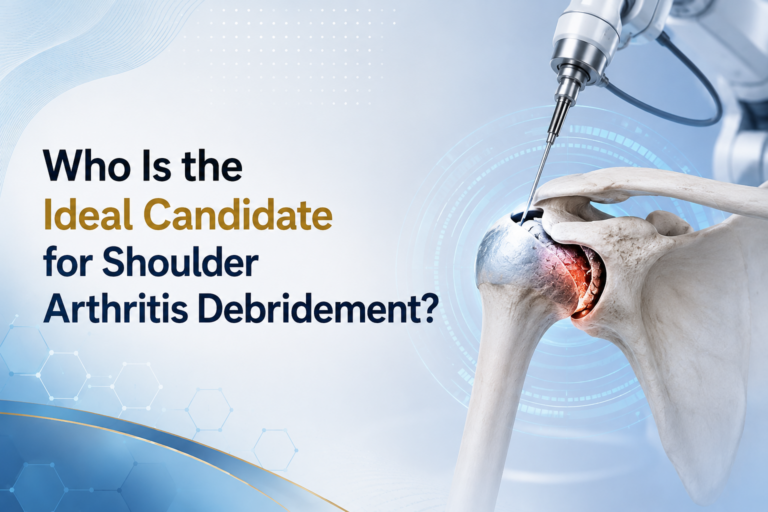
- Shoulder arthritis: Joint cartilage damage that can cause pain and stiffness.
- Bursitis: Inflammation of the small fluid-filled sacs cushioning the shoulder.
- Tendinitis: Irritation or inflammation of shoulder tendons.
The symptoms of these conditions can overlap. A proper examination helps identify the underlying cause before treatment is selected.
What Are the Symptoms of Shoulder Problems?
Shoulder problems can cause different symptoms depending on the affected structure. Some people experience mild discomfort, while others find it difficult to sleep, work, exercise or perform everyday activities.
Watch for these common symptoms:
- Pain while lifting, lowering or rotating your arm.
- Difficulty reaching behind your back or head.
- Stiffness after resting or waking up.
- Weakness while carrying or lifting objects.
- Shoulder pain that disturbs your sleep.
- Swelling or tenderness around the shoulder joint.
- Clicking or popping sensations during movement.
Persistent pain, weakness or restricted movement should not be ignored. These symptoms may indicate an underlying shoulder condition that needs medical evaluation.
What Are the Treatment Options for Shoulder Problems in Bangalore?
Shoulder treatment in Bangalore depends on the underlying condition, severity of symptoms, patient’s age and overall joint health. Many shoulder problems can initially be managed without surgery, while significant injuries or advanced joint damage may require an operation.
Common treatment options include:
- Medications: May help manage pain and inflammation when medically appropriate.
- Physiotherapy: Helps improve shoulder strength, flexibility and range of motion.
- Activity modification: Reduces movements that aggravate the affected shoulder.
- Injections: Certain injections may help manage pain and inflammation in selected cases.
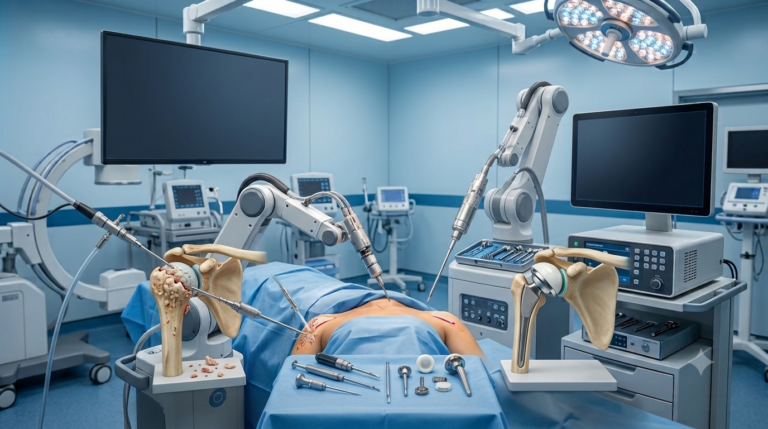
- Arthroscopic surgery: A minimally invasive procedure used to treat certain shoulder injuries.
- Shoulder replacement: May be considered for severe joint damage or advanced arthritis.
The most suitable treatment should be selected after evaluating the shoulder and identifying the cause of the symptoms.
For more information, read about shoulder surgery for chronic pain.
When Should You Consult an Orthopaedic Doctor for Shoulder Pain?
You should consult an orthopaedic specialist if shoulder pain continues, limits arm movement or interferes with your daily activities. Early evaluation can help identify the affected structures and determine whether non-surgical treatment or further investigation is needed.
Consider consulting a doctor if:
- Shoulder pain continues despite rest and basic treatment.
- You cannot lift your arm normally.
- Shoulder pain regularly disturbs your sleep.
- You experience weakness or reduced arm movement.
- Your shoulder becomes swollen after an injury.
- You experience sudden severe pain or visible deformity after trauma.
Seek urgent medical attention if you suspect a shoulder dislocation, fracture or sudden loss of shoulder function.
Where Can You Get Shoulder Treatment in Bangalore?
Patients experiencing shoulder pain in Bangalore can consult an orthopaedic specialist to identify the cause and discuss suitable treatment options. The evaluation may include checking shoulder movement, muscle strength, medical history and imaging tests, if required.
Dr. Abhinandan S. Punit is an Orthopaedic and Robotic Joint Replacement Surgeon with qualifications including MBBS, MS Orthopaedics and MCh Orthopaedics (Edinburgh, UK). He has 15+ years of experience and has performed 6,000+ orthopaedic surgeries. His shoulder specialities include rotator cuff injuries, frozen shoulder, shoulder dislocation, ligament injuries and shoulder arthroscopy.
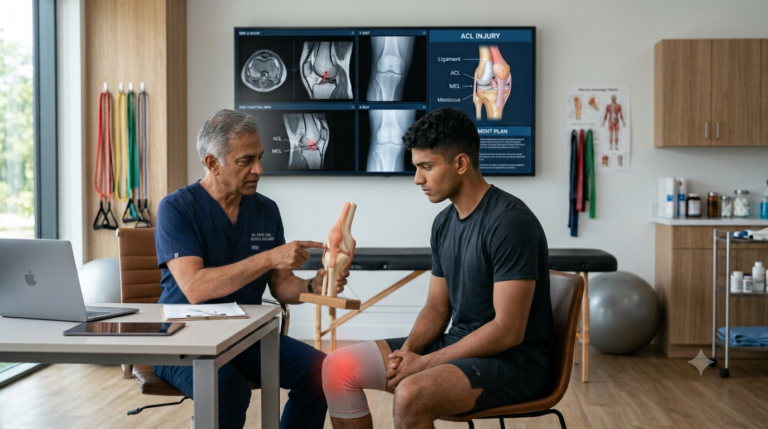
Patients can discuss their symptoms, understand their shoulder condition and explore appropriate treatment options. You can also read about what happens during a sports injury consultation.
Final Thoughts
Understanding shoulder anatomy helps explain how bones, muscles, tendons and ligaments work together to support movement and stability. Persistent shoulder pain, stiffness or weakness may indicate an underlying condition that requires proper evaluation. Identifying the cause early can help patients understand their treatment options and make informed decisions about their shoulder health.
Dr. Abhinandan S. Punit, an Orthopaedic and Robotic Joint Replacement Surgeon in Bangalore with 15+ years of experience and 6,000+ orthopaedic surgeries, provides orthopaedic consultations at Elite Orthocare and Narayana Clinic & Hospitals. If shoulder pain is affecting your daily activities, book an appointment with Dr. Abhinandan S. Punit to discuss your symptoms and treatment options.
Frequently Asked Questions About Shoulder Treatment in Bangalore
1. What is the most common cause of shoulder pain?
Rotator cuff problems, shoulder impingement, frozen shoulder and arthritis are common causes of shoulder pain. Repetitive movements, sports injuries, ageing and sudden trauma can also affect shoulder structures. The exact cause cannot always be identified from symptoms alone. An orthopaedic specialist may recommend a physical examination and imaging tests to understand the problem.
2. Can a rotator cuff tear heal without surgery?
Some rotator cuff injuries can improve without surgery through physiotherapy, activity modification and appropriate medication. However, larger or complete tears may require surgical evaluation, especially when they cause significant weakness or difficulty using the arm. Treatment depends on the tear’s size, symptoms, activity requirements and overall health. An orthopaedic specialist can help determine the suitable approach.
3. When does shoulder pain require surgery?
Shoulder surgery may be considered when there is significant tendon damage, repeated instability, severe arthritis or persistent symptoms despite appropriate non-surgical treatment. The decision depends on the underlying diagnosis, the extent of damage and how much the condition affects everyday activities. An orthopaedic specialist may recommend imaging and explain the available treatment options before surgery is considered.
4. How long does shoulder injury recovery take?
Shoulder recovery time depends on the type and severity of the injury and the treatment provided. Mild injuries may improve within a few weeks, while tendon tears and conditions requiring surgery can take several months of rehabilitation. Following medical advice, attending physiotherapy sessions and gradually returning to activities can support recovery. Your doctor can explain a suitable recovery plan.
5. Which doctor should I consult for shoulder pain in Bangalore?
You should consult an orthopaedic specialist for persistent shoulder pain, stiffness, weakness or difficulty moving your arm. An orthopaedic doctor can examine the shoulder, identify the affected structures and recommend suitable treatment. In Bangalore, patients can consult Dr. Abhinandan S. Punit at Elite Orthocare, Kanakapura Road, and Narayana Clinic & Hospitals, Electronic City, Bommasandra.