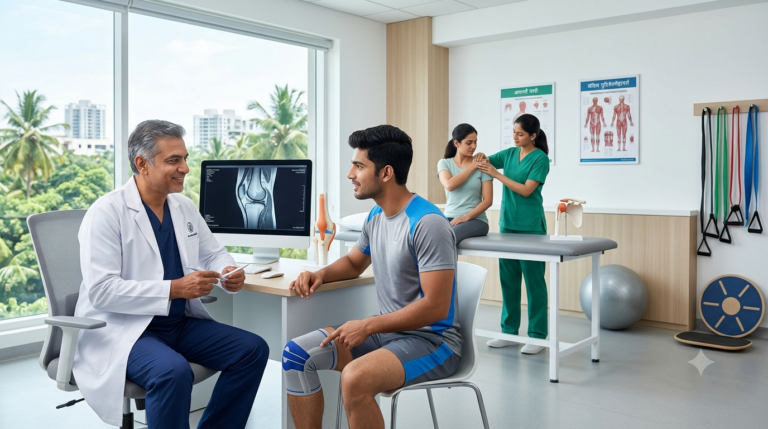

What Happens During a Sports Injury Consultation?
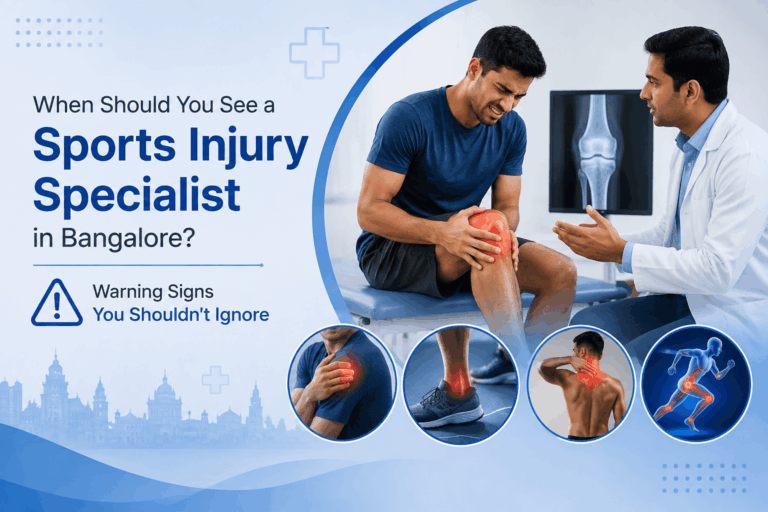
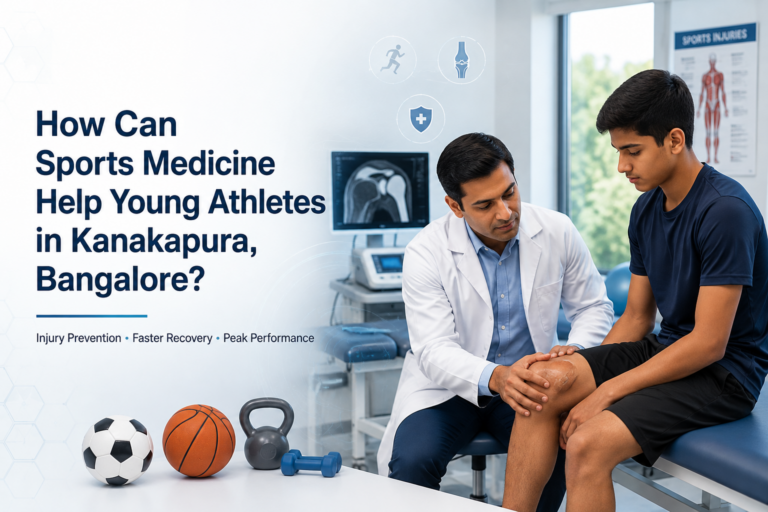
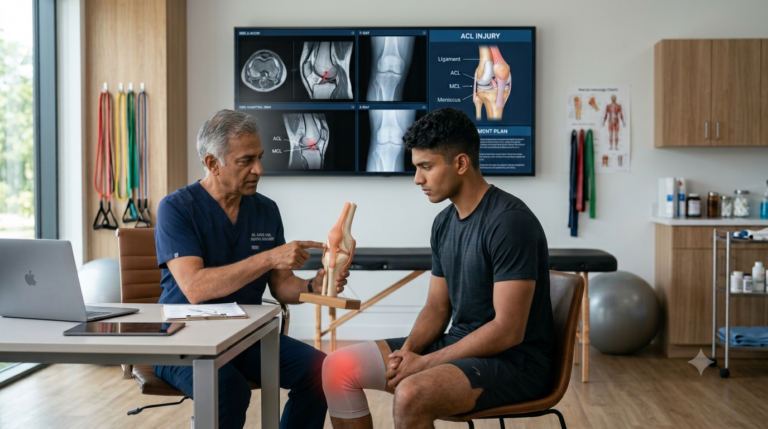
A sports injury consultation helps identify the exact cause of pain, swelling, weakness, or reduced performance after an injury. During the consultation, a sports injury doctor reviews your symptoms, examines the injured area, assesses movement and strength, and may recommend imaging tests such as X-rays or MRI scans to create a personalized treatment plan.
What Is a Sports Injury Consultation?
A sports injury consultation is a medical evaluation performed by a sports injury doctor to diagnose injuries affecting muscles, ligaments, tendons, cartilage, joints, or bones.
The goal is to determine why the injury occurred, assess its severity, and develop the safest treatment strategy to help patients return to sports and daily activities.
Definition
A sports injury consultation is a structured medical assessment used to diagnose sports-related injuries and create an individualized recovery and rehabilitation plan.
Why Should You See a Sports Injury Doctor?
Many people continue exercising despite pain, hoping it will improve on its own. However, untreated injuries can become chronic and more difficult to manage.
A sports injury doctor helps identify underlying damage early and prevents minor injuries from becoming long-term problems that affect performance and quality of life.
Who Needs a Sports Injury Consultation?
A sports injury consultation is useful for anyone experiencing pain or limitations after physical activity.
Common patients include:
- Athletes and professional sports players
- Gym enthusiasts
- Marathon and recreational runners
- Football and cricket players
- Cyclists
- Badminton and tennis players
- Active adults with exercise-related injuries
- Individuals with recurring joint pain
Sports injuries can affect both competitive athletes and people who simply enjoy staying active.
What Happens Before the Physical Examination?
The consultation usually begins with a detailed discussion about the injury.
A sports injury specialist may ask:
- When did the injury happen?
- What activity caused the injury?
- Did you hear a pop or snap?
- Is the pain getting worse?
- Have you had similar injuries before?
- Which movements cause discomfort?
These answers help narrow down possible diagnoses before the examination begins.
What Happens During the Physical Examination?
The physical examination is one of the most important parts of a sports injury consultation.
During the assessment, the doctor may evaluate:
- Joint stability
- Muscle strength
- Range of motion
- Swelling and inflammation
- Balance and coordination
- Walking or running mechanics
- Areas of tenderness
These findings help determine whether the injury involves muscles, ligaments, tendons, cartilage, or bone.
What Tests Might Be Recommended?
Not every sports injury requires imaging.
However, additional tests may be necessary when structural damage is suspected.
Common investigations include:
X-Ray
Used to identify fractures, bone alignment issues, and certain joint abnormalities.
MRI Scan
Often recommended for ACL tears, meniscus injuries, rotator cuff tears, cartilage damage, and ligament injuries.
Ultrasound
Useful for evaluating tendon injuries and soft tissue conditions.
CT Scan
Sometimes required for complex fractures or surgical planning.
These tests help confirm the diagnosis and guide treatment decisions.
How Does a Sports Injury Doctor Create a Treatment Plan?
Once the diagnosis is confirmed, a personalized treatment plan is created.
The plan depends on:
- Type of injury
- Severity of damage
- Age of the patient
- Activity level
- Sporting goals
- Recovery expectations
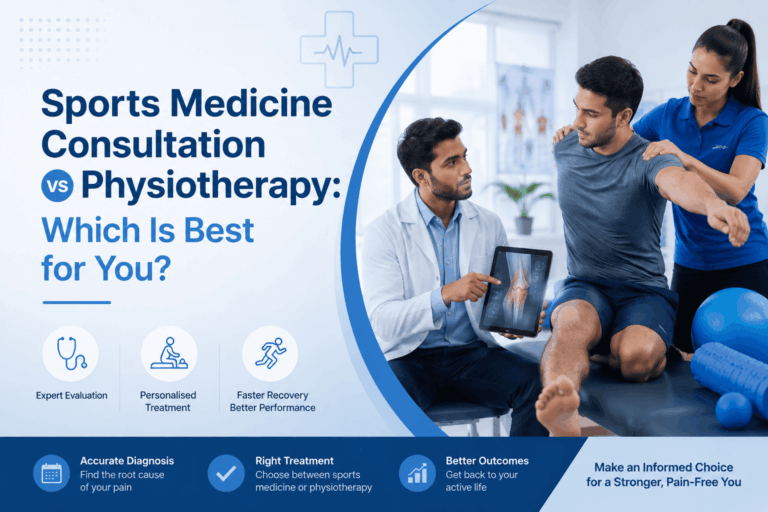
Treatment recommendations may include physiotherapy, rehabilitation exercises, activity modification, bracing, injections, or surgery when necessary.
What Sports Injuries Are Commonly Diagnosed During Consultations?
Some injuries appear frequently in sports medicine clinics.
Common diagnoses include:
- ACL tears
- Meniscus injuries
- Shoulder instability
- Rotator cuff tears
- Tennis elbow
- Ankle sprains
- Achilles tendon injuries
- Muscle strains
- Cartilage injuries
- Sports-related fractures
Early diagnosis often improves recovery outcomes and reduces downtime.
Sports Injury Consultation vs Ignoring the Injury
| Factor | Sports Injury Consultation | Ignoring the Injury |
|---|---|---|
| Diagnosis | Accurate identification of injury | Cause often remains unknown |
| Recovery Time | Usually shorter | Often prolonged |
| Risk of Further Damage | Reduced | Increased |
| Return to Sports | Structured and safer | Delayed or incomplete |
| Long-Term Joint Health | Better protection | Higher complication risk |
| Treatment Plan | Personalized | Self-management only |
| Performance Recovery | More predictable | Often limited |
What Happens After the Consultation?
After the assessment, patients receive clear guidance regarding treatment and recovery.
The next steps may include:
- Starting physiotherapy
- Modifying sports activities
- Using supportive braces
- Completing imaging investigations
- Following a rehabilitation protocol
- Scheduling follow-up reviews
- Considering surgery if indicated
Following these recommendations can significantly improve recovery outcomes.
Why Patients Choose Dr. Abhinandan Punit for Sports Injury Evaluation in Bangalore
Dr. Abhinandan Punit is an Orthopedic & Robotic Joint Replacement Surgeon in Bangalore with:
- 15+ years of orthopedic experience
- 6,000+ surgeries performed
- Expertise in sports injury management
- Advanced training in joint reconstruction procedures
- Experience treating knee, shoulder, and joint injuries
Patients can consult Dr. Abhinandan Punit at:
Elite Orthocare, Kanakapura Road
Narayana Clinic, Electronic City, Bangalore
His approach focuses on accurate diagnosis, evidence-based treatment, and helping patients return safely to their desired activity levels.
Book a Sports Injury Consultation Before the Injury Gets Worse
Persistent pain, swelling, instability, or reduced performance should never be ignored.
The sooner an injury is diagnosed, the greater the chances of avoiding long-term complications and achieving a faster recovery.
If you are looking for an experienced sports injury doctor in Bangalore, schedule a consultation with Dr. Abhinandan Punit to receive a personalized evaluation and treatment plan designed around your recovery goals.
Book your appointment today at Elite Orthocare or Narayana Clinic and take the first step toward a safe return to sports and active living.
Frequently Asked Questions
How long does a sports injury consultation take?
Most sports injury consultations take between 20 and 45 minutes depending on the complexity of the problem. During this time, the doctor reviews your medical history, discusses symptoms, performs a physical examination, and determines whether additional imaging or treatment is required.
Should I bring my MRI or previous reports?
Yes. Bringing previous MRI scans, X-rays, physiotherapy notes, surgical records, and medical reports can help the doctor understand your injury history more quickly. This information often improves diagnostic accuracy and prevents unnecessary repeat testing.
Do all sports injuries require MRI scans?
No. Many sports injuries can be diagnosed through a thorough history and physical examination. MRI scans are usually recommended when ligament tears, cartilage injuries, meniscus damage, tendon injuries, or surgical planning require more detailed evaluation.
Can I continue playing sports before my consultation?
This depends on the injury. Continuing activity despite pain may worsen damage, especially in cases involving ligament tears or joint instability. Until you are evaluated by a sports injury doctor, it is usually safer to avoid activities that increase symptoms.
What should I wear to a sports injury consultation?
Wear comfortable clothing that allows easy examination of the affected area. Shorts are helpful for knee injuries, while sleeveless or loose-fitting shirts are useful for shoulder evaluations. Comfortable clothing makes movement assessments easier.
Can sports injuries heal without surgery?
Many sports injuries improve with physiotherapy, rehabilitation, activity modification, and non-surgical treatment. Surgery is typically considered only when structural damage is severe, symptoms persist despite treatment, or an athlete’s goals require surgical correction.