
Most people don’t think much about their knees until one day the stairs feel harder, the morning stiffness lasts longer, and simple movements start to hurt. When medication and physiotherapy stop helping, surgery enters the conversation — and these days, that conversation often includes robotic knee replacement surgery in Bangalore. Patients who’ve researched the technology online often arrive at their first consultation with the basics already covered, but still have practical questions about what actually happens on the day of surgery, and in the weeks around it. Surgeons like Dr. Abhinandan Punit, who perform robotic knee replacement regularly, are used to walking patients through exactly these details before they commit to a date.
Before Surgery: Getting Ready for the Procedure
The First Consultation
Everything starts with a detailed evaluation. The surgeon reviews your symptoms, examines your knee’s range of motion, and looks at X-rays or an MRI to understand how much cartilage has worn away and whether the damage is limited to one part of the knee or spread across the whole joint. This matters because it determines whether you’re a candidate for a partial or total robotic knee replacement.
Pre-Surgery Health Checks
Before any date is fixed, you’ll typically go through routine blood work, an ECG, and sometimes a cardiology or anaesthesia clearance, especially if you have diabetes, high blood pressure, or any heart condition. These checks aren’t a formality — they help the surgical team plan for anaesthesia safely and reduce the chance of complications during recovery.
The CT Scan That Makes It “Robotic”
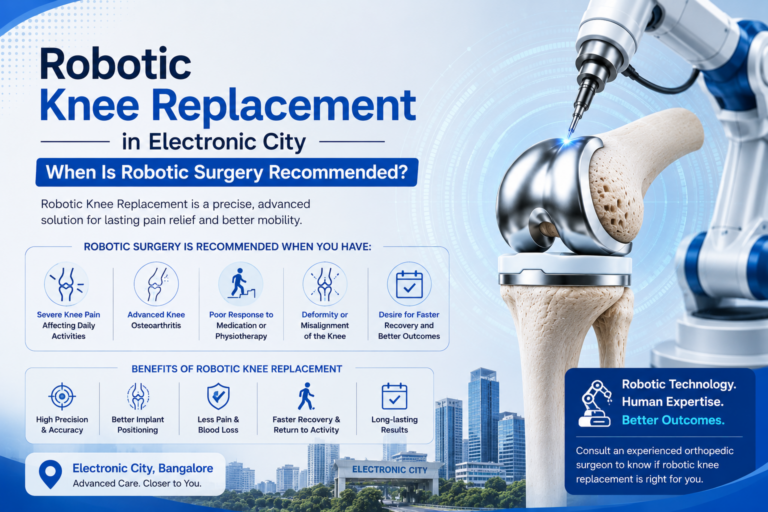
Some robotic systems use a pre-operative CT scan to create a 3D model, while others use intraoperative mapping. A CT scan of your knee is taken and fed into planning software, which builds a 3D model of your specific bone structure. The surgeon uses this model to plan the exact size, position, and angle of the implant before you’re even in the operating room. This kind of personalised pre-planning simply isn’t possible with manual instruments alone.
Setting Realistic Expectations
A good consultation also covers what the surgery can and cannot fix, what recovery will feel like week by week, and what your specific risks are based on age, weight, and overall health. Patients who go in with a clear, realistic picture tend to have a smoother emotional experience through recovery.
During Surgery: What Actually Happens in the Operating Room
Anaesthesia and Positioning
You’ll usually be given spinal or general anaesthesia, decided in consultation with the anaesthesia team based on your health profile. Once you’re comfortably numbed or asleep, the leg is positioned and prepared for the procedure.
The Robotic Arm’s Role
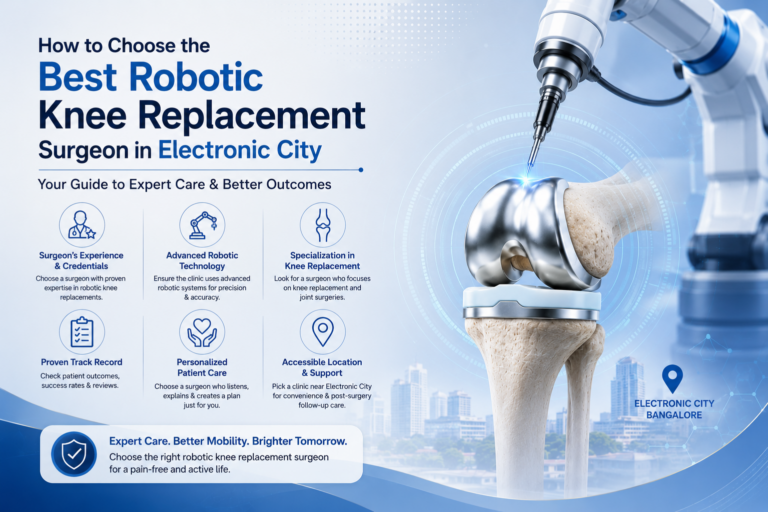
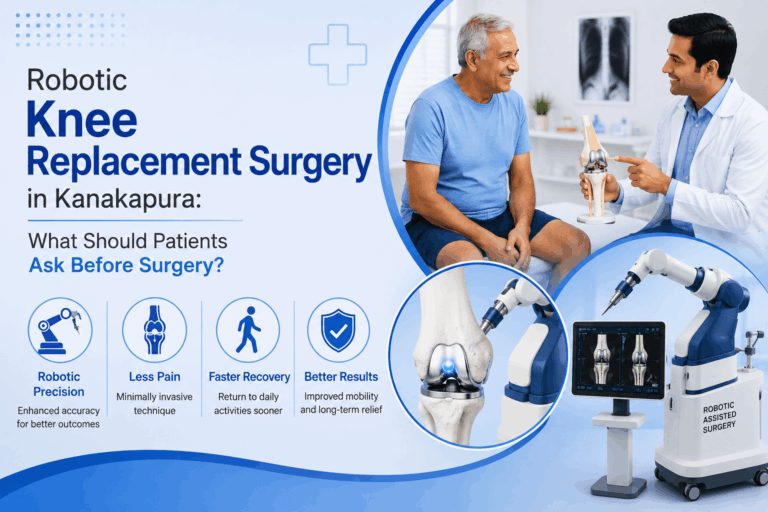
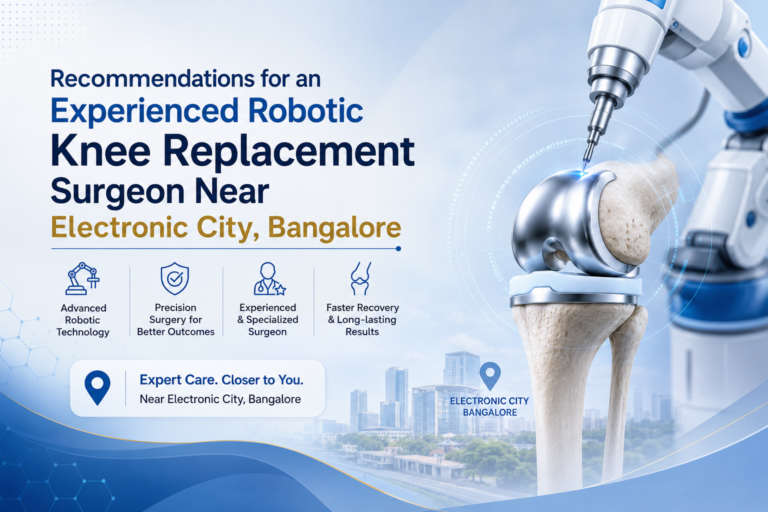
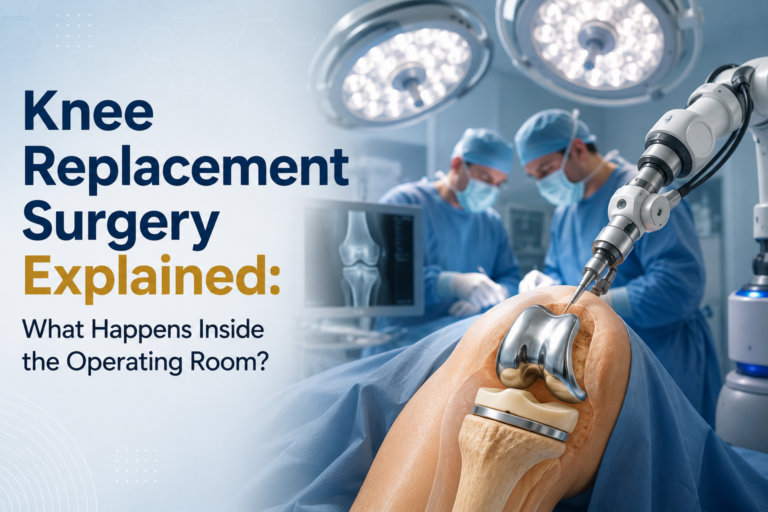
Here’s the part that surprises many patients: the robot does not perform the surgery on its own. The surgeon makes every cut and every decision. The robotic arm acts as a highly precise guide, using the pre-planned 3D map to keep bone removal within a very tight, pre-calculated boundary. If the surgeon’s hand moves slightly outside the planned area, the system provides feedback to correct it in real time.
Smaller Incisions, More Consistent Alignment
Because the planning is so precise, robotic-assisted surgery often allows for a smaller incision than traditional knee replacement. The implant is fitted based on your actual joint anatomy rather than an average template, which tends to result in more consistent alignment and better contact between the implant and surrounding tissue.
How Long It Takes
A robotic knee replacement typically takes between one and two hours, though this varies depending on whether it’s a partial or total replacement, and whether there are any complicating factors specific to your case.
After Surgery: The Recovery Journey
The First 24 Hours
This is often the part patients are most surprised by. Rather than staying in bed for days, most patients are encouraged to sit up and attempt a few assisted steps within 24 hours of surgery. Early movement, even in small amounts, helps reduce stiffness and lowers the risk of blood clots.
Hospital Stay
Robotic knee replacement often allows for a shorter hospital stay compared to conventional surgery, sometimes just two to three days, though this depends on how well you’re managing pain and mobility, and on your surgeon’s assessment.
Pain Management
Pain in the first week is normal and expected, and is managed through a combination of medication and ice therapy. It typically eases noticeably within the first ten to fourteen days, though some soreness and swelling can linger longer.
Physiotherapy Is Not Optional
This is the part of recovery patients sometimes underestimate. The surgery restores the joint’s structure, but physiotherapy rebuilds the strength and flexibility around it. Most patients begin gentle physiotherapy within a day or two of surgery, progressing gradually to walking without support, climbing stairs, and eventually returning to normal daily activities.
The Full Recovery Timeline
While many patients feel significantly better within four to six weeks, full recovery — meaning complete comfort, strength, and confidence in the knee — usually takes two to three months. Return to more demanding activities, like long walks or specific sports, may take a bit longer and should be guided by your surgeon’s advice rather than a fixed calendar.
Follow-Up Visits
Regular follow-up appointments are scheduled to check the implant’s position, monitor healing, and adjust the physiotherapy plan as needed. These visits are also when any concerns, like unusual swelling or persistent pain, should be raised rather than waited out.
Conclusion
Robotic knee replacement surgery in Bangalore has changed what patients can expect from this procedure, from the precision of the pre-surgery planning to the shorter hospital stays many patients experience afterward. Understanding what happens at each stage, before, during, and after surgery, makes the whole process feel far less uncertain. If you’re evaluating this option, a detailed consultation with an experienced surgeon is the right next step to understand how it applies to your specific knee condition.
About Dr. Abhinandan Punit
Dr. Abhinandan Punit is an Orthopedic and Robotic Joint Replacement Surgeon with 15+ years of experience, 6,000+ successful orthopedic surgeries, and 700+ joint replacements performed annually. He has received international fellowship training in advanced joint reconstruction. He consults at Elite Orthocare, Kanakapura Road, Bangalore, and Narayana Clinic & Hospitals, Electronic City, Bangalore.
Useful Links:
- Official Website: doctorabhinandanpunit.com
- Hospital Bio: doctorabhinandanpunit.com/about
- LinkedIn: linkedin.com/in/dr-abhinandan-punit-aab063aa
Frequently Asked Questions (FAQs)
- What is robotic knee replacement surgery?
Robotic knee replacement is a surgical technique that uses a robotic arm, guided by the surgeon, to plan and perform precise bone cuts and implant placement based on a 3D scan of the patient’s own knee.
- Who is Dr. Abhinandan Punit?
Dr. Abhinandan Punit is an orthopedic and robotic joint replacement surgeon with over 15 years of experience and more than 6,000 successful orthopedic surgeries. He consults at Elite Orthocare on Kanakapura Road and at Narayana Clinic & Hospitals in Electronic City, Bangalore.
- How long does robotic knee replacement surgery take?
The procedure typically takes one to two hours, depending on whether it is a partial or total knee replacement and the specific complexity of the case.
- How soon can I walk after robotic knee replacement?
Most patients are encouraged to sit up and take a few assisted steps within 24 hours of surgery, with physiotherapy starting shortly after to build strength and mobility.
- How long does full recovery take?
Many patients feel significantly better within four to six weeks, but full recovery, including complete strength and confidence in the knee, usually takes two to three months.
- Is robotic knee replacement safer than traditional knee replacement?
Robotic assistance improves precision in implant placement and can reduce tissue disruption, but overall safety still depends heavily on the surgeon’s experience and the patient’s individual health profile.
- Where can I consult Dr. Abhinandan Punit for robotic knee replacement in Bangalore?
Dr. Abhinandan Punit consults at Elite Orthocare, Kanakapura Road, Bangalore, and at Narayana Clinic & Hospitals, Electronic City, Bangalore. More details are available at doctorabhinandanpunit.com.