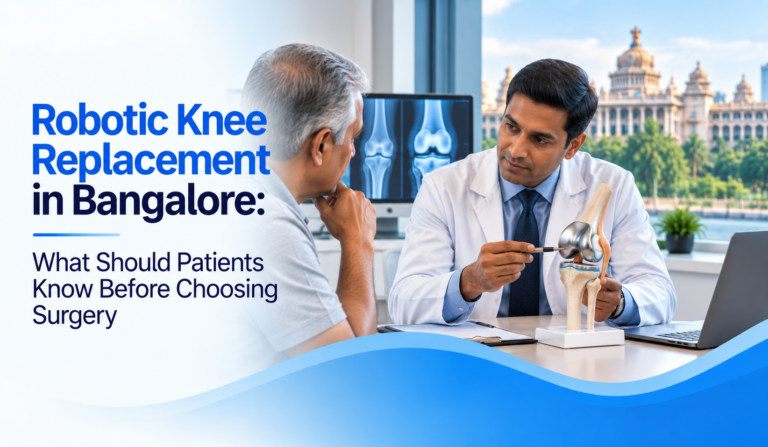

During knee replacement surgery, the surgeon removes damaged bone and cartilage from the knee joint and replaces it with artificial implants made of metal and plastic. The procedure takes 1-2 hours under general anesthesia. The surgeon makes an incision, exposes the joint, removes diseased tissue, positions new implants, and closes the wound. This eliminates pain and restores knee function for most patients.
What Is Knee Replacement Surgery?
Total knee replacement (TKR) replaces a damaged knee joint with an artificial prosthesis. The procedure is performed when severe arthritis or injury makes the knee painful and difficult to move.
The artificial knee has three components: femoral (thighbone), tibial (shinbone), and patellar (kneecap). They’re made of stainless steel, cobalt chrome, and medical-grade polyethylene plastic.
Why Is Knee Replacement Surgery Performed?
Knee replacement addresses severe joint damage that conservative treatments cannot fix. Osteoarthritis is the most common reason, followed by rheumatoid arthritis and post-traumatic arthritis.
Your doctor may recommend surgery when pain limits walking, climbing stairs, or sleeping despite months of medication, therapy, and injections.
What Happens Before You Enter the Operating Room?
Before surgery, you’ll undergo preoperative assessment including blood work, imaging, and cardiac evaluation. You’ll receive pre-op instructions: fast after midnight, arrange transportation, wear loose clothing.
On surgery day, arrive 2-3 hours early for identity verification and IV placement. Staff will confirm the surgical site with markers. An anesthesiologist discusses anesthesia options with you.
What Happens Inside the Operating Room?
Preparing for Surgery
You’re positioned supine on the surgical table. Your leg is prepped with antiseptic solution and draped with sterile sheets. Monitoring equipment tracks heart rate, blood pressure, oxygen, and temperature throughout.
Anaesthesia
General anesthesia is administered through your IV. Some patients receive regional anesthesia (spinal or epidural) combined with sedation, which numbs the leg while you remain sedated. The anesthesiologist monitors vital signs continuously.
Removing Damaged Cartilage
The surgeon makes an 8-12 inch incision down the front of the knee. The kneecap is moved aside to expose the joint. Using specialized instruments, damaged cartilage and bone are carefully removed from the femur, tibia, and patella, creating a clean surface for implants.
Placing the Knee Implant
Metal components are inserted into prepared bone surfaces. Cement or special coatings secure the implants. A polyethylene spacer is placed between components to create a smooth, gliding surface. Alignment is critical for natural movement.
Checking Knee Movement
Before closing, the surgeon tests the implant’s range of motion, stability, and alignment. The knee is flexed and extended to ensure smooth movement. X-ray imaging may confirm proper positioning.
Closing the Incision
The joint is irrigated with saline solution to remove debris. Tissue layers are closed with sutures or staples. A sterile dressing is applied, and a compression wrap reduces swelling.
Recovery Room
You’re transferred to recovery, where staff monitor you as anesthesia wears off. Pain medications are given as needed. Gentle movements begin, and you may receive a continuous passive motion (CPM) machine to keep the knee moving.
How Long Does Knee Replacement Surgery Take?
Standard knee replacement takes 60-90 minutes. Complex cases involving previous surgery, severe deformity, or revision may take 2-3 hours. Time varies based on bone quality, implant selection, and individual anatomy.
How Does Robotic Knee Replacement Differ?
Robotic-assisted knee replacement uses advanced technology for greater precision. Pre-operative 3D imaging creates a personalized surgical plan. The surgeon controls the robotic arm, which stays within planned boundaries for optimal positioning.
Systems provide real-time feedback and achieve superior alignment. This can improve implant longevity and functional outcomes. Recovery is similar to traditional surgery.
What Should Patients Know Before Surgery?
- Realistic expectations: Surgery alleviates pain; implant will feel different initially
- Activity modifications: High-impact sports may not be recommended after surgery
- Implant longevity: Modern implants last 15-20+ years; revision may be needed later
- Rehabilitation is essential: PT success determines functional outcomes
- Recovery timeline: Light activities resume at 6-8 weeks; full recovery takes 3-6 months
- Potential complications: Rare risks include infection, blood clots, or persistent pain
5 Steps of Knee Replacement Surgery
- Positioning and anesthesia: Position patient, administer anesthesia, prep and drape surgical field
- Incision and exposure: Make anterior incision, retract tissues, dislocate kneecap, expose joint
- Bone preparation: Remove damaged cartilage and bone from femur, tibia, and patella with cutting guides
- Implant placement: Insert metal components, position spacer, verify alignment and stability
- Closure: Irrigate joint, close tissue layers, apply dressing, transfer to recovery
Why Do Patients Consult Dr. Abhinandan Punit for Knee Replacement Surgery?
Dr. Abhinandan Punit has 15+ years of experience performing over 6,000 surgeries. He specializes in robotic-assisted joint replacement and advanced knee reconstruction. As a European Board Certified Orthopaedic Surgeon with MCh from the University of Edinburgh and certification in MAKO and CORI robotic systems, he brings international expertise to Bangalore.
Dr. Punit practices at Elite Orthocare on Kanakapura Road and Narayana Clinic in Electronic City.
When Should You Speak to a Knee Replacement Surgeon?
Consult an orthopedic surgeon if knee pain persists despite conservative treatment for 3+ months. Schedule an appointment if you have persistent pain, swelling, instability, reduced range of motion, nighttime pain, or visible deformity.
Book a Knee Replacement Consultation
If knee pain is limiting your life, expert evaluation is the first step toward relief. Dr. Abhinandan Punit offers comprehensive assessment and personalized treatment plans. Whether you need physical therapy, injections, or surgery, he’ll recommend the best option for your goals. Schedule your consultation today at Elite Orthocare or Narayana Clinic in Bangalore.
About Dr. Abhinandan Punit
Dr. Abhinandan Punit is a European Board Certified Orthopaedic Surgeon with 15+ years of clinical experience. He has performed over 6,000 successful surgeries specializing in robotic-assisted joint replacement and advanced knee reconstruction.
Qualifications:
- MS Orthopaedics, DNB Orthopaedics
- MCh Orthopaedics (University of Edinburgh)
- MSc Sports & Exercise Medicine
Frequently Asked Questions
Is knee replacement surgery painful?
You won’t feel pain during surgery due to anesthesia. Post-operative discomfort is managed with medications. Most patients report mild to moderate discomfort peaking at 2-3 days, then improving. Physical therapy, ice, elevation, and pain relief manage recovery effectively.
How long do crutches stay after knee replacement?
Most patients use crutches for 2-4 weeks post-surgery. Transition to a walker or cane depends on strength and balance. Your physical therapist determines when you can walk without assistance.
Can I climb stairs after knee replacement?
Yes, climbing stairs is achievable with proper rehabilitation. Most patients resume stair climbing by 6-8 weeks post-operation. Initially, go one step at a time, leading with the surgical leg up and operated leg down.
What activities should I avoid permanently after knee replacement?
High-impact activities like running and jumping may accelerate implant wear. Walking, swimming, cycling, and golf are generally safe. Discuss specific activities with your surgeon, as individual factors affect recommendations.
When can I return to work after knee replacement?
Desk job employees typically return after 4-6 weeks. Manual or physically demanding jobs may require 8-12 weeks. Your surgeon will assess healing and job demands for personalized guidance.