
Dr. Abhinandan Punit Bio

-
Dr. Abhinandan Punit (Best Shoulder surgeon & Hip for Replacement in Bangalore), MS, DNB, MCh (Edinburgh), MSc Sports & Exercise Medicine
-
15+ years of surgical experience with 6,000+ orthopedic surgeries
-
Performs 200+ knee replacements annually, specializing in robotic techniques (MAKO, Cuvis, Cori)
-
Fellowship training in the UK and Australia
-
Founder of Elite Orthocare Multi-Specialty Clinic and consultant at Narayana Clinic & Hospitals
-
Member of ISHKS and ISTA, with published outcome research in peer-reviewed journals
Chronic hip pain can significantly affect your daily life—making it difficult to walk, exercise, sleep comfortably, or enjoy normal activities. Conditions such as arthritis, injury, or age-related degeneration often worsen over time. When medications, physiotherapy, lifestyle changes, and injections no longer provide relief, hip replacement surgery becomes one of the most effective long-term solutions. Today, with advancements in medical technology, Minimally Invasive Hip Replacement (MIHR) has become a preferred technique for many patients in Banashankari, Bangalore.
This modern surgical approach allows for faster recovery, reduced pain, smaller incisions, and improved comfort. Banashankari, being one of the well-connected and medically advanced areas in Bangalore, offers access to expert orthopedic surgeons and high-quality medical facilities for minimally invasive hip replacement.
What Is Minimally Invasive Hip Replacement?
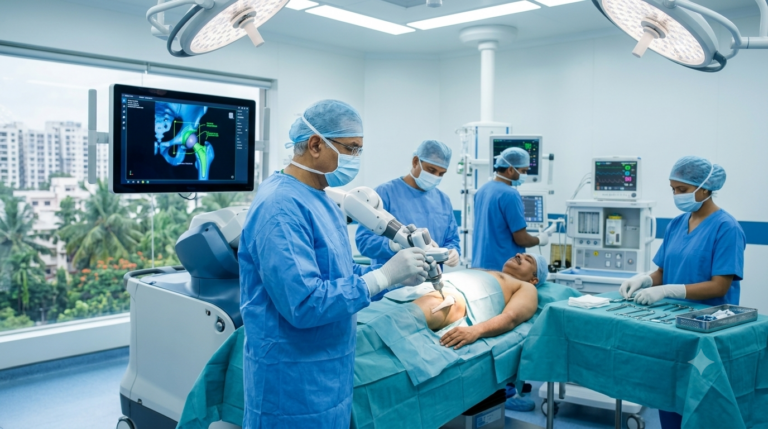
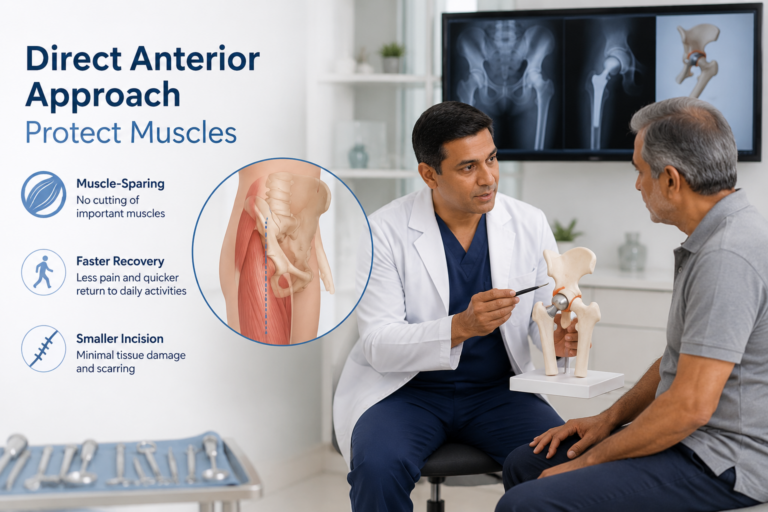
Minimally Invasive Hip Replacement (MIHR) is an advanced technique that replaces the damaged parts of the hip joint using small incisions and muscle-sparing surgical methods. Unlike traditional hip replacement, which requires larger incisions and more tissue disruption, MIHR focuses on preserving muscles and soft tissues around the hip.
Key Advantages of MIHR:
-
Smaller incisions (3–5 inches)
-
Faster healing and mobility
-
Lower postoperative pain
-
Reduced blood loss
-
Shorter hospital stay
-
Minimal scarring
-
Faster return to normal activities
By minimizing tissue damage, patients experience a more comfortable recovery and long-term mobility.
Common Conditions That Require Hip Replacement
You may need minimally invasive hip replacement if you suffer from:
1. Osteoarthritis
The most common cause of hip joint degeneration, leading to pain, stiffness, and reduced mobility.
2. Rheumatoid Arthritis
Chronic inflammation resulting from an autoimmune condition that affects the joint lining.
3. Avascular Necrosis
Reduced blood supply to the hipbone, leading to bone collapse.
4. Hip Fractures
Often caused by accidents, falls, or sports injuries.
5. Post-Traumatic Arthritis
Joint damage resulting from previous injuries.
If hip pain affects your daily activities, limits your mobility, or disturbs your sleep, a surgeon may recommend hip replacement surgery.
Why Minimally Invasive Hip Replacement Is Preferred
In Banashankari, patients often choose MIHR over traditional techniques due to the following benefits:
Less Painful Recovery
Smaller cuts and minimal tissue disturbance mean reduced pain post-surgery.
Faster Mobility
Most patients walk with assistance within 24 hours of surgery.
Cosmetic Benefit
Small incisions lead to small scars, appealing to patients of all ages.
Lower Infection Rates
Small incisions reduce the chance of infection and promote faster healing.
Early Discharge
Patients often leave the hospital within 1–2 days.
Long-Term Reliability
Modern implants last 15–25 years, offering durable results.
How the Minimally Invasive Hip Replacement Procedure Works
Understanding the procedure helps patients feel confident and prepared.
1. Preoperative Assessment
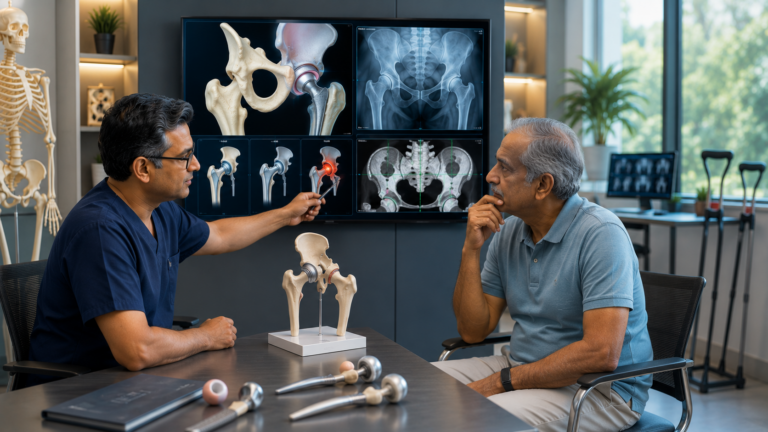
Your surgeon performs X-rays, blood tests, and other evaluations to plan the surgery.
2. Anesthesia
Depending on the patient’s health, either spinal or general anesthesia is administered.
3. Small Incision Approach
A small incision is made near the hip. Instead of cutting through muscles, the surgeon carefully moves them aside.
4. Removal of Damaged Bone and Cartilage
The surgeon removes damaged bone surfaces and prepares the joint for implant placement.
5. Implant Placement
A durable artificial hip joint made of ceramic, metal, or polyethylene is inserted into the socket and femur.
6. Wound Closure
The incision is stitched neatly, leaving a minimal scar.
7. Rehabilitation
Physiotherapy begins almost immediately to ensure a safe and quick recovery.
Recovery After Minimally Invasive Hip Replacement
First 24 Hours
-
Begin walking with support
-
Start gentle physiotherapy
-
Pain control through medication
First 2–3 Weeks
-
Improved mobility and reduced stiffness
-
Light household work becomes manageable
-
Swelling gradually decreases
After 4–6 Weeks
-
Patients can return to desk jobs
-
Ability to resume short-distance travel
-
Strength and flexibility continue to improve
3–6 Months
-
Complete recovery
-
Ability to return to most daily activities and low-impact exercises
Following a personalized rehabilitation plan is critical for long-term success and implant durability.
Why Banashankari Is a Top Location for Hip Replacement in Bangalore
Banashankari is known for its advanced medical infrastructure and access to top orthopedic specialists.
1. State-of-the-Art Facilities
Hospitals here are equipped with modern operating theatres, diagnostic imaging, and physiotherapy units.
2. Expert Orthopedic Surgeons
Banashankari hosts highly experienced joint replacement surgeons trained in minimally invasive and robotic techniques.
3. Personalized Patient Care
From diagnosis to rehabilitation, patients receive personalized treatment plans tailored to their condition.
4. Easy Accessibility
Banashankari is centrally located and well-connected to nearby areas such as Jayanagar, JP Nagar, Uttarahalli, Padmanabhanagar, Rajarajeshwari Nagar, and Basavanagudi.
Who Is the Right Candidate for MIHR?
You may be an ideal candidate if:
-
You have severe hip pain that affects daily activities
-
Non-surgical treatments have not helped
-
You have moderate to advanced joint degeneration
-
You are in reasonably good health
-
You want a faster recovery with minimal scars
Your orthopedic surgeon will decide your eligibility after a thorough evaluation.
Frequently Asked Questions (FAQs)
1. Is minimally invasive hip replacement safe?
Yes. It is a safe and proven technique performed by trained and experienced orthopedic surgeons.
2. How soon can I walk after surgery?
Most patients walk within 24 hours after the procedure.
3. Are the results long-lasting?
Modern hip implants last 15–25 years depending on lifestyle and activity level.
4. Will I have a big scar?
No, the incision is small (3–5 inches), resulting in a minimal scar.
5. When can I return to work?
Desk job workers can typically return within 3–4 weeks.
Final Thoughts
Minimally invasive hip replacement is a highly effective and reliable procedure that helps patients restore mobility, reduce pain, and regain independence. For residents of Banashankari, Bangalore, this advanced procedure is easily accessible through expert surgeons and modern medical facilities. Whether you are struggling with arthritis, hip injury, or mobility issues, minimally invasive hip replacement offers a faster, safer, and more comfortable path to an active life.
If hip pain is affecting your daily routine, consulting a joint replacement specialist in Banashankari is the first step toward long-lasting relief and improved quality of life.
Elite Orthocare Multi-Specialty Clinic
Metro Pillar – 211, NDV Towers, Kanakapura Road, Raghuvanahalli, Bangalore
Phone: +91 8618292628
Email: punitabhi1@gmail.com
Timing: Mon-Fri, 4:30 pm onwards
Narayana Health City Bommasandra
Phone: 8197299003
Timing: Mon-Sat, 9 am–5 pm
Narayana Clini,c Electronic City
Phone: 8197299003
Book online: doctorabhinandanpunit.com
📍 Clinic Locations:
-
Elite Orthocare, Kanakpura Road
-
Narayana Clinic, Electronic City
-
Narayana Health City, Bommasandra
Book a consultation today📞
For Hip replacement click here