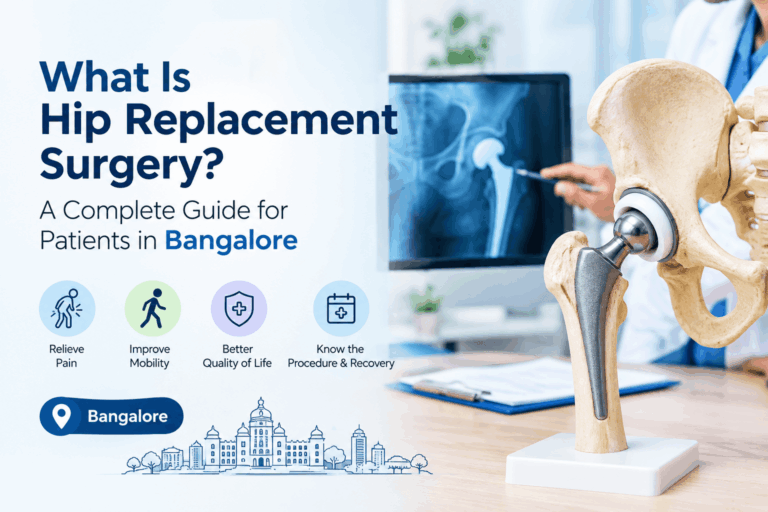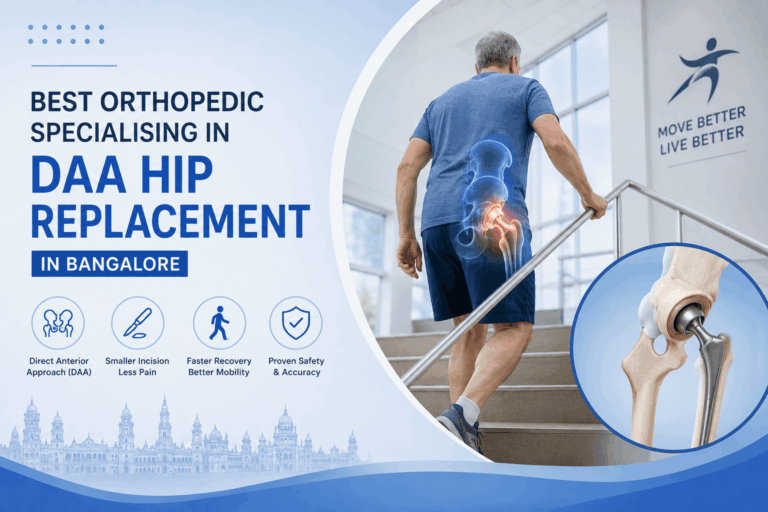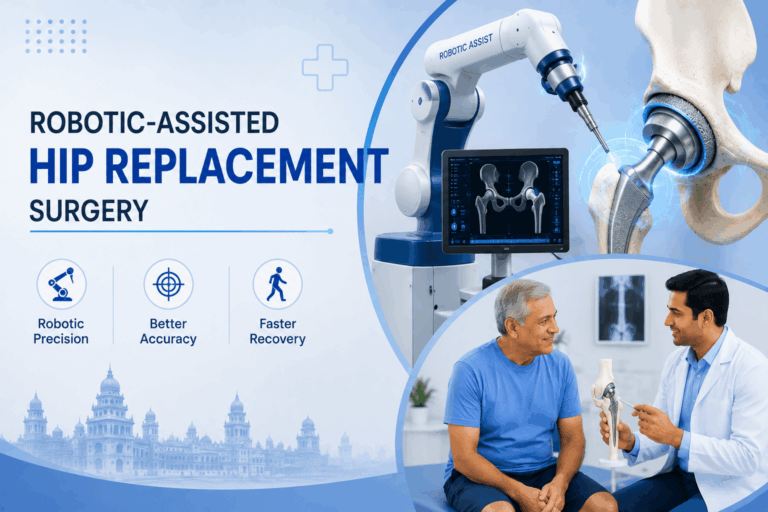

Minimally invasive hip replacement surgery uses smaller incisions and specialized techniques to replace a damaged hip joint while minimizing disruption to surrounding muscles and soft tissues. It may offer faster recovery, less pain, and shorter hospital stays for suitable patients, but it is not the best option for everyone.
What Is Minimally Invasive Hip Replacement Surgery?
Minimally invasive hip replacement surgery is an advanced technique in which the surgeon replaces the damaged hip joint through one or two smaller incisions compared with traditional hip replacement surgery.
The goal is to reduce damage to muscles and soft tissues while restoring hip function and relieving pain.
This approach is commonly used for patients with:
- Hip osteoarthritis
- Rheumatoid arthritis
- Hip fractures (selected cases)
- Avascular necrosis
- Chronic hip pain affecting daily activities
How Is Minimally Invasive Hip Replacement Surgery Different?
Unlike traditional hip replacement, minimally invasive hip replacement surgery uses specialized instruments and smaller incisions.
Potential differences include:
| Minimally Invasive Hip Replacement | Traditional Hip Replacement |
| Smaller incision | Larger incision |
| Less soft tissue disruption | More tissue exposure |
| May reduce blood loss | Standard blood loss |
| Often shorter hospital stay | Standard hospital stay |
| Potentially quicker early recovery | Traditional recovery timeline |
Both procedures aim to relieve pain and restore mobility.
What Are the Benefits of Minimally Invasive Hip Replacement Surgery?
For suitable patients, minimally invasive hip replacement surgery may offer several benefits.
Smaller Surgical Incision
Smaller incisions may lead to reduced scarring and improved cosmetic outcomes.
Less Muscle and Soft Tissue Damage
Modern surgical techniques help preserve surrounding tissues whenever possible.
Faster Early Recovery
Many patients begin walking within a day after surgery and may return to daily activities sooner.
Reduced Post-Operative Pain
Less tissue disruption may reduce pain during the initial recovery phase.
Shorter Hospital Stay
Some patients may be discharged earlier, depending on their overall health and recovery progress.
Are There Any Disadvantages?
Although minimally invasive hip replacement surgery has many advantages, it may not be suitable for everyone.
Possible limitations include:
- Not appropriate for every patient
- Technically more demanding
- Requires specialized surgical expertise
- Limited visibility in complex cases
- Certain medical conditions may require a traditional approach
The most suitable technique depends on individual patient factors.
Who Is a Good Candidate?
You may be considered for minimally invasive hip replacement surgery if you have:
- Severe hip arthritis
- Chronic hip pain
- Good bone quality
- Healthy body weight
- No major hip deformity
- Overall good health
Your orthopaedic surgeon will evaluate your condition before recommending the procedure.
When Is Traditional Hip Replacement a Better Option?
Traditional hip replacement may be preferred when patients have:
- Complex hip deformities
- Previous hip surgeries
- Severe bone loss
- Revision hip replacement
- Certain fractures
In these situations, better surgical exposure may improve safety and implant positioning.
What Is Recovery Like?
Recovery varies from patient to patient.
Most patients begin:
- Standing within 24 hours
- Walking with support shortly after surgery
- Physiotherapy during hospitalization
- Strengthening exercises within the first few weeks
Many patients gradually return to normal daily activities over the following weeks or months.
Are There Any Risks?
Like all surgeries, minimally invasive hip replacement surgery carries certain risks.
Potential complications include:
- Infection
- Blood clots
- Hip dislocation
- Implant loosening
- Nerve injury
- Fracture around the implant
Choosing an experienced orthopaedic surgeon and following rehabilitation advice helps reduce these risks.
How Does Your Surgeon Decide?
The choice between minimally invasive and traditional hip replacement depends on:
- Age
- Bone quality
- Body weight
- Overall health
- Hip anatomy
- Severity of arthritis
- Previous surgeries
- Lifestyle goals
A personalized evaluation helps determine the safest and most effective treatment approach.
Expert Advice from Dr. Abhinandan Punit
According to Dr. Abhinandan Punit:
“Minimally invasive hip replacement surgery offers excellent benefits for appropriately selected patients. However, the best surgical approach should always be individualized based on the patient’s anatomy, underlying condition, and long-term functional goals.”
About Dr. Abhinandan Punit
Dr. Abhinandan Punit is a European Board-Certified Orthopaedic Surgeon in Bangalore with over 15 years of experience and 6,000+ orthopaedic surgeries performed. He specializes in robotic hip replacement, Direct Anterior Approach (DAA) hip replacement, sports injury treatment, and advanced joint reconstruction with a focus on evidence-based care and faster recovery.
Consult for Hip Replacement Surgery in Bangalore
If hip pain is limiting your daily activities, an expert evaluation can help determine whether minimally invasive hip replacement surgery is the right option for you.
If you experience hip pain while walking, stiffness, or difficulty performing daily activities, an orthopedic evaluation can help determine the right treatment.
Dr. Abhinandan Punit provides comprehensive hip assessments, advanced surgical care, and personalized rehabilitation plans to help patients regain mobility and improve long-term joint function.
Consultation is available at:
📍 Elite Orthocare, Kanakapura Road, Bangalore
📍 Narayana Clinic, Electronic City, Bangalore
Book an appointment with Dr. Abhinandan Punit to receive a personalized evaluation and discuss the most suitable hip replacement treatment for your condition.
Frequently Asked Questions
Is minimally invasive hip replacement surgery better than traditional surgery?
Minimally invasive hip replacement surgery may provide faster early recovery, smaller incisions, and less soft tissue disruption for selected patients. However, the best option depends on the patient’s anatomy, overall health, and the underlying hip condition.
How long does recovery take after minimally invasive hip replacement surgery?
Many patients begin walking within a day after surgery and gradually return to normal activities over several weeks. Complete recovery varies depending on age, rehabilitation, and overall health.
Is minimally invasive hip replacement surgery suitable for everyone?
No. While many patients benefit from this approach, individuals with complex hip deformities, previous surgeries, or significant bone loss may require a traditional hip replacement.
Does minimally invasive hip replacement surgery reduce pain?
Because the procedure uses smaller incisions and may involve less soft tissue disruption, many patients experience less pain during the early recovery period. Pain levels vary between individuals.
What are the risks of minimally invasive hip replacement surgery?
Potential risks include infection, blood clots, hip dislocation, nerve injury, implant loosening, and fractures around the implant. These risks are similar to those associated with traditional hip replacement surgery.