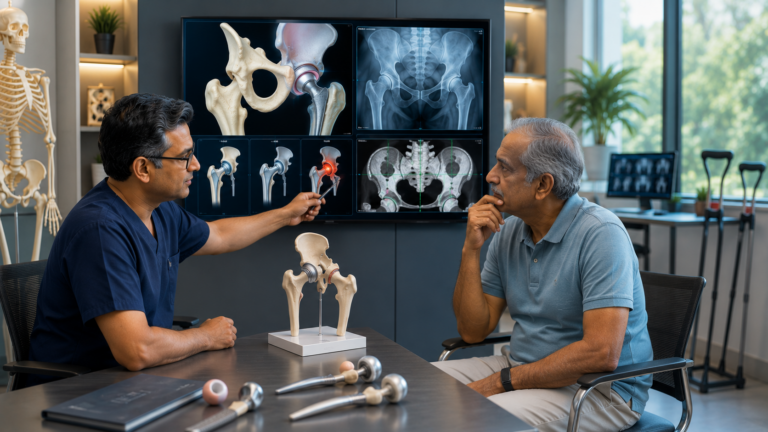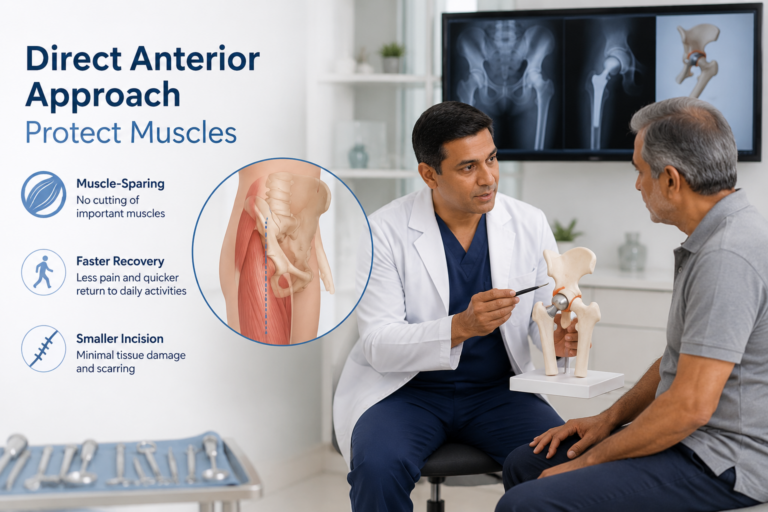

What Causes Hip Pain When Walking?
Hip pain when walking is mainly caused by conditions such as Osteoarthritis, muscle strain, Bursitis, tendon inflammation, or joint injuries. These problems affect the hip joint’s movement and stability, leading to pain, stiffness, and discomfort during walking. The pain usually worsens with weight-bearing activities because pressure on the joint increases irritation and friction in damaged or inflamed tissues.
What Are the Common Causes of Hip Pain While Walking?
The most frequent hip pain when walking causes include:
- Osteoarthritis: Cartilage breakdown leading to joint stiffness and pain
- Muscle Strain: Overuse or sudden movement causing soft tissue injury
- Bursitis: Inflammation of fluid-filled sacs around the hip joint
- Tendonitis: Irritation or inflammation of tendons
- Hip Labral Tear: Damage to the cartilage lining of the joint
- Fractures or Injury: Especially in older adults or after falls
Why Does Walking Make Hip Pain Worse?
Hip pain often increases during walking because:
- Body weight puts pressure on the hip joint
- Damaged cartilage causes friction between bones
- Inflamed tissues become more irritated with movement
- When muscles lack strength, they cannot hold the joint in place effectively
What Are the Signs of Hip Pain While Walking?
Common symptoms include:
- Sharp or dull pain in the hip joint
- Pain radiating to the thigh or groin area
- Stiffness after sitting or resting
- Difficulty walking long distances
- Limping or reduced mobility
Signs It Might Be Time To Talk To A Doctor About Hip Pain?
You should seek medical advice if:
- Pain persists for several weeks
- Walking becomes difficult or painful
- Swelling or stiffness increases
- Pain interferes with daily activities
Non Surgical Options for Easing Hip Pain During Walking?
Most reasons for hip pain while walking might get better without an operation. Trying different approaches first could help ease discomfort. Some find relief through gentle movement instead of going under the knife. Other options exist before choosing a surgical path. Treatment often starts with simpler methods that work well over time
- Physiotherapy: Strengthens muscles and improves flexibility
- Medications: Anti-inflammatory drugs to reduce pain
- Lifestyle Changes: Weight management and activity modification
- Assistive Devices: Use of a cane or support for walking
Heat therapy helps relax muscles, while cold therapy reduces swelling and inflammation.
Preventing hip pain during walking?
You can reduce the risk of hip pain when walking caused by:
- Maintaining a healthy weight
- Staying physically active
- Stretching regularly
- Avoiding overuse or sudden strain
- Wearing proper footwear
Deciding on surgery for hip pain?
Surgery may be recommended if:
- When it gets worse, the ache stays without letup
- Non-surgical treatments fail
- Damage within the joint has progressed deeply
- Mobility is significantly reduced
Conclusion
Walking might bring hip discomfort for reasons ranging from slight muscle pulls to tougher joint troubles. Early recognition of what’s wrong often means correct care follows, sometimes preventing an operation. When signs continue without change, getting advice from a doctor trained in such issues leads to better understanding and handling.
About Dr. Abhinandan Punit
Surgeon Dr. Abhinandan S Punit runs Elite Orthocare Multi-Speciality Clinic in Bangalore, holding certification from Europe’s orthopaedic board. His work dives deep into complex joint replacements – knees get special attention, along with robot-supported operations. Years add up past fifteen, shaping his focused path in surgical precision. Procedures evolve under his steady hand, blending experience with modern techniques.
Every year he does many joint replacements, aiming each time for accuracy, smaller incisions, yet quicker healing afterward. Total knee work takes up much of his schedule, though partial knees share space too, along with tough redo cases where past implants failed. Machines like MAKO guide some operations, while others rely on Cuvis or Cori tools built for fine control during surgery. Precision stays central, no matter which tech hums beside him in the room.
Health comes first when Dr. Abhinandan Punit listens closely, then builds care step by step. Each plan fits the person, shaped by clear findings instead of guesses. With time, joints work better because attention stays steady on lasting results.
Frequently Asked Questions About Hip Pain While Walking
What are the main causes of hip pain when walking?
The main causes of hip pain when walking include osteoarthritis, bursitis, muscle strain, tendonitis, and hip joint injuries. These conditions affect the joint’s movement and stability, leading to discomfort during weight-bearing activities. In some cases, pain may also be linked to poor posture, overuse, or referred pain from the lower back.
Is hip pain while walking serious?
Hip pain while walking can be mild or serious depending on the underlying cause. Minor issues like muscle strain may improve with rest, but conditions such as arthritis or joint damage may require medical attention. If the pain is persistent, worsening, or affecting mobility, it is important to consult a doctor for proper evaluation.
Can hip pain be treated without surgery?
Yes, many cases of hip pain can be treated without surgery. Non-surgical options include physiotherapy, medications, lifestyle changes, and strengthening exercises. These treatments help reduce pain and improve joint function. However, if the condition is severe or does not respond to conservative treatment, surgical options may be considered.
When should I worry about hip pain while walking?
You should be concerned about hip pain while walking if it lasts for several weeks, becomes severe, or limits your daily activities. Other warning signs include stiffness, swelling, limping, or sudden pain after an injury. Early medical evaluation can help identify the cause and prevent the condition from worsening.
Does walking make hip pain worse?
Walking can make hip pain worse, especially if the joint is inflamed or damaged. Weight-bearing activities increase pressure on the hip, which can worsen discomfort. However, in some cases, gentle movement may help improve flexibility. The impact of walking depends on the cause and severity of the condition.