
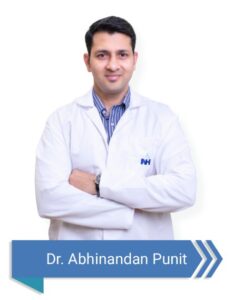
Dr. Abhinandan Punit Bio
-
Dr. Abhinandan Punit (Best Shoulder surgeon & Knee for Replacement in JP Nagar), MS, DNB, MCh (Edinburgh), MSc Sports & Exercise Medicine
-
15+ years of surgical experience with 6,000+ orthopedic surgeries
-
Performs 200+ knee replacements annually, specializing in robotic techniques (MAKO, Cuvis, Cori)
-
Fellowship training in the UK and Australia
-
Founder of Elite Orthocare Multi-Specialty Clinic and consultant at Narayana Clinic & Hospitals
-
Member of ISHKS and ISTA, with published outcome research in peer-reviewed journals
ACL Surgery in Kanakapura Bangalore
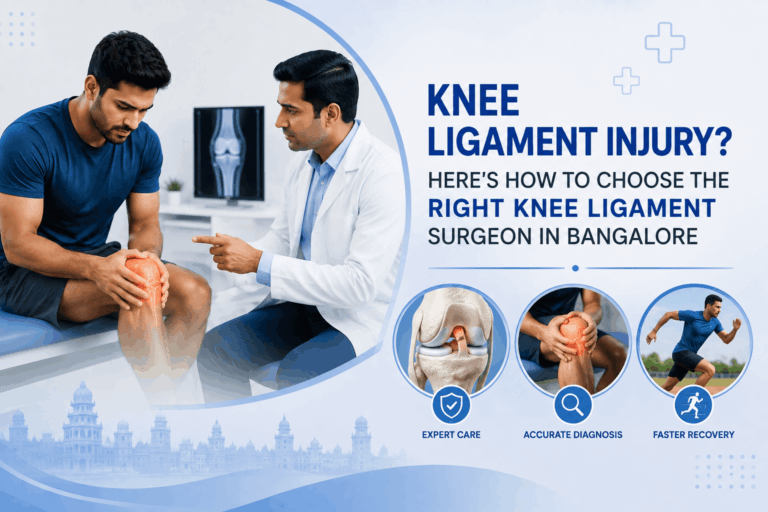
An ACL tear is one of the most common sports injuries. ACL surgery—called ACL reconstruction—repairs the torn anterior cruciate ligament to restore knee stability. If you’ve injured your ACL and experience instability, Dr. Abhinandan Punit at Elite Orthocare on Kanakapura Road offers minimally-invasive surgery with expert care.
What Is an ACL Injury?
The anterior cruciate ligament (ACL) is a key ligament in the knee that prevents the shin bone from sliding forward. When torn—usually during sports or sudden direction changes—the ACL cannot heal itself due to poor blood supply.
Common causes include pivoting in sports (football, basketball, soccer), hard landings, or direct blows to the knee.
Symptoms of a Serious ACL Tear
- Loud popping sound at injury
- Sudden swelling within hours
- Feeling of instability or knee “giving way”
- Difficulty walking or bending the knee
- Recurring episodes of the knee buckling
- Persistent pain with activity
Should You Have ACL Surgery?
You should consider surgery if:
- You’re an athlete or participate in cutting/pivoting sports
- Your knee feels unstable during normal activities
- You want to return to sports at the same level
- You have secondary injuries (meniscus tears)
- Your work requires stability and quick movements
You may manage without surgery if:
- You’re sedentary and avoid cutting sports
- You’re willing to modify your activities permanently
- You commit to 6 months of physiotherapy
ACL Surgery vs Physiotherapy
| Aspect | Surgery | Physiotherapy Only |
|---|---|---|
| Best For | Athletes, active people | Sedentary individuals |
| Recovery to Sports | 9–12 months | May never return safely |
| Success Rate | 90%+ stability | 50–60% without exercise |
| Secondary Injury Risk | Low (5–10%) | High (30–50%) |
| Osteoarthritis Risk | Lower | Higher over time |
Surgery is the gold standard for functional recovery and returning to sports. Physiotherapy alone works only if you permanently avoid cutting sports.
What Happens During an ACL Consultation
Dr. Abhinandan will:
- Review your injury history and activity level
- Perform physical tests (Lachman test, anterior drawer test)
- Review your MRI to confirm the tear
- Discuss surgery vs. conservative options based on your goals
- Explain the surgical process and recovery timeline
- Answer all your questions
The consultation takes 30–45 minutes. There’s no rush to decide.
Recovery After ACL Surgery
Weeks 0–2: Pain, swelling, limited motion. Use crutches.
Weeks 2–6: Pain decreases, motion improves. Physiotherapy 2–3x weekly.
Months 2–3: Return to work, light walking. Continue strengthening.
Months 3–6: Progressive activity, sport-specific training begins.
Months 6–12: Return to cutting sports and competitive activities.
Full recovery: 9–12 months with dedicated physiotherapy.
Recovery isn’t linear. Your commitment to physiotherapy is the #1 factor determining success.
Why Choose Dr. Abhinandan Punit
Experience & Expertise
- 15+ years of orthopedic surgery experience
- Over 6,000 successful surgeries
- Specializes in sports injuries and joint reconstruction
- Expert in minimally-invasive arthroscopic techniques
Advanced Care at Elite Orthocare
- State-of-the-art arthroscopic facilities
- On-site MRI and imaging
- Dedicated physiotherapy center
- Expert nursing and anesthesia support
Patient-Centered Approach
- Takes time to understand your activity goals
- Customized surgical and rehabilitation plans
- Clear communication throughout recovery
- Accessible for follow-up questions
About Dr. Abhinandan Punit
Dr. Abhinandan Punit is an accomplished Orthopedic & Robotic Joint Replacement Surgeon with 15+ years of specialized experience in joint reconstruction and sports injuries. He has performed over 6,000 successful surgeries and is recognized for expertise in minimally-invasive arthroscopic techniques and robotic-assisted procedures.
His approach combines cutting-edge surgical technology with patient-centered care, ensuring the best outcomes for every patient. Dr. Abhinandan is committed to helping patients return to their desired activity level.
Book a Consultation: Get Pain-Free Mobility
Elite Orthocare Multi-Specialty Clinic
Metro Pillar – 211, NDV Towers, Kanakapura Road, Raghuvanahalli, Bangalore
Phone: +91 8618292628
Timing: Mon-Fri, 4:30 pm onwards
Narayana Health City Bommasandra
Phone: 8197299003
Timing: Mon-Sat, 9 am–5 pm
Narayana Clini,c Electronic City
Phone: 8197299003
Book online: doctorabhinandanpunit.com
📍 Clinic Locations:
-
Elite Orthocare, Kanakpura Road
-
Narayana Clinic, Electronic City
-
Narayana Health City, Bommasandra
Book a consultation today📞
ACL Surgery
Frequently Asked Questions
Do all ACL tears need surgery?
No. Sedentary people who avoid cutting sports may manage with physiotherapy alone. But athletes and those with ongoing instability benefit greatly from surgery. 30–50% of untreated ACL tears develop secondary injuries (meniscus tears, cartilage damage) within 2 years.
How long does recovery take?
Most patients return to light activities in 2–3 months. Return to non-contact sports by month 4–5. Full return to cutting sports takes 9–12 months. Your commitment to physiotherapy determines the timeline.
Can I walk with a torn ACL?
You can walk slowly on flat ground, but stairs and sudden movements cause buckling. Long-term untreated ACL tears increase cartilage damage and secondary injury risk. A knee brace helps, but surgery restores full function.
Is ACL surgery painful?
The surgery itself is painless (performed under anesthesia). Post-operative pain is mild to moderate and well-managed with medication for 2–3 weeks. By week 4–6, most patients reduce medication significantly. Physiotherapy causes therapeutic soreness, not sharp pain.
When should I see a specialist?
See a specialist immediately after sudden knee swelling, a popping sound, or significant instability. Early evaluation (within 2–3 weeks) via MRI confirms the diagnosis and prevents compensatory injuries. Waiting months increases secondary injury risk.