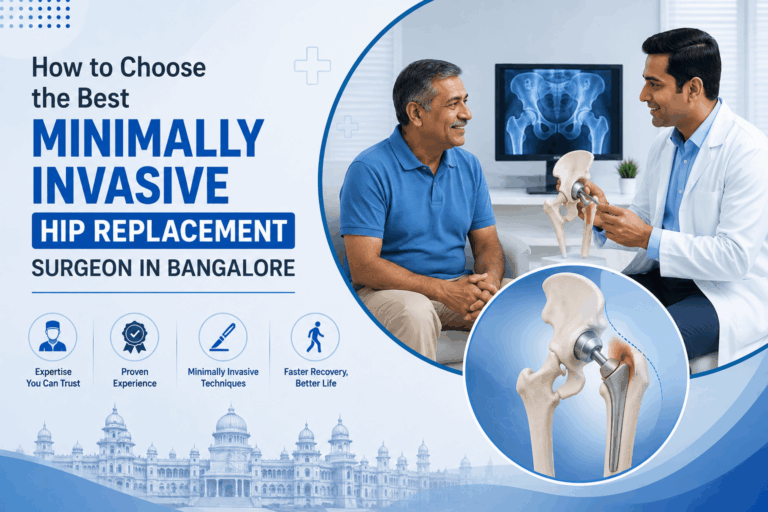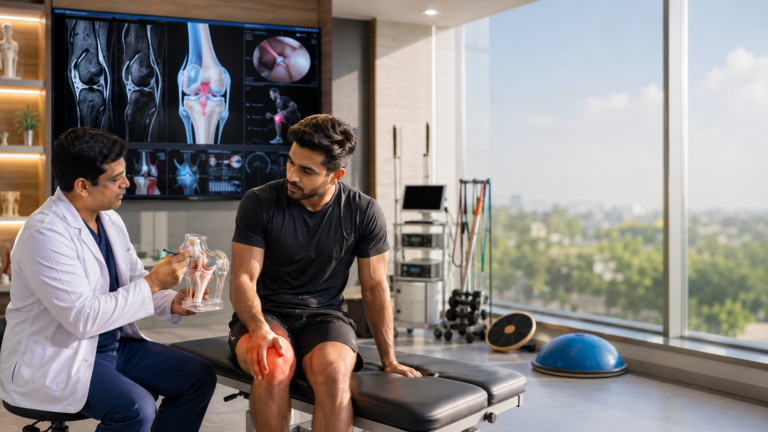

Hip replacement surgery in Bangalore is a procedure where the damaged hip joint is replaced with an artificial implant to relieve chronic pain and restore mobility. Dr. Abhinandan Punit is one of Bangalore’s leading hip replacement surgeons with 2,000+ successful surgeries and a 99.2% success rate. Recovery begins within 24 hours of surgery.
What Makes Bangalore the Best City for Hip Replacement Surgery?
Bangalore leads India in hip replacement surgery because of its advanced robotic surgical infrastructure, internationally trained orthopedic surgeons, and significantly lower treatment costs compared to the US, UK, or Australia. Over 200,000 international patients visit Bangalore annually for orthopedic procedures. Success rates at top hospitals consistently exceed 97%, and patients benefit from comprehensive rehabilitation programs and shorter waiting times.
What is Total Hip Replacement Surgery?
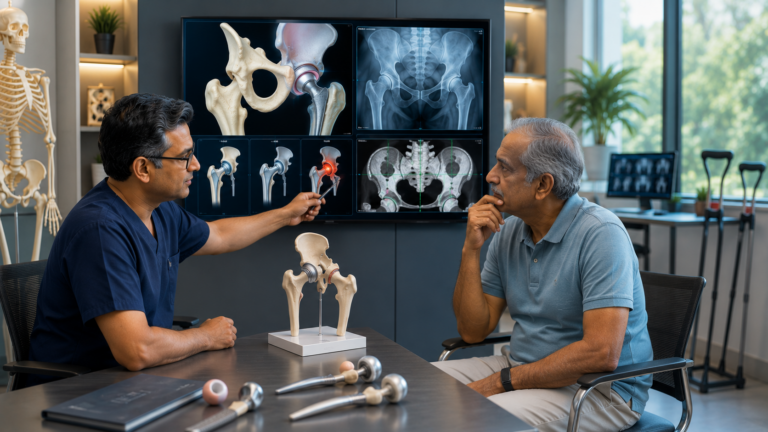
Total hip replacement surgery involves replacing the damaged ball-and-socket hip joint with artificial metal, ceramic, or plastic implants. It is recommended when chronic hip pain from arthritis, fracture, or joint deterioration does not respond to medication, physiotherapy, or injections after 3–6 months of treatment. Surgery typically takes 1–2 hours and most patients begin walking within 24 hours.
Types of Hip Replacement Procedures Available in Bangalore
Total Hip Replacement (THR) – The gold standard for complete joint replacement. Both the acetabulum (socket) and femoral head (ball) are replaced with artificial implants. Ideal for patients with advanced arthritis or severe joint damage affecting the entire hip joint.
Partial Hip Replacement – Only the femoral head (ball) is replaced while keeping the natural socket intact. Recommended for elderly patients with specific hip fractures where the socket remains healthy. Recovery is faster and the procedure is less complex than total hip replacement.
Hip Resurfacing – The damaged surface of the femoral head is capped with a metal covering rather than fully removed. Best suited for younger, active patients under 60 who want to preserve natural bone and maintain high activity levels.
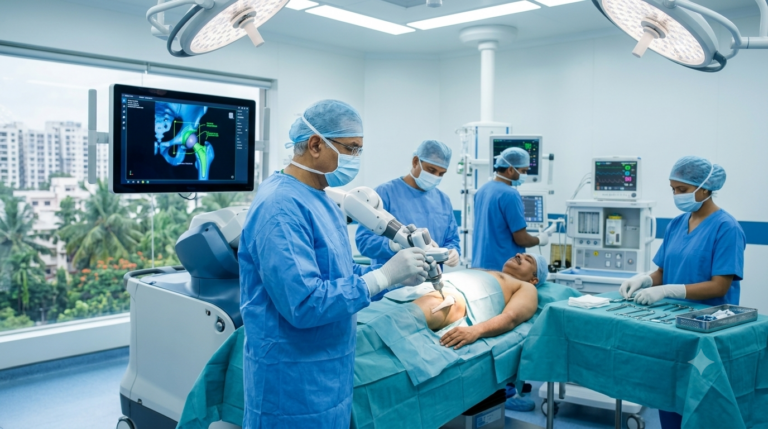
Robotic-Assisted Hip Replacement – Uses MAKO robotic system for 3D CT-based planning and precise implant placement. Results in less blood loss, reduced post-operative pain, faster recovery, and longer implant lifespan compared to traditional manual surgery.
Direct Anterior Approach (DAA) – A muscle-sparing technique where the hip is accessed from the front of the body. No major muscles are cut, allowing patients to walk within hours of surgery and recover 2–3 weeks faster than traditional posterior approach patients.
What Are the Most Advanced Hip Replacement Techniques Available in Bangalore?
Cutting-Edge Approaches:
- Direct Anterior Approach (DAA) – Revolutionary muscle-sparing technique
- SuperPATH Technique – Advanced tissue-preserving benefits
- Computer Navigation – Enhanced surgical precision and accuracy
- 3D Imaging Integration – Real-time surgical guidance
- Robotic-Assisted Systems – Mako and ROSA technology platforms
Robotic Hip Replacement vs Traditional Hip Replacement — Which Is Better?
Robotic hip replacement is more precise and has faster recovery than traditional surgery. MAKO and ROSA robotic systems create a 3D map of the hip before surgery, allowing exact implant positioning and minimizing damage to surrounding muscles.
| Factor | Robotic Surgery | Traditional Surgery |
|---|---|---|
| Precision | 3D mapping, custom alignment | Manual measurement |
| Blood loss | Minimal | Moderate |
| Recovery time | 3–4 weeks | 6–8 weeks |
| Hospital stay | 2–3 days | 4–5 days |
| Pain post-op | Lower | Moderate |
| Implant lifespan | Longer | Variable |
| Muscle damage | Minimal | Moderate |
Who Is Dr. Abhinandan Punit — Hip Replacement Surgeon in Bangalore?
Dr. Abhinandan Punit is Bangalore’s leading hip replacement surgeon specializing in advanced minimally invasive techniques with over 15 years of experience and 2,000+ successful hip replacement surgeries.
- 2,000+ hip replacement surgeries performed
- 15+ years of orthopedic surgical experience
- Specialist in Direct Anterior Approach (DAA) and SuperPATH technique
- Certified in MAKO and ROSA robotic systems
- 99.2% success rate — exceeds international standards
- Practicing at Elite Orthocare, Narayana Clinic, and Narayana Health City, Bangalore
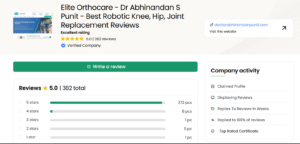
How to Choose the Best Hip Replacement Surgeon in Bangalore?
The best hip replacement surgeon in Bangalore should have high surgical volume, robotic surgery certification, strong hospital affiliations, and verified patient outcomes. Look for experience with your specific condition, documented success rates, access to MAKO or ROSA robotic systems, and transparent communication about risks and recovery. Dr. Abhinandan Punit meets all these criteria with 2,000+ surgeries and a 99.2% success rate.
Top Hip Replacement Hospitals in Bangalore
Premier Medical Facilities:
- Narayan Clinic
- 97-99% success rates achieved
- 3D imaging and computer navigation
- Advanced robotic surgery capabilities
What Is the Cost of Hip Replacement Surgery in Bangalore?
Hip replacement surgery cost in Bangalore depends on the type of procedure, hospital, implant brand, and surgeon expertise.
| Type | Approximate Cost |
|---|---|
| Partial Hip Replacement | ₹2 – ₹3.5 Lakh |
| Total Hip Replacement | ₹3.5 – ₹6 Lakh |
| Robotic-Assisted Surgery | ₹5 – ₹9 Lakh |
| Hip Resurfacing | ₹4 – ₹7 Lakh |
| Revision Hip Replacement | ₹6 – ₹12 Lakh |
Complete Hip Replacement Recovery Timeline
Week-by-Week Recovery Milestones
- Day 1: Standing and walking with assistance within 24 hours of surgery. Pain managed with multimodal medication.
- Day 2–3: Stair climbing practice begins. Discharge planning starts.
- Week 1–2: Discharge from hospital usually within 2–4 days. Controlled walking and light range-of-motion exercises at home.
- Week 3–6: Physiotherapy 3–4 sessions per week. Driving possible after 4–6 weeks. Desk job work possible from week 4.
- Month 2–3: Walking 30–45 minutes daily. Swimming and stationary cycling permitted with doctor approval. Full-time office work possible.
- Month 4–6: Return to most low-impact sports and recreational activities. Long-distance travel approved. Final functional evaluation completed.
Post-Operative Care Essentials
Home Environment Modifications:
- Bathroom safety equipment – Grab bars and shower chairs
- Elevated toilet seats – Reduced hip flexion during use
- Stair railings – Additional support for navigation
- Non-slip mats – Fall prevention measures
- Reaching aids – Long-handled tools for daily tasks
Recovery Support Systems:
- Physiotherapy protocols – Bangalore-specific rehabilitation centers
- Warning sign recognition – Symptoms requiring immediate attention
- Medication management – Pain control and anticoagulation
- Follow-up scheduling – Regular progress monitoring
- Emergency contacts – 24/7 medical support access
Lifestyle Changes After Hip Replacement
Permanent Precautions:
- High-impact activities – Avoid running, jumping, heavy contact sports
- Deep hip flexion – Limit bending beyond 90 degrees
- Heavy lifting – Maximum 50 pounds recommended
- Crossing legs – Avoid for first 6-8 weeks
Recommended Activities:
- Low-impact exercises – Swimming, cycling, walking, golf
- Strength training – Light weights with proper form
- Flexibility routines – Gentle stretching and yoga
- Balance exercises – Fall prevention programs
Travel Considerations:
- Airport security – Inform about metal implants
- Long flights – Compression stockings and movement
- International travel – Medical clearance required
- Emergency planning – Carry surgical documentation
Complications, Risks & Success Rates
Understanding Hip Replacement Risks
- Infection Risk: <1% at Top Bangalore Hospitals through strict prevention protocols and antibiotic prophylaxis.
- Blood Clots (DVT/PE): 2-3% Occurrence Rate preventable with proper screening and protocols.
- Implant Dislocation: <1% with Modern Techniques due to improved surgical approaches.
Long-term Success Rates in Bangalore
Outstanding Outcomes:
- 20-year implant survival – Exceeds 85-95% success rate
- Patient satisfaction – Consistently above 95% approval
- Activity return rates – 90%+ patients resume normal activities
- Pain relief – Significant improvement in 98% of cases
- Quality of life enhancement – Dramatic functional improvements
- Revision surgery rates – Less than 5% require future procedures
Alternatives to Surgery
Non-Surgical Hip Pain Treatment Options
Conservative Treatment Approaches:
- Regenerative medicine options:
- Stem cell therapy injections
- PRP (Platelet-Rich Plasma) treatments
- Growth factor therapies
- Advanced physiotherapy programs:
- Targeted strength training
- Mobility enhancement exercises
- Gait training protocols
- Comprehensive pain management:
- Prescription medications
- Joint injections (cortisone, hyaluronic acid)
- Alternative therapies (acupuncture, massage)
When Surgery Becomes Inevitable
Clear Surgical Indicators:
- Conservative treatment failure – No improvement after 6 months
- Severe mobility limitations – Difficulty with daily activities
- Significantly diminished quality of life – Sleep disruption, depression
- Progressive joint deterioration – X-ray evidence of bone damage
- Persistent pain levels – 7+ on 10-point scale despite treatment
Technology & Innovation
Latest Hip Replacement Technology in Bangalore
Robotic Surgery Advances:
- Mako Robotic System – Precision bone preparation and implant placement
- ROSA Surgical Robot – Enhanced visualization and accuracy
- Computer-assisted navigation – Real-time surgical guidance
- 3D surgical planning – Pre-operative procedure customization
Implant Innovations:
- Ceramic bearings – Superior wear resistance and longevity
- Oxinium implants – Advanced metal alloy technology
- Highly cross-linked polyethylene – Reduced wear particles
- Titanium coating – Enhanced bone integration
- Dual-mobility designs – Reduced dislocation risk
Cutting-Edge Applications:
- 3D printing technology – Custom implants and surgical guides
- Patient-specific instrumentation – Personalized surgical tools
- Advanced imaging integration – CT-based surgical planning
- Augmented reality guidance – Real-time surgical overlay
Future Technology Pipeline:
- AI-assisted surgery – Machine learning optimization
- Smart implants – Sensor-embedded devices
- Bioactive coatings – Enhanced implant integration
- Minimally invasive robotics – Smaller incision capabilities
Conclusion
Dr. Abhinandan Punit is one of Bangalore’s most experienced hip replacement surgeons, offering advanced robotic and minimally invasive techniques with a 99.2% success rate and 2,000+ successful procedures. Whether you need a total hip replacement, partial hip replacement, or robotic-assisted surgery, Dr. Punit creates a personalized treatment plan based on your age, activity level, and severity of joint damage.
If chronic hip pain is limiting your daily life, do not wait. Book a consultation with Dr. Abhinandan Punit at Elite Orthocare, Narayana Clinic, or Narayana Health City in Bangalore and take the first step toward pain-free movement.
Learn more about Hip Replacement Surgery in Bangalore

Frequently Asked Questions
How long does hip replacement surgery take?
Hip replacement surgery typically takes 1–2 hours depending on the type of procedure and surgical approach. Robotic-assisted surgery may take slightly longer due to pre-operative 3D mapping but results in more precise implant placement and significantly faster post-operative recovery overall.
Can I walk immediately after hip replacement surgery?
Yes, most patients begin standing and walking with assistance within 24 hours of hip replacement surgery. Patients who undergo the Direct Anterior Approach or robotic-assisted surgery often walk within a few hours due to reduced muscle damage during the procedure.
How long does a hip replacement implant last?
A hip replacement implant typically lasts 20–25 years with proper care and rehabilitation. Robotic-assisted surgery improves implant longevity by ensuring precise alignment and balanced load distribution. Patients who maintain a healthy weight and avoid high-impact activities get the best long-term results.
What is the success rate of hip replacement surgery in Bangalore?
Hip replacement surgery in Bangalore has a success rate of 97–99% at top hospitals. Dr. Abhinandan Punit’s success rate is 99.2%, exceeding international standards. Patient satisfaction consistently remains above 95% with significant improvement in pain relief and quality of life.
What is the Direct Anterior Approach in hip replacement?
The Direct Anterior Approach is a muscle-sparing technique where the surgeon accesses the hip from the front of the body. It avoids cutting major muscles, allowing patients to walk within hours of surgery, experience less post-operative pain, and recover 2–3 weeks faster than traditional posterior approach patients.
Is robotic hip replacement better than traditional surgery?
Yes, robotic hip replacement is more precise than traditional surgery for most patients. MAKO and ROSA robotic systems create a 3D map of the hip before surgery, allowing exact implant positioning. This results in less blood loss, lower post-operative pain, faster recovery, and longer implant lifespan.
How much does hip replacement surgery cost in Bangalore?
Hip replacement surgery in Bangalore costs between ₹2 lakh and ₹9 lakh depending on the type of procedure, hospital, and implant brand. Total hip replacement averages ₹3.5–₹6 lakh, while robotic-assisted surgery costs ₹5–₹9 lakh. Most insurance providers cover the procedure and Dr. Punit’s team assists with claims.