
Knee pain can make even simple things hard. Walking to the kitchen, climbing stairs, sitting on the floor for a puja, or playing with grandchildren — all of it becomes a struggle when the knee joint wears out. For elderly patients, this pain often builds up over years until surgery becomes the only real option left.
If you or your parents are looking for the top robotic knee replacement surgeons in Bangalore, you are already on the right track. Robotic knee replacement has changed the game for older patients. It is more precise, less painful, and the recovery is much faster than old-style surgery. But finding the right surgeon is the most important step in this whole journey. This guide will help you understand what robotic knee replacement is, why it works so well for elderly patients, and how to choose the best surgeon in Bangalore for this surgery.
What Is Robotic Knee Replacement Surgery?
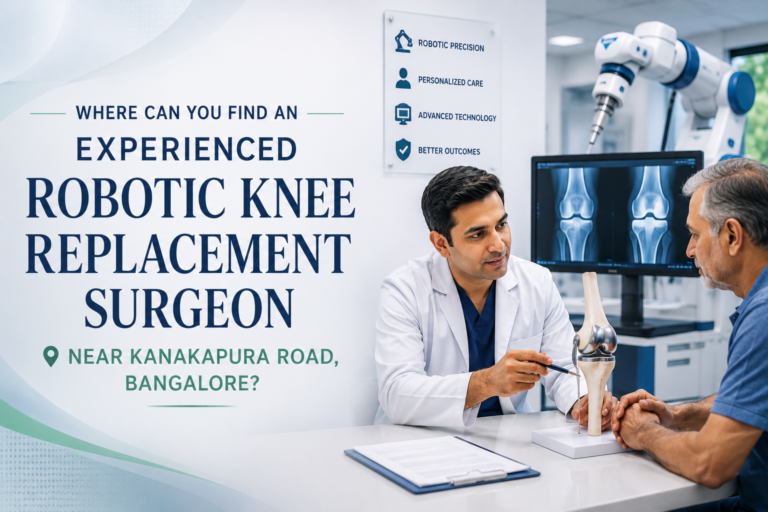
Robotic knee replacement is a modern method in which the surgeon uses a robotic arm and computer imaging to plan and perform the surgery with high accuracy. Before the actual operation, a 3D scan of the patient’s knee is created. This scan helps the surgeon see the exact shape, size, and alignment of the bones.
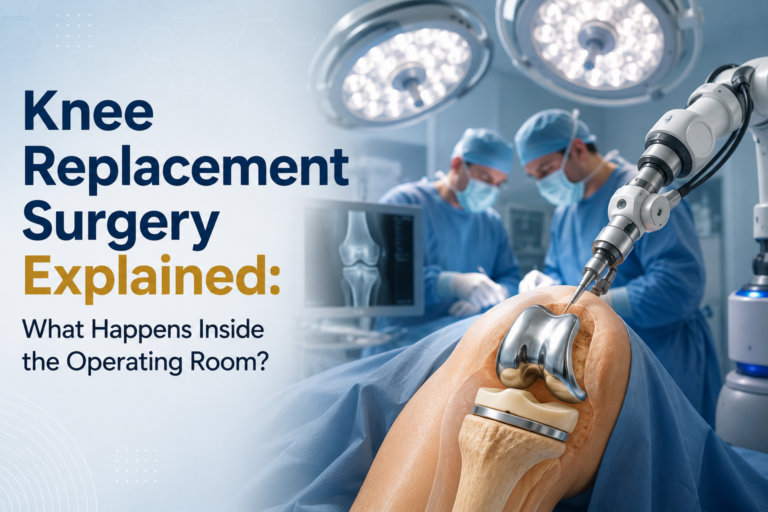
During the surgery, the robotic arm assists the surgeon in cutting the bone and placing the implant at the perfect angle. The surgeon remains in full control the whole time—the robot does not operate on its own. It simply guides the surgeon’s hand with more precision than the human eye alone can manage.
This precision matters, especially for older patients whose bones may be weaker or whose knee deformity is more complex after years of wear and tear.
Why Elderly Patients Benefit More From Robotic Surgery
Age brings its own set of challenges when it comes to surgery. Older patients often have lower bone density, slower healing, and other health conditions like diabetes or high blood pressure. That’s why robotic knee replacement is such a good fit for them.
Less blood loss and smaller cuts: Robotic-assisted surgery usually needs smaller incisions than traditional surgery. This means less blood loss, less post-surgery pain, and a lower chance of infection—all things that matter a great deal for elderly patients.
Better implant alignment: A knee implant that is not aligned properly wears out faster and can cause pain later. Robotic technology places the implant with much higher accuracy, which means the implant lasts longer and works better with the patient’s natural leg movement.
Faster recovery and less hospital stay: Older patients often worry about long hospital stays. With robotic surgery, many patients can stand and start walking with support within a day or two. Shorter hospital stays also mean lower risk of hospital-acquired infections, which is a real concern for senior citizens.
Lower risk of complications: Because the cuts are more precise, there is less damage to the soft tissue around the knee. This lowers the chances of complications and helps the patient regain movement sooner.
How to Find the Right Robotic Knee Replacement Surgeon in Bangalore
Bangalore has grown into one of India’s leading medical hubs, with several hospitals offering advanced robotic joint replacement programs. But since this is such an important decision, especially for an elderly family member, here is what you should actually check before choosing a surgeon.
1. Check the Surgeon’s Experience With Robotic Systems Specifically
Not every orthopedic surgeon who does knee replacements has hands-on experience with robotic platforms. Ask directly: how many robotic knee replacements has the surgeon personally performed? A surgeon who has done hundreds of robotic cases will handle unexpected situations far better than one who is still new to the technology.
2. Look at the Hospital’s Robotic Infrastructure
When considering robotic-assisted joint replacement in Bangalore, look beyond the surgeon’s experience and evaluate the hospital’s overall infrastructure. A well-equipped facility should have appropriate pre-surgery imaging and planning capabilities, a trained operating-room team familiar with robotic-assisted procedures, and access to structured post-surgery rehabilitation and follow-up care. These factors can play an important role in supporting a smooth recovery, particularly for elderly patients.
3. Ask About Experience With Elderly and High-Risk Patients
Elderly patients often come with other health conditions. A good surgeon will work closely with an anaesthetist and physician to manage these risks before, during, and after surgery. Ask if the surgical team has specific experience handling patients with diabetes, heart conditions, or osteoporosis.
4. Read Patient Reviews and Ask for References
Genuine patient reviews on Google, Practo, or hospital websites give a real sense of a surgeon’s communication style and how patients feel about their care. If possible, talk to a family member or friend who has had a knee replacement done by the same surgeon.
5. Understand the Full Recovery Plan
A good surgeon doesn’t just perform the operation—they guide the patient through physiotherapy and recovery too. Ask what the rehabilitation plan looks like, how long it usually takes, and what support is available at home after discharge.
6. Compare Consultation Experience
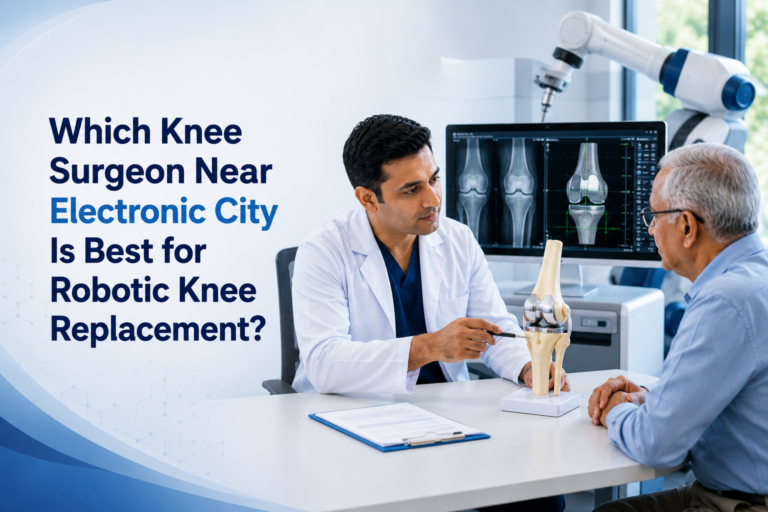
Book a consultation before deciding. A good surgeon will explain the condition clearly, show the scan results, discuss the surgery options honestly, and answer all your questions without rushing. This is especially important when the patient is elderly and may need things explained more than once, in simple language.
Questions to Ask Before Surgery
- How many robotic knee replacements have you performed this year?
- What is the expected recovery timeline for someone my age?
- What are the risks specific to my health condition?
- What kind of physiotherapy support will be provided after surgery?
- What is the expected lifespan of the implant?
Final Thoughts
Choosing the right surgeon for robotic knee replacement is one of the most important decisions in an elderly patient’s treatment journey. Bangalore offers some of the best medical facilities in India, with several hospitals running dedicated robotic joint replacement programs. The key is not just finding a well-known name, but finding a surgeon with real, hands-on experience with robotic systems, who understands the specific needs of elderly patients, and has a strong team to support recovery.
Take your time, ask the right questions, visit more than one hospital if needed, and choose a surgeon who makes you and your loved one feel comfortable and well-informed. A knee replacement done right can give an elderly patient many more years of pain-free, independent movement — and that is worth the extra care in choosing well.
Frequently Asked Questions
-
Who are the top robotic knee replacement surgeons in Bangalore?
Bangalore has several experienced orthopedic surgeons who perform robotic-assisted knee replacement using advanced surgical systems. When choosing a surgeon, consider factors such as robotic surgery experience, surgical case volume, training, patient reviews, experience with elderly or complex cases, and the quality of post-surgery care. Dr. Abhinandan Punit is one option patients may consider, with expertise in robotic and minimally invasive joint replacement and experience with robotic systems
-
Is robotic knee replacement safe for elderly patients?
Yes. Robotic knee replacement is generally considered safer for older patients because it involves smaller cuts, less blood loss, and more accurate implant placement. This lowers the risk of complications, which is especially important for patients with other health conditions like diabetes or heart disease.
-
How long does recovery take after robotic knee replacement?
Most elderly patients can stand and walk with support within one to two days after surgery. Full recovery, including physiotherapy and return to normal daily activities, usually takes around six to twelve weeks, depending on the patient’s overall health.
-
How much does robotic knee replacement cost in Bangalore?
Costs vary by hospital, implant type, and the patient’s medical condition. It is best to get a detailed cost estimate directly from the hospital during consultation, including surgery, implant, hospital stay, and physiotherapy charges.
-
What is the difference between robotic and traditional knee replacement?
Traditional knee replacement relies on the surgeon’s manual skill and standard instruments. Robotic knee replacement uses 3D imaging and a robotic arm to guide the surgeon with greater precision, which often results in better implant alignment and faster recovery.
-
How do I choose the best surgeon for an elderly family member?
Check the surgeon’s experience with robotic systems, ask about their track record with elderly or high-risk patients, read genuine patient reviews, and book a consultation to see how clearly they explain the procedure and recovery plan.