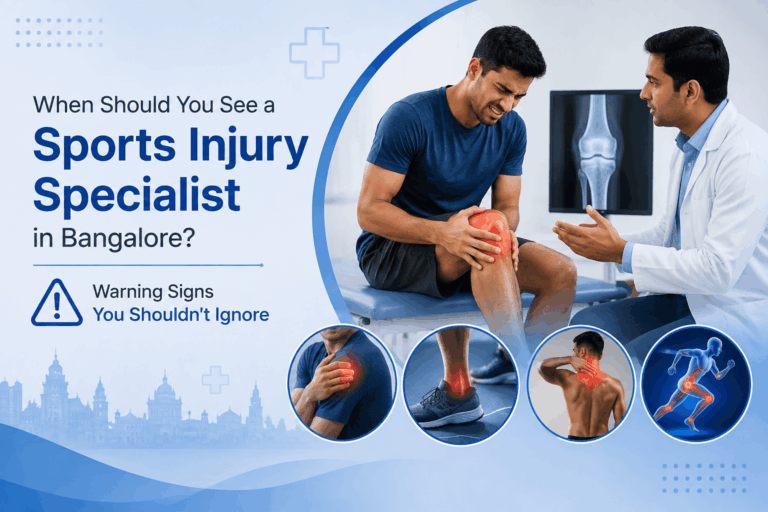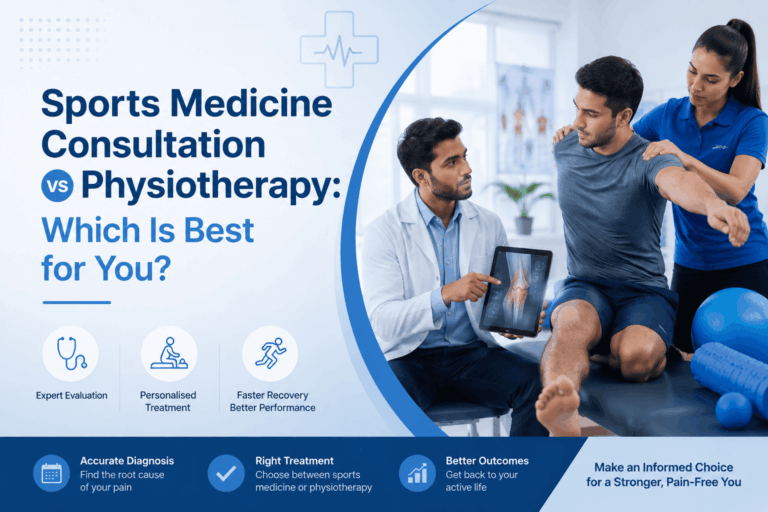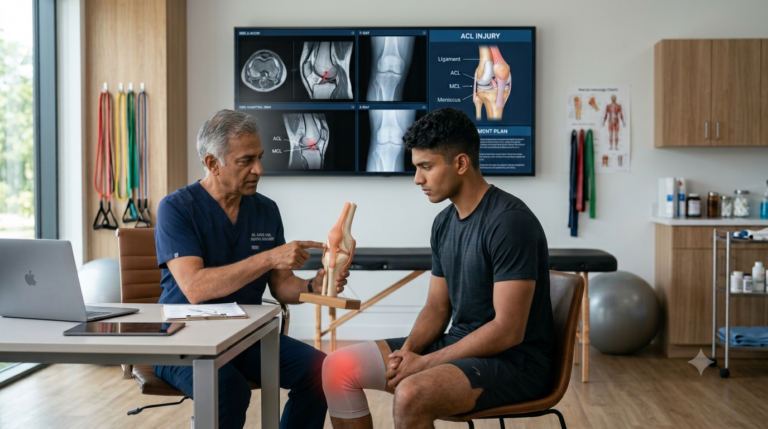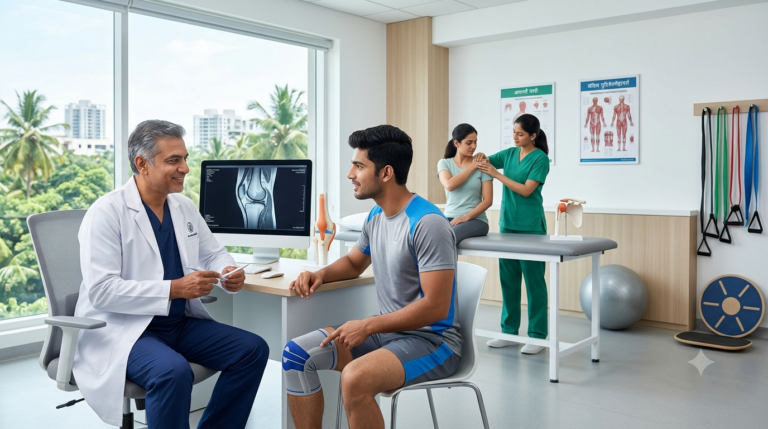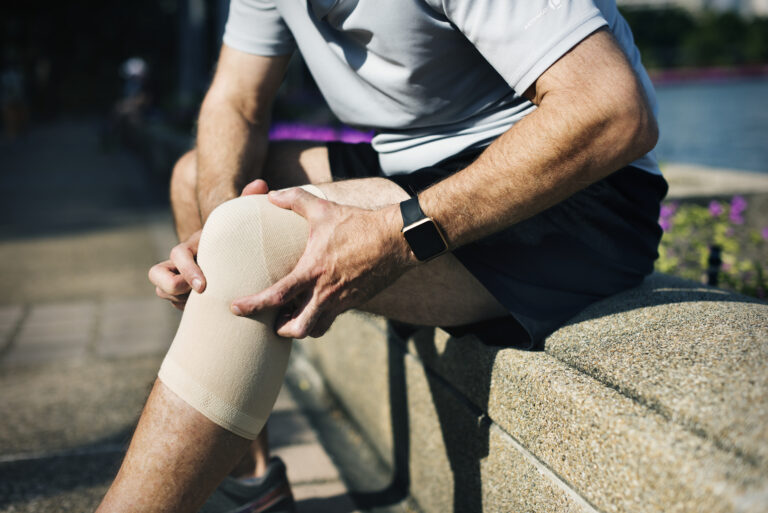

Sports medicine can help young athletes prevent injuries, identify problems early, and return to sports safely. Sports medicine care for youth athletes may include injury assessment, strength and movement training, rehabilitation, training-load management, and return-to-sport guidance. Treatment should consider the athlete’s age, physical development, sport, previous injuries, and individual goals.
Dr. Abhinandan Punit, with 15+ years of experience and 6,000+ successful orthopedic surgeries, can assess sports-related conditions in young athletes and recommend appropriate treatment and rehabilitation.
What Is Sports Medicine for Youth Athletes?
Sports medicine for youth athletes focuses on preventing, diagnosing, treating, and rehabilitating injuries related to sports and physical activity. Because young athletes are still growing, their care should consider physical development, training demands, previous injuries, and sport-specific requirements rather than simply applying an adult treatment approach.
Why Do Young Athletes Need Sports Medicine Care?
Young athletes can experience both sudden injuries and problems that develop gradually. Repetitive training, sudden increases in activity, poor technique, inadequate recovery, and returning to sport too quickly can increase injury risk. Growing bones and tissues can also respond differently to repeated stress, making persistent pain worth discussing with a healthcare professional.
Which Sports Injuries Are Common in Young Athletes?
Common youth sports injuries include sprains, muscle strains, growth-related irritation, stress injuries, knee problems, and overuse injuries. The type of injury often depends on the athlete’s sport, training routine, physical development, and the movements involved.
Some common concerns include:
- Knee injuries from running, jumping, landing, or sudden direction changes.
- Ankle sprains caused by twisting, landing, or uneven surfaces.
- Muscle strains associated with sudden or excessive physical loading.
- Growth-related injuries affecting developing bones, tendons, and joints.
- Stress injuries caused by repeated loading without enough recovery.
- Shoulder injuries in young athletes involved in repetitive throwing.
- Overuse injuries caused by repeated training without adequate rest.
How Can Sports Medicine Prevent Injuries in Young Athletes?
Sports medicine takes a proactive approach by looking at how an athlete trains, moves, recovers, and responds to physical stress. The aim is not to eliminate every possible injury but to identify factors that can be changed. Appropriate conditioning, technique, recovery, and gradual training progression can help young athletes participate more safely.
What Should Parents and Athletes Focus On?
Parents, coaches, and athletes can work together to develop healthier training habits. Important areas include:
- Proper warm-up before demanding training or competition.
- Age-appropriate conditioning based on physical development.
- Gradual training increases instead of sudden workload changes.
- Adequate recovery between practices and competitions.
- Good technique during sport-specific movements and exercises.
- Appropriate equipment that fits the athlete correctly.
- Early attention to pain instead of repeatedly playing through symptoms.
How Does Training Load Affect Youth Sports Injuries?
Training load refers to the amount and intensity of physical activity an athlete’s body has to handle. Problems can occur when training increases faster than the body can adapt. A sudden increase in practices, competitions, running, or intense workouts can leave insufficient time for recovery.
How Can Training Load Be Managed?
Training should progress gradually rather than changing dramatically from one period to another. Parents and coaches should also consider school schedules, tournaments, multiple teams, previous injuries, and recovery time.
How Does Sports Medicine Help With Strength and Conditioning?
Strength and conditioning can help young athletes develop the physical abilities needed for their sport. A suitable program can focus on strength, balance, coordination, mobility, movement control, and endurance. Exercises should be appropriate for the athlete’s age, development, experience, and sport rather than simply copying an adult training program.
Can Young Athletes Do Strength Training?
Yes, young athletes can participate in appropriately designed strength training when it is supervised and focused on proper technique. Strength training can help improve strength, coordination, and physical conditioning when exercises are appropriate for the athlete’s age, development, and sport. Maximum lifts and uncontrolled movements should be avoided before skeletal maturity.
How Does Sports Medicine Help With Sports Injury Recovery?
When an injury occurs, the first step is understanding what caused it and how serious it is. Depending on the problem, treatment may include activity modification, physiotherapy, strengthening, rehabilitation, and gradual return to sport.
Dr. Abhinandan Punit’s sports medicine service includes medical history, physical examination, imaging when required, personalized treatment, rehabilitation, follow-ups, and progression back to sports or physical activity.
When Should a Young Athlete See a Sports Medicine Specialist?
A young athlete should be assessed when pain persists, keeps returning, affects performance, or does not improve with appropriate rest. Swelling, instability, or localized tenderness should also be taken seriously, particularly in a growing athlete.
Consider a sports medicine consultation when:
- Pain keeps returning during training or competition.
- The athlete changes their movement because of pain.
- Swelling develops after sports activity or an injury.
- The athlete experiences repeated instability or giving-way episodes.
- Pain continues despite appropriate rest.
- Performance suddenly decreases because of physical symptoms.
- The athlete is returning after a significant injury or surgery.
How Does Sports Medicine Help With Return to Sports?
Returning to sports should be gradual after a significant injury. An athlete may first need to regain comfortable movement, strength, balance, and control before progressing to sport-specific drills. The final stage should reflect the physical demands of the athlete’s sport rather than simply returning because the pain has improved.
What Should a Safe Return-to-Sport Plan Include?
A return-to-sport plan can include progressive exercises, sport-specific movements, strength work, balance training, and gradual increases in training intensity. The exact process depends on the injury and the athlete’s recovery. A sports medicine professional can help determine when an athlete is ready to move from rehabilitation back to normal training and competition.
How Can Parents Help Prevent Sports Injuries?
Parents can play an important role in helping young athletes maintain a healthy balance between training and recovery. They can encourage proper warm-ups, adequate rest, healthy nutrition, good sleep, and early reporting of pain.
Parents should also avoid encouraging children to continue playing through persistent or worsening pain. Regular breaks and age-appropriate sports participation can help support healthier athletic development.
Parents can help by:
- Encouraging the athlete to report pain early.
- Supporting appropriate rest between training sessions.
- Avoiding pressure to play through significant pain.
- Choosing age-appropriate sports and training programs.
- Communicating previous injuries to coaches.
- Supporting healthy sleep and recovery habits.
- Keeping competition focused on development and enjoyment.
Youth Sports Medicine vs Adult Sports Medicine: What Is the Difference?
Sports medicine principles overlap across age groups, but young athletes require additional consideration of growth and development. Their bones, muscles, tendons, and training needs are still changing. Treatment and rehabilitation should therefore consider physical maturity, injury history, sport demands, and the athlete’s stage of development.
| Factor | Youth Sports Medicine | Adult Sports Medicine |
| Physical development | Considers ongoing growth and development | Usually focuses on mature structures |
| Training | Age- and development-appropriate | Based mainly on fitness and activity demands |
| Injury prevention | Considers growth, technique, load, and recovery | Focuses on injury history, load, and performance |
| Rehabilitation | Progression should suit developmental stage | Follows injury and functional goals |
| Sports participation | May involve school, club, or multiple sports | Often recreational or competitive |
| Return to sport | Considers development and sport demands | Focuses on functional recovery and sport requirements |
How Can Dr. Abhinandan Punit Help Youth Athletes in Kanakapura, Bangalore?
Dr. Abhinandan Punit provides sports medicine care in Kanakapura, Bangalore, through Elite Orthocare on Kanakapura Road. His sports medicine service includes injury prevention, injury assessment, rehabilitation, follow-up, and return-to-activity guidance. The clinic is located at Metro Pillar 211, NDV Towers, First Floor, Kanakapura Road, Raghuvanahalli, Bengaluru.
His 15+ years of clinical and surgical experience includes 6,000+ orthopedic surgeries. He is the founder of Elite Orthocare Multi-Specialty Clinic and a consultant orthopedic surgeon with Narayana Clinic and Hospitals. His qualifications include MS in Orthopaedics, DNB in Orthopaedics, MCh Orthopaedics from the University of Edinburgh, and MSc in Sports & Exercise Medicine from the University of South Wales.
He has experience treating amateur and elite athletes, with expertise in sports injuries and arthroscopy.
What Should Parents Ask During a Sports Medicine Consultation?
Parents and young athletes should feel comfortable asking questions about the diagnosis, treatment options, rehabilitation, and return to sports. A clear conversation can help families understand whether the athlete needs rest, physiotherapy, further testing, or a structured rehabilitation program.
Questions Parents Can Ask
- What is causing my child’s pain?
- Does the athlete need imaging?
- Can they continue training?
- How much rest is appropriate?
- What exercises are safe?
- How can we reduce the risk of another injury?
- When can they return to their sport?
- Are there warning signs we should watch for?
Why Is Early Sports Medicine Care Important for Young Athletes?
Early assessment can help families understand whether pain is related to training, technique, an acute injury, or another condition. It also provides an opportunity to modify activity before a problem becomes more disruptive.
For young athletes, the goal is not simply to get through one season. Good sports medicine care should support safe and healthy participation over the longer term.
Conclusion
Frequently Asked Questions About Sports Medicine for Youth Athletes
1. What does a sports medicine doctor do for young athletes?
A sports medicine doctor can evaluate sports-related pain and injuries, identify factors that may increase injury risk, and guide treatment or rehabilitation. Depending on the problem, care may include physical examination, imaging, activity modification, physiotherapy, strengthening, and gradual return to sports. For young athletes, the assessment should also consider physical development, training demands, previous injuries, and the requirements of their specific sport.
2. When should my child see a sports medicine specialist?
Your child should be assessed if pain keeps returning, becomes worse during activity, changes their movement, or does not improve with appropriate rest. Swelling, instability, repeated injuries, or localized tenderness over a bone are also reasons to seek medical advice. Young athletes should not be encouraged to repeatedly play through persistent pain, particularly when symptoms affect performance or daily activities.
3. How can I prevent sports injuries in my young athlete?
Injury prevention starts with sensible training and recovery. Young athletes should warm up properly, learn appropriate techniques, increase training gradually, use suitable equipment, and have regular rest periods. Playing different sports rather than specializing too early in one activity can also reduce repetitive stress. Parents should encourage athletes to report pain rather than hiding symptoms to continue competing.
4. Is strength training safe for young athletes?
Age-appropriate strength training can be part of a young athlete’s conditioning program when it is properly supervised. The emphasis should be on correct technique, controlled movements, and exercises appropriate for the athlete’s development rather than maximum lifting. The American Academy of Pediatrics recommends proper supervision and avoiding maximum lifts or ballistic movements before skeletal maturity.
5. How long should a young athlete rest after an injury?
There is no single rest period for every sports injury. Recovery depends on the type and severity of the injury, the athlete’s symptoms, physical development, and rehabilitation progress. Some minor problems may improve with modified activity, while more significant injuries may require structured rehabilitation. A sports medicine professional can guide the athlete through the appropriate stages of returning to activity.
6. Can my child continue playing sports with mild pain?
Mild pain should not automatically be ignored, particularly if it keeps returning or becomes worse during training. Young athletes may continue participating because they do not want to miss practice or competition. However, persistent pain can indicate an overuse or other injury. If symptoms continue, an assessment can help determine whether activity should be modified or temporarily stopped.
7. When can a young athlete return to sports after an injury?
Return to sports should depend on the injury and the athlete’s recovery rather than a fixed number of days. The athlete may need to regain comfortable movement, strength, balance, and sport-specific control before returning to full training. A gradual progression from rehabilitation to practice and then competition can help ensure the athlete is physically prepared for the demands of the sport.
8. Where can I find sports medicine care in Kanakapura, Bangalore?
Dr. Abhinandan Punit provides sports medicine care through Elite Orthocare on Kanakapura Road, Raghuvanahalli, Bangalore. His sports medicine service includes injury assessment, prevention, rehabilitation, follow-up, and return-to-activity guidance. Families should contact the clinic directly to confirm the current consultation schedule and discuss whether the service is appropriate for the young athlete’s specific condition.