
If you’re dealing with hip pain that’s starting to limit your daily life, you’ve probably come across the term “minimally invasive hip replacement” while researching your options in Bangalore. With advancements in hip replacement techniques, surgeons such as Dr. Abhinandan Punit focuses on selecting an approach based on the patient’s condition, lifestyle, and individual needs. This guide explains what the procedure actually involves, how it differs from traditional hip replacement, realistic recovery timelines, and how to know if you’re a good candidate so you can have an informed conversation with your surgeon rather than walking in with just internet searches.
What Is Minimally Invasive Hip Replacement?
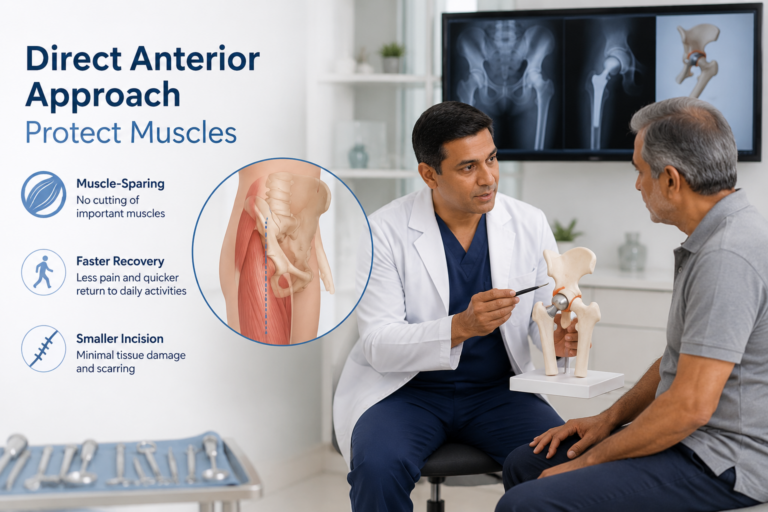
Minimally invasive hip replacement is a surgical technique designed to replace a damaged hip joint using smaller incisions and less soft tissue disruption. The goal is to reduce muscle damage, improve recovery comfort, and help patients regain walking confidence earlier after surgery.
Why Are More Patients in Bangalore Choosing Minimally Invasive Hip Replacement?
Many patients today are not only searching for pain relief. They also want smoother recovery, shorter hospital stays, and earlier return to normal activities. This is why minimally invasive hip replacement in Bangalore is becoming increasingly popular among active adults and older patients.
Common Reasons Patients Prefer Minimally Invasive Surgery
- Smaller surgical incision
- Reduced muscle disruption
- Earlier walking after surgery
- Faster recovery confidence
- Less post-operative stiffness
- Improved rehabilitation comfort
- Quicker return to daily activities
- Shorter hospital stay in many cases
How Is Minimally Invasive Hip Surgery Different from Traditional Surgery?
Traditional hip replacement surgery may involve larger incisions and more tissue handling. In contrast, minimally invasive hip surgery focuses on reducing surgical trauma while still replacing the damaged joint effectively.
Minimally Invasive (DAA) vs. Traditional Hip Replacement
| Factor | Minimally Invasive (DAA) | Traditional Hip Replacement |
| Incision size | Smaller | Larger |
| Muscle handling | Works between muscle planes, less detachment | Typically involves cutting through muscle |
| Early walking | Often begins within 24–48 hours, with support | Usually a few days later |
| Hospital stay | Frequently 2–4 days | Often longer, varies by case |
| Hip precautions | Fewer movement restrictions in many cases | Stricter movement restrictions common |
| Best suited for | Most primary hip replacements in suitable candidates | Complex anatomy, revision surgery, certain deformities |
Who Is a Good Candidate for Minimally Invasive Hip Replacement?
Minimally invasive DAA is commonly suitable for patients with:
- Hip osteoarthritis causing pain, stiffness, or limping
- Avascular necrosis (AVN) of the hip
- Difficulty walking, climbing stairs, or sitting cross-legged due to hip damage
- Active adults who want a faster return to routine activity
It may not be the best option for everyone. Patients with severe obesity, significant hip deformity, prior hip surgery requiring revision, or unusual bone anatomy may be better served by a traditional approach. Your surgeon will confirm this with X-rays, a physical exam, and a discussion of your specific case, not a one-size-fits-all recommendation.
What Does Recovery Actually Look Like?
Recovery timelines vary from patient to patient, but here’s a general roadmap based on typical DAA hip replacement recovery:
| Recovery Stage | Typical Timeline | What’s Happening |
| Hospital stay | 2–4 days | Pain management, early mobilization with physiotherapy |
| Assisted walking | Day 1–2 after surgery | Walking with a walker or support, under supervision |
| Walking without support | 2–6 weeks | Depends on muscle strength and physiotherapy progress |
| Return to daily activities | 4–6 weeks | Driving, light household tasks, most patients feel confident |
| Full strength and endurance | 3–6 months | Continued physiotherapy, outdoor walking, higher activity levels |
“Will I Be Able to Walk Normally Again?”
This is the question most patients ask before agreeing to surgery, and it’s a fair one. Many people delay hip replacement for years out of fear of losing independence, often not realizing that the delay itself tends to make the hip stiffer and the surrounding muscles weaker, which can make recovery harder when surgery eventually does happen.
In practice, most patients who go through structured post-op physiotherapy regain confident, independent walking. The honest answer is that outcomes depend on doing the rehab, not just on having the surgery.
Is Minimally Invasive the Same as Robotic Hip Replacement?
No, these are two different things that are often bundled together:
- Minimally invasive / DAA refers to the surgical approach: how the surgeon accesses the joint and how much soft tissue is disturbed.
- Robotic-assisted hip replacement refers to the use of computer-assisted technology to help with surgical planning and implant positioning during the procedure.
What Are the Benefits of Minimally Invasive Hip Replacement?
The main goal is not only replacing the joint but also improving recovery experience and long-term mobility.
- Potential Benefits of Minimally Invasive Hip Surgery
- Earlier assisted walking
- Reduced soft tissue damage
- Faster mobility confidence
- Improved rehabilitation comfort
- Less post-operative stiffness
- Smaller surgical incision
- Better early movement recovery
Is Minimally Invasive Hip Replacement Suitable for Everyone?
No. Although minimally invasive techniques offer several advantages, they may not be suitable for every patient. Obesity, revision surgery, severe deformity, bone quality, or complex anatomy may influence whether this approach is ideal.
Real Patient Scenario from Bangalore
“Doctor, my hip pain is manageable right now. Can I wait a little longer?”
Many patients in Bangalore delay hip replacement because symptoms develop gradually over years. Initially, pain improves temporarily with medication or rest. However, worsening stiffness, limping, disturbed sleep, and difficulty standing from chairs often reduce quality of life significantly over time.
Several patients later realize mobility limitations were affecting daily life more than they expected.
What Questions Should Patients Ask Before Hip Replacement Surgery?
Patients should understand both the surgical procedure and recovery expectations before making treatment decisions.
Important Questions Patients Should Ask
- Is minimally invasive surgery suitable for me?
- How soon will walking begin after surgery?
- What type of rehabilitation is required?
- Is robotic assistance used during surgery?
- What precautions are needed during recovery?
- When can normal daily activities restart?
- What are realistic recovery expectations?
Why Do Patients Prefer Minimally Invasive Hip Replacement Surgeons?
Patients often prefer surgeons experienced in minimally invasive techniques because surgical planning, implant positioning, rehabilitation support, and patient selection all influence long-term recovery quality and mobility outcomes.
Why Patients Choose Dr. Abhinandan Punit for Minimally Invasive Hip Replacement in Bangalore
Dr. Abhinandan Punit LinkedIn Profile
Dr. Abhinandan Punit is associated with Narayana Health, Bangalore and focuses on advanced hip replacement surgery, minimally invasive orthopedic procedures, robotic-assisted joint replacement, and complex hip reconstruction.
Credentials & Experience
- 15+ years of orthopedic experience
- 6000+ orthopedic procedures performed
- MCh Orthopaedics (Edinburgh, UK)
- Fellowship training in UK & Australia
- Specialized training in minimally invasive hip replacement
- Consultant at Narayana Health, Bangalore
- Founder of Elite Orthocare
How to Book a Consultation with Dr. Abhinandan Punit
If you’re experiencing knee instability, repeated swelling, or difficulty returning to activity after a knee injury, a consultation can help clarify the next steps.
📍 Clinic Locations:
- Elite Orthocare, Kanakpura Road
- Narayana Clinic, Electronic City
- Narayana Health City, Bommasandra
From diagnosis to recovery guidance, Dr. Punit and his team focus on clarity, precision, and long-term joint health.
To discuss more about your hip replacement surgery, book an appointment with Dr. Abhinandan Punit.
For further queries, click here to learn more about Knee and related orthopedic treatments.
Frequently Asked Questions About Minimally Invasive Hip Replacement
Is minimally invasive hip replacement less painful?
Many patients report better early comfort because smaller incisions and reduced tissue disruption may improve recovery experience. However, rehabilitation and physiotherapy still remain important after surgery.
How soon can I walk after minimally invasive hip surgery?
Several patients begin assisted walking during the early recovery phase depending on overall health and physiotherapy progress. Recovery timelines vary from patient to patient.
Does minimally invasive surgery leave a smaller scar?
Yes, minimally invasive techniques commonly use smaller incisions compared to traditional surgery. However, scar appearance also depends on body structure and healing response.
Is minimally invasive hip replacement suitable for older adults?
Yes. Many older adults are evaluated for minimally invasive hip replacement if they are medically fit and suitable candidates for surgery.
What should you look for in a minimally invasive hip replacement surgeon?
Look for a surgeon with relevant qualifications, experience in hip replacement, and expertise in minimally invasive techniques. Dr. Abhinandan Punit has over 15 years of clinical experience and has performed 6,000+ orthopaedic surgeries, including joint replacement procedures.
How long does hospital stay usually last after surgery?
Hospital stay varies depending on recovery speed, medical condition, mobility progress, and rehabilitation planning. Several patients begin early movement and walking during the initial recovery period.
Can delaying hip replacement surgery make recovery harder later?
In some patients, delayed treatment may worsen stiffness, muscle weakness, limping, and mobility limitations over time. Early orthopedic evaluation helps patients understand the right timing for surgery.