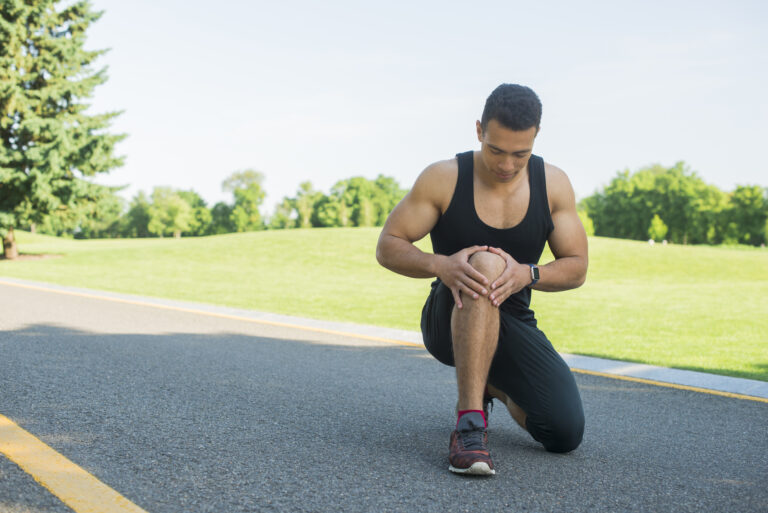

Complete ACL Tear Treatment Without Surgery: Is It Really Possible?
Complete ACL tear treatment without surgery may be possible for some low-activity patients with stable knees, but many complete ACL tears cause ongoing instability, repeated twisting, and meniscus damage over time. Treatment depends on knee stability, activity level, sports goals, and MRI findings. Early orthopedic evaluation is important to prevent long-term knee damage.
What Is a Complete ACL Tear?
A complete ACL tear happens when the Anterior Cruciate Ligament (ACL) fully ruptures and can no longer stabilize the knee joint. The ACL helps control twisting and pivoting movements. A complete tear often causes knee instability, swelling, and difficulty during sports, running, or sudden direction changes.
Can a Complete ACL Tear Heal Without Surgery?
A completely torn ACL usually does not naturally rejoin or heal like a muscle injury. However, some patients with low physical activity and stable knee movement may manage symptoms temporarily through physiotherapy, bracing, muscle strengthening, and lifestyle modification without immediate surgery.
Patients involved in:
- Sports
- Running
- Gym training
- Physically demanding jobs
often continue experiencing instability episodes without proper ACL reconstruction.
Real Patient Scenario Seen in Bangalore
“Doctor, the swelling has reduced. Do I still need to worry?”
This is one of the most common questions orthopedic specialists hear after an ACL injury in Bangalore. Many patients feel better after swelling settles, but ACL tears are mainly problems of instability, not constant pain.
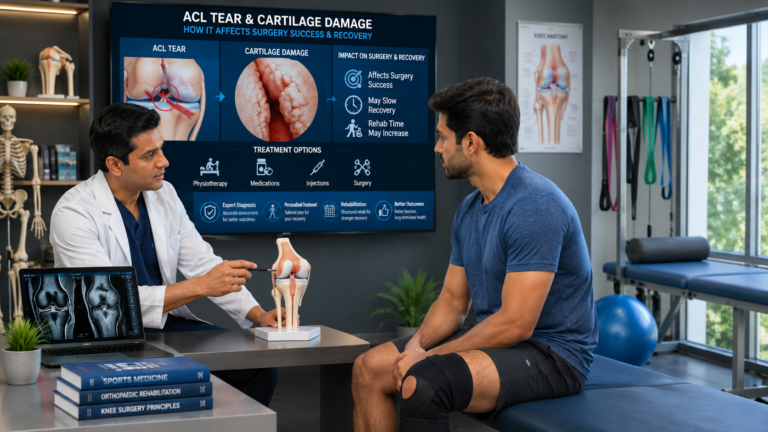
Repeated knee twisting, sudden turning, or sports activity can gradually damage the meniscus and knee cartilage. Delayed ACL treatment may increase the risk of early joint degeneration and long-term instability.
What Are the Symptoms of a Complete ACL Tear?
Common symptoms of a complete ACL tear include:
- Sudden popping sound during injury
- Immediate knee swelling
- Knee giving way while walking
- Instability during turning movements
- Difficulty running or playing sports
- Pain during pivoting movements
- Fear of sudden knee twisting
- Reduced confidence while walking downstairs
These symptoms may reduce temporarily, but instability often returns during activity.
What Non-Surgical Treatments Help a Complete ACL Tear?
Physiotherapy and Rehabilitation
Physiotherapy strengthens the muscles around the knee to improve support and balance. It is the most important part of non-surgical ACL treatment and helps reduce instability during movement.
Knee Bracing
A knee brace helps stabilize the joint and reduces sudden twisting movements. It is commonly used during walking, exercise, or rehabilitation sessions.
Activity Modification
Patients are advised to avoid pivoting sports, sudden direction changes, jumping, and high-impact exercises that increase knee instability.
Pain and Swelling Management
Ice therapy, medications, and guided exercises help reduce swelling and discomfort during the early healing phase.
Strength Training
Targeted strengthening of the quadriceps, hamstrings, and hip muscles improves knee control and reduces stress on the injured ACL.
When Is ACL Reconstruction Surgery Recommended?
ACL reconstruction surgery is commonly recommended when patients experience repeated instability, sports-related goals, meniscus injury, or difficulty during daily activities.
Surgery is often advised for:
- Athletes
- Active adults
- Young patients
- Patients with knee buckling
- Combined ACL + meniscus injury
- Recurrent instability episodes
Timely ACL surgery may help protect the cartilage and reduce long-term knee degeneration risk.
What Happens if a Complete ACL Tear Is Left Untreated?
Untreated ACL tears may gradually damage other knee structures. Repeated instability can increase pressure on the meniscus and cartilage, leading to:
| Problem | Effect on Knee | Long-Term Risk |
| Knee instability | Repeated twisting episodes | Reduced confidence walking |
| Meniscus damage | Shock absorber injury | Early arthritis |
| Cartilage wear | Joint surface damage | Chronic knee pain |
| Muscle weakness | Reduced knee support | Poor balance |
| Activity limitation | Avoidance of sports | Reduced fitness |
| Early degeneration | Progressive wear and tear | Osteoarthritis |
Complete ACL Tear Treatment Without Surgery vs ACL Reconstruction Surgery
| Treatment Option | Best For | Limitation |
| Physiotherapy | Low-activity patients | Instability may continue |
| Knee Brace | Temporary support | Does not repair ACL |
| Strength Training | Muscle support | Cannot restore ligament |
| Lifestyle Modification | Mild instability | Sports limitation |
| ACL Reconstruction Surgery | Active individuals | Requires rehabilitation |
| Combined ACL + Meniscus Surgery | Complex injuries | Longer recovery |
How Long Does Recovery Take Without Surgery?
Recovery without surgery usually takes several months depending on rehabilitation consistency and activity level. Some patients regain functional movement within 3–6 months, but instability may continue during sports or high-impact activities.
What Is ACL Reconstruction Surgery?
ACL reconstruction surgery is a minimally invasive arthroscopic procedure used to restore knee stability using a tendon graft. Modern ACL surgery focuses on anatomical reconstruction, graft precision, structured rehabilitation, and safe return to activity.
ACL reconstruction today focuses on:
- Precise tunnel positioning
- Appropriate graft selection
- Protection of surrounding structures
- Structured milestone-based rehabilitation
- Stability restoration
- Safe return-to-sport planning
When Should You See an Orthopedic Surgeon for an ACL Injury?
You should consult an orthopedic specialist if you experience:
- Knee buckling during walking
- Repeated instability episodes
- Swelling after activity
- Difficulty climbing stairs
- Pain during sports movement
- Clicking or locking sensation
- Fear of sudden turning movements
Early diagnosis may help prevent additional meniscus and cartilage damage.
Why Choose Dr. Abhinandan Punit for ACL Treatment in Bangalore?
Dr. Abhinandan Punit is a Bangalore-based orthopedic surgeon associated with Narayana Health and Elite Orthocare. He has:
- 15+ years of orthopedic experience
- 6000+ joint and ligament procedures
- Fellowship-based advanced orthopedic training
- Expertise in sports injury management
- Experience in ACL reconstruction surgery
- Robotic and minimally invasive orthopedic exposure
Frequently Asked Questions (FAQ)
Can a complete ACL tear heal naturally without surgery?
A complete ACL tear usually does not fully heal naturally because the ligament loses continuity after rupture. Some low-activity patients may manage symptoms through physiotherapy and strengthening exercises, but instability often remains during sports, pivoting, or sudden movements. Orthopedic evaluation helps determine whether surgery is necessary.
Is ACL surgery painful?
ACL reconstruction surgery is performed under anesthesia, so patients do not feel pain during the procedure. Mild to moderate discomfort is common during the first few recovery weeks, but pain management, physiotherapy, and rehabilitation protocols help improve comfort and mobility gradually.
Can I walk normally with a complete ACL tear?
Many patients can walk straight after swelling reduces, but instability often appears during turning, sports, running, or sudden movement. Walking normally does not always mean the ACL has healed. MRI evaluation and orthopedic assessment remain important after injury.
How long does ACL reconstruction recovery take?
Initial recovery usually takes several weeks, but complete rehabilitation may take 6–9 months depending on muscle strength, physiotherapy progress, graft healing, and sports goals. Structured rehabilitation is important for safe return to activity.
Is physiotherapy enough for ACL tears?
Physiotherapy may help improve strength and stability for selected low-activity patients. However, physiotherapy cannot reconnect a completely torn ACL ligament. Active individuals and athletes often require ACL reconstruction surgery for long-term stability.
Can ACL tears cause arthritis later?
Yes. Repeated instability and untreated meniscus damage may increase cartilage wear over time. Long-standing ACL instability can contribute to early knee degeneration and osteoarthritis in some patients.
Dr. Abhinandan Punit has 15+ years of experience and has performed over 6000+ surgeries. He specializes in robotic joint replacement and advanced orthopedic care in Bangalore, consulting at Electronic City and Kanakapura Road.
📍 Clinic Locations:
- Elite Orthocare, Kanakpura Road
- Narayana Clinic, Electronic City
- Narayana Health City, Bommasandra
Book a consultation today to get expert diagnosis and personalized treatment.
Dr. Abhinandan Punit and his team guide patients through every step — from diagnosis to recovery — ensuring safe and effective results.