
The knee replacement recovery time for older adults generally ranges from 3 to 6 months for most daily activities, although complete recovery may take up to 12 months. Dr. Abhinandan S. Punit, an Orthopaedic and Robotic Joint Replacement Surgeon in Bangalore with 15+ years of clinical experience and 6,000+ orthopaedic surgeries performed, helps patients understand their treatment options, including knee replacement surgery in Bangalore, robotic-assisted procedures, and the importance of proper rehabilitation.
What Is Knee Replacement Recovery Time for Older Adults?
Knee replacement recovery time for older adults refers to the period required to reduce pain, restore knee movement, rebuild muscle strength, and return to everyday activities after surgery. Most patients begin walking with assistance within 24 hours, but regaining strength, balance, and comfortable movement takes several months.
How Long Does It Take Older Adults to Recover From Knee Replacement Surgery?
Most older adults take approximately 3 to 6 months to resume their regular daily activities after knee replacement surgery. However, complete recovery can take up to 12 months. The timeline depends on overall health, muscle strength, existing medical conditions, physiotherapy participation, and the type of knee replacement procedure performed.
What Is the Knee Replacement Recovery Timeline for Older Patients?
Recovery after knee replacement surgery happens gradually. Each stage focuses on reducing discomfort, improving mobility, and rebuilding strength. Understanding the recovery timeline helps older patients and their families prepare for rehabilitation.
What Happens During the First Week After Knee Replacement Surgery?
The first week focuses on managing pain, reducing swelling, and starting safe movement. Most patients begin standing and walking with assistance within 24 hours after surgery. Physiotherapy exercises help improve blood circulation, maintain knee movement, and reduce stiffness. Patients should follow their surgeon’s instructions during this initial recovery period.
What Happens During Weeks 2 to 6 After Knee Replacement?
Between weeks 2 and 6, patients gradually improve their walking ability and knee flexibility. Swelling generally starts decreasing, and everyday activities such as dressing, bathing, and moving around the home become easier. Regular physiotherapy helps rebuild muscle strength and improve independence. Patients should perform only the exercises recommended by their physiotherapist.
What Happens During Months 2 to 3 After Knee Replacement?
During the second and third months, many older patients experience noticeable improvements in mobility and muscle strength. Walking becomes more comfortable, and dependence on walking aids may decrease. Patients should continue their prescribed exercises to improve knee flexibility, balance, and confidence during everyday activities.
What Happens Between 3 and 6 Months After Knee Replacement?
Between 3 and 6 months, many patients return to most regular daily activities. Knee stiffness continues to improve, walking endurance increases, and low-impact physical activities become easier. Recovery progress depends on individual healing, muscle strength, and consistency with rehabilitation.
When Can Older Adults Expect Complete Recovery After Knee Replacement?
Complete recovery may take up to 12 months after knee replacement surgery. Although many patients notice significant improvements within 3 to 6 months, the knee continues adapting to the implant. Strength, balance, flexibility, and overall joint function can continue improving throughout this period.
What Factors Affect Knee Replacement Recovery Time in Older Adults?
Several physical and medical factors influence how quickly older adults recover after knee replacement surgery. Patients with good overall health and consistent rehabilitation may progress more comfortably.
Important factors include:
- Overall health: Existing medical conditions can influence healing and rehabilitation.
- Muscle strength: Stronger surrounding muscles support walking and knee stability.
- Physiotherapy: Regular exercises help restore flexibility and movement.
- Body weight: Maintaining a healthy weight reduces stress on the replaced joint.
- Nutrition: A balanced diet supports healing and muscle recovery.
- Medical conditions: Diabetes, heart disease, and osteoporosis may affect recovery.
- Family support: Assistance at home can make daily activities safer during rehabilitation.
Patients experiencing persistent knee pain should also understand the possible causes of knee ligament injuries, as different knee conditions may require different treatment approaches.
What Is the Week-by-Week Knee Replacement Recovery Timeline?
The following table explains the general recovery stages for older patients after knee replacement surgery.
| Recovery Stage | Typical Timeline | Expected Progress |
| Hospital Recovery | Days 1–3 | Standing and walking with assistance |
| Early Home Recovery | Weeks 1–2 | Pain management and basic mobility exercises |
| Functional Recovery | Weeks 3–6 | Improved walking and daily independence |
| Strength Building | Months 2–3 | Better muscle strength and knee movement |
| Advanced Recovery | Months 3–6 | Return to most regular activities |
| Complete Recovery | Up to 12 months | Continued improvement in strength and mobility |
Note: This is a general recovery guide. Individual recovery timelines may vary.
How Can Older Patients Recover Faster After Knee Replacement Surgery?
Older patients can support their recovery by following their surgeon’s instructions and maintaining a consistent rehabilitation routine. Proper nutrition, safe movement, and regular follow-up appointments also contribute to better recovery.
Here are seven important recovery practices:
- Follow the physiotherapy schedule recommended by your surgeon.
- Perform prescribed knee exercises regularly without overexertion.
- Include protein-rich foods in your daily diet.
- Manage diabetes and other existing medical conditions.
- Use a walker or cane as medically advised.
- Stay physically active within your recommended activity limits.
- Attend scheduled appointments to monitor recovery progress.
Patients who are unsure whether they need surgery can also understand the differences between knee replacement surgery and physiotherapy before discussing suitable treatment options with an orthopaedic surgeon.
Why Is Physiotherapy Important After Knee Replacement Surgery?
Physiotherapy plays an important role in knee replacement recovery, particularly for older adults. It helps strengthen the muscles surrounding the knee, improve flexibility, restore walking ability, and develop better balance. Following a personalised exercise programme can also reduce stiffness and improve confidence during everyday movements.
Patients should follow a rehabilitation programme recommended by their surgeon and physiotherapist rather than attempting strenuous exercises independently.
When Should Older Patients Contact Their Surgeon After Knee Replacement?
Although some discomfort and swelling are expected during recovery, certain symptoms require prompt medical attention. Older patients and caregivers should monitor changes in the operated leg and overall health.
Contact your surgeon if you experience:
- Increasing pain instead of gradual improvement.
- Persistent fever or chills.
- Excessive fluid drainage from the surgical wound.
- Significant or worsening swelling in the leg.
- Sudden difficulty standing or walking.
- Redness, warmth, or other signs of wound infection.
- New chest pain or difficulty breathing.
Chest pain or breathing difficulty requires emergency medical attention.
Why Do Older Adults Consider Robotic Knee Replacement Surgery?
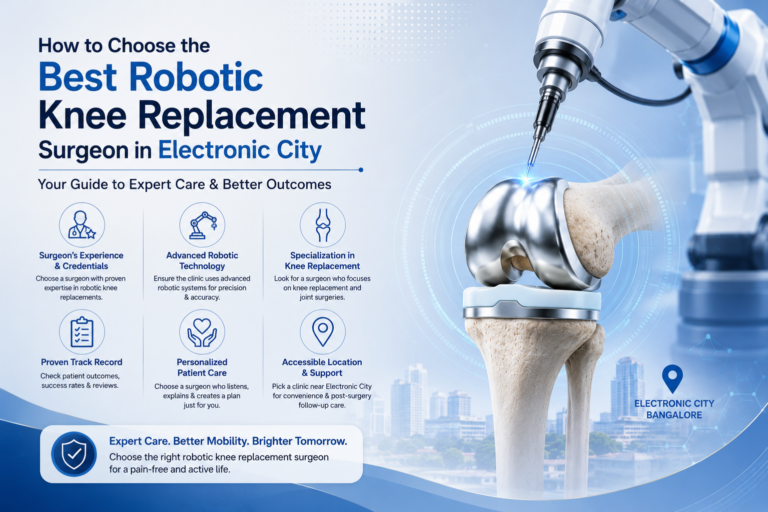
Robotic-assisted knee replacement uses advanced technology to help surgeons plan the procedure and guide implant positioning. It supports personalised surgical planning and helps surgeons make informed decisions during the procedure based on the patient’s individual knee anatomy.
However, robotic-assisted surgery does not guarantee faster recovery. Healing still depends on the patient’s overall health, surgical factors, muscle strength, and participation in physiotherapy. Patients can explore robotic knee replacement surgery in Bangalore to understand this treatment approach.
How Does Dr. Abhinandan Punit Help Older Adults With Knee Replacement Surgery?
Dr. Abhinandan S. Punit is an Orthopaedic and Robotic Joint Replacement Surgeon in Bangalore with 15+ years of clinical experience and 6,000+ orthopaedic surgeries performed. He specialises in knee and hip replacement procedures, including robotic-assisted joint replacement surgery.
His qualifications include:
- MCh Orthopaedics, University of Edinburgh, UK.
- Advanced international orthopaedic fellowships.
- Member of ISHKS.
- Member of ISTA.
Dr. Abhinandan Punit consults patients at:
Patients can learn more about Dr. Abhinandan Punit’s orthopaedic expertise and discuss knee pain, surgical options, rehabilitation requirements, and expected recovery timelines during a consultation.
Final Thoughts
Knee replacement recovery time for older adults generally ranges from 3 to 6 months for most daily activities, while complete recovery may take up to 12 months. Consistent physiotherapy, proper nutrition, medical supervision, and safe physical activity are important parts of the recovery process.
For older patients considering knee replacement surgery in Bangalore, Dr. Abhinandan S. Punit, an Orthopaedic and Robotic Joint Replacement Surgeon with 15+ years of experience and 6,000+ orthopaedic surgeries performed, provides guidance on surgical options and rehabilitation planning.
To understand your treatment options and expected recovery, book a consultation with Dr. Abhinandan Punit.
Frequently Asked Questions About Knee Replacement Recovery in Older Adults
1. Can an 80-year-old recover successfully from knee replacement surgery?
Yes. Many people in their 70s and 80s can recover successfully after knee replacement surgery. Age alone does not determine whether someone is suitable for the procedure. Overall health, muscle strength, medical conditions, and the ability to participate in physiotherapy are important considerations. An orthopaedic surgeon evaluates these factors before recommending surgery.
2. How soon can older adults walk after knee replacement surgery?
Most patients begin standing and walking with assistance within 24 hours after knee replacement surgery. Initially, they may use a walker for support. Walking distance gradually increases as strength, balance, and confidence improve. The physiotherapist guides patients through safe walking techniques and determines when they can progress to less support.
3. How painful is knee replacement recovery for olser patients?
Some pain, swelling, and discomfort are normal after knee replacement surgery, particularly during the initial recovery period. Prescribed pain medication, ice therapy, and physiotherapy help manage these symptoms. Pain generally improves gradually as healing progresses. Patients should contact their surgeon if pain becomes worse rather than improving.
4. How long do older patients need a walker after knee replacement?
Many older patients use a walker for several weeks following knee replacement surgery. However, the duration varies depending on muscle strength, balance, walking ability, and overall recovery. Some patients may transition to a walking stick before walking independently. The surgeon and physiotherapist should guide this transition to maintain safety.
5. Why should patients consult Dr. Abhinandan S. Punit for knee replacement surgery in Bangalore?
Dr. Abhinandan S. Punit is an Orthopaedic and Robotic Joint Replacement Surgeon in Bangalore with 15+ years of clinical experience and 6,000+ orthopaedic surgeries performed. He holds an MCh in Orthopaedics from the University of Edinburgh, UK. He consults at Elite Orthocare, Kanakapura Road, and Narayana Clinic & Hospitals, Electronic City. Patients can discuss their knee condition, treatment options, and expected recovery with him.