
Knee Pain That Won’t Go Away? Signs You May Need Knee Replacement Surgery
If your knee pain has persisted for months despite rest, medication, and physical therapy, knee replacement surgery may be the solution. This procedure involves replacing damaged cartilage and bone with an artificial implant, effectively eliminating pain and restoring mobility. Dr. Abhinandan Punit, an orthopedic surgeon with 15+ years of experience and 6,000+ surgeries performed, specializes in robotic-assisted knee replacement in Bangalore, offering advanced treatment options tailored to your condition.
What Is Knee Replacement Surgery?
Knee replacement surgery (also called total knee arthroplasty or TKA) is a procedure where a surgeon removes damaged bone and cartilage from your knee joint and replaces it with an artificial implant made of metal, plastic, or ceramic materials. Think of it like replacing worn-out components in a machine—the goal is to restore smooth movement and eliminate pain.
The procedure typically takes 1.5 to 2 hours, and most patients spend one night in the hospital. Modern techniques, including robotic-assisted surgery, make the procedure more precise, reduce tissue damage, and speed up recovery.
Types of Knee Replacement
Total Knee Replacement (TKR)
- Replaces the entire knee joint
- Used for severe arthritis affecting the whole knee
- Most common type performed
Partial (Unicompartmental) Knee Replacement
- Replaces only the damaged part of the knee
- Used when arthritis is limited to one compartment
- Involves smaller incisions and faster recovery
- Preserves more natural knee movement
Robotic-Assisted Knee Replacement
- Uses advanced technology for precise implant positioning
- Offers better alignment and long-term outcomes
- Reduces pain and stiffness post-surgery
- Enables faster return to normal activities
- Dr. Abhinandan Punit specializes in this advanced approach
When Do You Need Knee Replacement Surgery?
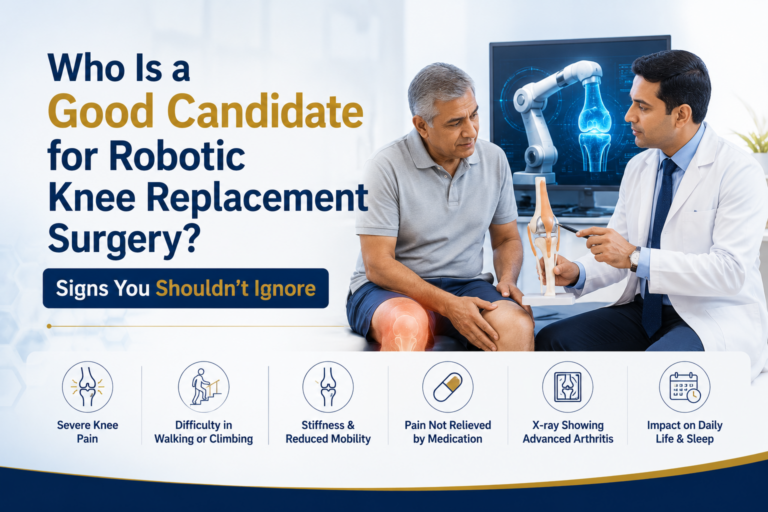
Not everyone with knee pain needs surgery. Knee replacement is typically recommended when:
You meet these criteria:
- Severe arthritis or cartilage damage visible on X-ray or MRI
- Pain that interferes with daily activities (walking, stairs, sleeping)
- Swelling and stiffness that limits movement
- Failed conservative treatment (physical therapy, medications, injections) lasting 6+ months
- Reduced quality of life due to knee problems
- Your age and overall health make surgery appropriate
Conservative treatments have been tried:
- Anti-inflammatory medications (NSAIDs)
- Weight management programs
- Physical therapy and exercise
- Steroid injections or hyaluronic acid injections
- Assistive devices (canes, knee braces)
If these approaches haven’t provided relief after 6-12 months, surgery becomes a reasonable option to restore your independence and quality of life.
Signs Your Knee Pain Indicates You Need Replacement Surgery
Persistent Pain That Doesn’t Improve
If your knee aches constantly—even at rest or during light activity—and pain persists for weeks despite treatment, this is a warning sign. Many patients describe this as a dull, deep pain that wakes them at night or prevents them from sleeping on that side.
Swelling That Doesn’t Resolve
Chronic swelling (edema) around the knee that remains visible despite ice, elevation, and medication suggests ongoing joint damage. Your knee may feel puffy or feel like there’s fluid inside the joint.
Stiffness That Limits Movement
If your knee joint feels tight or “locked” when you wake up or after sitting, and this stiffness takes hours to improve (or never fully improves), this indicates cartilage wear and joint degeneration.
Difficulty with Daily Activities
Struggling with basic tasks signals that surgery might help:
- Climbing stairs (or avoiding stairs entirely)
- Walking distances beyond a few blocks
- Getting in and out of cars
- Squatting or kneeling
- Participating in hobbies or sports
Deformity or Instability
Your knee may look bent inward or outward (varus or valgus deformity), or it may feel like it’s giving way, buckling, or unstable during weight-bearing activities.
Reduced Mobility and Activity Tolerance
When knee pain forces you to limit activities you previously enjoyed—walking in the park, playing with grandchildren, gardening—and no amount of rest helps, surgery becomes worth considering.
Causes of Severe Knee Pain Requiring Surgery
Understanding the underlying cause helps determine if replacement is necessary.
Osteoarthritis (Most Common Cause)
Osteoarthritis (OA) is wear-and-tear arthritis where protective cartilage gradually breaks down over time. It’s the leading reason people need knee replacement, accounting for about 90% of cases. Risk factors include:
- Age (more common over 50)
- Obesity or excess weight
- Previous knee injuries
- Family history of arthritis
- Repetitive stress on knees
Rheumatoid Arthritis
An autoimmune condition where your body attacks joint tissue, causing inflammation, pain, and cartilage destruction. RA can damage knees more rapidly than OA, sometimes requiring surgery earlier.
Post-Traumatic Arthritis
Severe knee injuries—fractures, ligament tears, meniscus damage—can lead to arthritis years later, even if the initial injury seemed minor.
Avascular Necrosis
When blood supply to the knee bone is disrupted, the bone dies and collapses, causing severe pain and joint damage.
Bone Tumors or Severe Infections
Rarely, infections or tumors damage the knee joint, necessitating replacement.
How Is Knee Replacement Diagnosed?
Your Doctor’s Evaluation
Medical History Dr. Abhinandan Punit will ask about when your pain started, what activities trigger it, what treatments you’ve tried, and how it’s affecting your life.
Physical Examination Your surgeon will:
- Assess knee swelling, warmth, and deformity
- Test your range of motion
- Evaluate knee stability
- Check for signs of instability or cartilage damage
Imaging Studies
X-rays
- Show bone alignment, cartilage loss, and arthritis severity
- Help determine if surgery is indicated
- Provide baseline for surgical planning
MRI Scan
- Reveals soft tissue damage (cartilage, ligaments, meniscus)
- Confirms arthritis stage
- Identifies other joint problems
- Helps Dr. Abhinandan plan the best surgical approach
Blood Tests
- Rule out infection or inflammatory conditions
- Assess overall health before surgery
Treatment Options for Severe Knee Pain
Conservative (Non-Surgical) Treatments
Physical Therapy
- Strengthens muscles supporting the knee
- Improves flexibility and range of motion
- Reduces pain and swelling
- Duration: 6-12 weeks, 2-3 sessions per week
Medications
- NSAIDs (ibuprofen, naproxen) reduce inflammation and pain
- Acetaminophen for pain relief
- Topical creams with pain-relieving agents
Weight Management
- Losing excess weight reduces stress on your knee
- Every pound lost reduces knee load by 3-4 pounds
- Combined with exercise, most effective for pain reduction
Injections
- Steroid injections: Reduce inflammation, last 2-3 months
- Hyaluronic acid injections: Improve knee fluid, last 3-6 months
- PRP (platelet-rich plasma): Uses your own blood components
Lifestyle Modifications
- Low-impact activities (swimming, cycling, walking)
- Assistive devices (knee brace, cane, walker)
- Activity pacing to avoid pain triggers
- Elevation and ice to reduce swelling
When Surgery Becomes Necessary
If conservative treatments fail after 6-12 months of consistent effort and your quality of life remains severely limited, knee replacement offers a permanent solution. Unlike injections or therapy that provide temporary relief, replacement actually fixes the problem by removing damaged tissue and restoring joint function.
Knee Replacement Surgery: The Procedure
Pre-Surgery Preparation
Before surgery, you’ll:
- Complete medical clearance from your primary doctor
- Stop certain medications (blood thinners, NSAIDs)
- Stop eating and drinking after midnight the night before
- Arrange transportation home
- Prepare your home for recovery (grab bars, walker access)
The Surgery Itself
Dr. Abhinandan Punit performs knee replacement using either traditional or robotic-assisted techniques. Here’s what happens:
Step 1: Anesthesia You’ll receive general or spinal anesthesia—you’ll be asleep during the entire procedure.
Step 2: Incision A 8-10 inch incision is made at the front of your knee (or a smaller incision for partial replacement).
Step 3: Damaged Tissue Removal Surgeon removes damaged cartilage and bone from the knee’s surface.
Step 4: Implant Placement Metal implants are attached to healthy bone, and a plastic spacer is inserted between them to recreate the knee’s smooth surface.
Step 5: Closure The incision is closed with stitches or staples.
Step 6: Recovery You awaken in recovery, and physiotherapy begins immediately.
Robotic-Assisted Approach
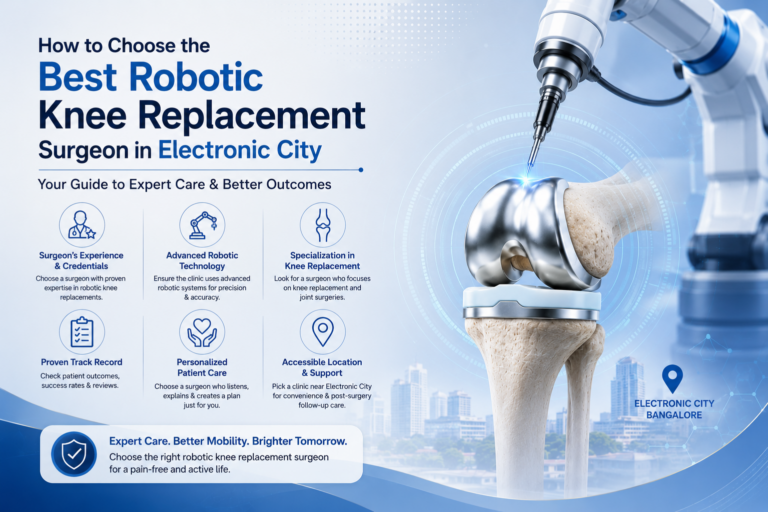
Dr. Abhinandan Punit offers robotic-assisted knee replacement, which:
- Provides 3D mapping of your knee before surgery
- Allows sub-millimeter precision in implant placement
- Preserves more bone and soft tissue
- Reduces complications
- Improves long-term implant survival
- Enables faster, more complete recovery
Recovery After Knee Replacement Surgery
Hospital Stay (Day 1-2)
What to expect:
- Pain management with medications
- Continuous passive motion (CPM) machine to gently move your knee
- Beginning of physical therapy (walking with walker, gentle exercises)
- Compression bandage and elevation to reduce swelling
- Possible drainage tube to prevent fluid buildup
Weeks 1-2 at Home
Physical therapy:
- Daily exercises to regain knee motion
- Walking with walker or crutches
- Elevation and ice to manage swelling
- Pain management with prescribed medications
Limitations:
- No driving while on pain medication
- No standing for long periods
- Limited stair climbing
- No heavy lifting
Weeks 3-6
Progression:
- Increased walking distance (now without aids)
- More aggressive physical therapy
- Return to light activities
- Reduced swelling and pain
Weeks 6-12
Continued improvement:
- Most daily activities resume
- Walking longer distances comfortably
- Climbing stairs without handrails
- Driving (if pain-free and not on opioids)
Months 3-12
Full recovery:
- Complete return to normal activities
- Pain-free walking, stairs, and mobility
- Improved sleep quality
- Most patients feel 80-90% better by 3 months, 95% by 6 months
Long-Term Outcomes
Modern knee implants typically last 15-20 years. With proper care, many last 20-25 years or longer. Physical activity, weight management, and protecting your knee from trauma help maximize implant lifespan.
Why Choose Dr. Abhinandan Punit for Knee Replacement Surgery in Bangalore?
Expertise and Experience
Dr. Abhinandan Punit brings unmatched credentials to knee replacement surgery:
- 15+ years of orthopedic experience with specialized focus on joint replacement
- 6,000+ surgeries performed, providing extensive experience across diverse patient cases
- Advanced expertise in robotic-assisted joint replacement, offering precision technology for better outcomes
- Specialization in knee reconstruction and complex cases, including revision surgeries and complicated presentations
Advanced Technology
At Elite Orthocare and Narayana Clinic in Bangalore, Dr. Abhinandan utilizes:
- State-of-the-art robotic surgical systems for precision and safety
- 3D imaging and surgical planning technology
- Minimally invasive techniques that reduce tissue damage
- Modern anesthesia and pain management protocols
Convenient Locations in Bangalore
Elite Orthocare, Kanakapura Road
- Comprehensive orthopedic facility
- Advanced surgical suites
- Rehabilitation center on-site
- Easy access from South Bangalore and surrounding areas
Narayana Clinic, Electronic City
- Modern surgical facility
- Convenient for patients in Electronic City and East Bangalore
- Equipped with latest diagnostic tools
Both locations provide seamless care, from initial consultation through surgery and recovery.
Comparison: When Surgery vs. Conservative Treatment Is Right
| Factor | Conservative Treatment | Knee Replacement Surgery |
|---|---|---|
| Pain Relief | Temporary (weeks to months) | Permanent or long-term (15-20+ years) |
| Duration of Treatment | Ongoing (continuous management) | One-time procedure with defined recovery |
| Timeline to Improvement | 6-12 months or longer | Major improvement within 3 months |
| Lifestyle Impact | Ongoing limitations and restrictions | Return to normal activities |
| Cost | Lower initial, but accumulates over time | Higher upfront, lower long-term |
| Best For | Mild-to-moderate pain, active patients | Severe pain, failed conservative care |
| Age Suitability | All ages | Generally 50+, but flexible based on overall health |
| Success Rate | Variable, depends on compliance | 95%+ patient satisfaction |
| Revision Risk | N/A | 5-10% chance over 20 years |
Before You Schedule Surgery: Questions to Ask
When you consult with Dr. Abhinandan Punit, bring these questions:
- “Based on my X-rays and MRI, how severe is my arthritis?”
- “Have I tried all conservative options, or are there treatments I haven’t attempted?”
- “Am I a good surgical candidate given my age and health?”
- “Which type of implant would work best for my lifestyle?”
- “Will you use robotic-assisted techniques?”
- “How long will my implant last?”
- “What are the risks specific to my case?”
- “What’s your typical recovery timeline for patients like me?”
- “How do I prepare for surgery?”
- “What happens if I’m not ready for surgery right now?”
Risks and Complications (Honest Discussion)
While knee replacement is safe and effective, like any surgery, it carries potential risks. Dr. Abhinandan maintains low complication rates through careful technique and patient selection, but it’s important to understand possibilities:
Common (5-15% of patients):
- Swelling and stiffness lasting weeks
- Temporary pain and soreness
- Bruising around the incision
- Mild fever in first few days
Uncommon (1-3% of patients):
- Blood clots (DVT) in the leg
- Infection of the surgical site
- Bleeding or hematoma
- Anesthesia reactions
- Damage to surrounding nerves or blood vessels
Rare (<1% of patients):
- Implant loosening (usually years later)
- Allergic reaction to implant materials
- Severe infection requiring hospitalization
- Persistent pain or stiffness (Complex Regional Pain Syndrome)
Risk reduction strategies:
- Pre-operative medical clearance
- Compression stockings and blood thinners post-surgery
- Careful sterile technique during surgery
- Early mobilization and physical therapy
- Infection prevention protocols
Most complications are manageable with appropriate care, and serious complications are rare in experienced hands.
Benefits of Knee Replacement Surgery
Pain Relief
- 95%+ of patients experience significant pain reduction or elimination
- Pain relief is typically permanent, lasting the lifetime of the implant
Restored Mobility
- Return to walking, stairs, hobbies, and sports
- No more limitations from knee pain
- Improved independence in daily activities
Better Sleep Quality
- Eliminated nighttime pain disturbances
- Ability to sleep in any position
- More restful, restorative sleep
Improved Quality of Life
- Return to activities you love
- Social engagement and travel
- Confidence in movement without fear of falling or knee giving way
Long-Term Value
- One-time solution vs. ongoing management
- Better long-term cost-effectiveness than ongoing injections and therapy
- Lasting results (15-25+ years for modern implants)
Psychological Benefits
- Regained independence and confidence
- Relief from depression and anxiety related to chronic pain
- Ability to participate fully in family and social activities
When Should You See a Knee Specialist?
Schedule a consultation with Dr. Abhinandan Punit if you have:
- Knee pain lasting more than 2-3 weeks
- Swelling that doesn’t improve with ice and elevation
- Limited knee motion or stiffness affecting daily activities
- Knee instability or giving way
- Pain that wakes you at night
- Visible deformity or misalignment
- Failed conservative treatments
- Questions about whether you need surgery
Don’t wait if you experience:
- Sudden severe pain with swelling (possible injury)
- Fever with knee swelling (possible infection)
- Inability to bear weight on the leg
- Significant deformity
Early evaluation prevents progression of damage and ensures timely treatment.
Don’t Let Knee Pain Control Your Life
If persistent knee pain is limiting your activities, disrupting your sleep, and affecting your quality of life, you don’t have to suffer indefinitely. Knee replacement surgery offers a proven solution that has helped thousands of patients return to the activities they love.
Dr. Abhinandan Punit has successfully performed over 6,000 orthopedic surgeries, including advanced robotic-assisted knee replacements at Elite Orthocare and Narayana Clinic in Bangalore. His 15+ years of specialized experience means you’re in trusted, capable hands.
The first step is simple: schedule a consultation to discuss your specific situation. During your appointment, Dr. Abhinandan will:
- Evaluate your knee thoroughly
- Discuss all treatment options honestly
- Help you understand whether surgery is right for you
- Answer every question you have
- Create a personalized treatment plan
Whether you need surgery now or can benefit from conservative treatment, you’ll receive clear guidance and expert care.
Book Your Consultation Today Don’t wait until your pain becomes unbearable or you’ve lost more mobility. Early evaluation often leads to better outcomes and more treatment options.
Your journey back to a pain-free, active life starts with one conversation.
FREQUENTLY ASKED QUESTIONS
How do I know if I need knee replacement surgery?
You likely need knee replacement if severe pain, swelling, and stiffness persist despite 6+ months of conservative treatment (physical therapy, medications, injections), and X-rays or MRI show significant cartilage damage. Common signs include difficulty walking, climbing stairs, sleeping due to pain, and reduced quality of life. Dr. Abhinandan Punit can evaluate your knee and imaging to determine if surgery is appropriate for your specific situation through a thorough consultation.
How painful is knee replacement surgery recovery?
Recovery involves managed pain, not unbearable pain. You’ll receive pain medication (oral and sometimes injected) for the first 2-4 weeks, with most patients requiring less medication as weeks progress. Pain peaks in the first 1-2 weeks and gradually decreases. Physical therapy exercises do cause discomfort (similar to exercise soreness), but this is part of healing and improves range of motion. Most patients report pain is significantly better by week 3-4 and substantially resolved by 6-8 weeks post-surgery.
How long do crutches or walker stay after knee replacement?
Most patients use a walker or crutches for 2-6 weeks depending on pain levels and strength. Many transition to a cane by week 3-4 and walk independently by week 6-8. Physical therapy progression varies—some patients need assistive devices longer if they’re older or have slower recovery. Dr. Abhinandan’s team will guide you on when it’s safe to progress to less support based on your individual recovery. Pain and swelling typically dictate the timeline more than a set schedule.
Can I climb stairs after knee replacement?
Yes, most patients can climb stairs confidently by week 6-8 post-surgery. Initially (weeks 1-3), stairs are challenging and should be avoided if possible; use crutches or a walker with handrails if stairs are necessary. By week 4-6, many patients climb one step at a time (up and down). By 8-12 weeks, most climb normally. Stair-climbing ability depends on your pain level, strength, and balance—progress at a comfortable pace and use handrails as long as needed for safety.
Is knee replacement surgery permanent?
Knee replacement is a long-term solution, not permanent. Modern implants typically function well for 15-20 years, with many lasting 20-25 years or longer. Eventually, the plastic spacer may wear down or the implant loosen, requiring revision (replacement) surgery. However, most people get their replacement in their 60s-70s and never need revision surgery in their lifetime. Maintaining healthy weight, staying active (but avoiding high-impact sports), and protecting your knee from trauma help maximize implant lifespan.
What activities can I do after knee replacement?
By 3-6 months post-surgery, most patients can: walk unlimited distances, climb stairs, hike, garden, travel, swim, cycle, play golf, and attend social activities. High-impact activities (running, jumping, contact sports) are generally not recommended as they can damage the implant. Dr. Abhinandan can discuss specific activities based on your job, hobbies, and lifestyle. Most people find their post-replacement activities actually expand compared to their pre-surgery limitations due to pain reduction.
What happens if I have a blood clot after knee replacement?
Blood clots (deep vein thrombosis or DVT) occur in about 1-3% of knee replacement patients. Symptoms include calf swelling, pain, warmth, or redness. Immediate treatment with blood thinners (medication) prevents the clot from traveling to your lungs (pulmonary embolism). This is serious but treatable. Prevention starts before surgery with compression stockings, leg exercises, and blood thinner medication. Early mobilization and walking post-surgery significantly reduce DVT risk. If you notice sudden calf swelling or pain, contact Dr. Abhinandan’s office or seek emergency care immediately.
How much will knee replacement surgery cost?
Knee replacement cost varies based on implant type, hospital facility, surgeon fees, and your insurance. Typical costs range from ₹3-6 lakhs in Bangalore, but most insurance covers major costs with your copay and deductible. Dr. Abhinandan’s office provides transparent pricing and works with your insurance company for pre-authorization. It’s worth noting that while initial surgery cost is significant, the long-term value is typically better than ongoing injections, therapy, and pain management spreading over 15-20 years.