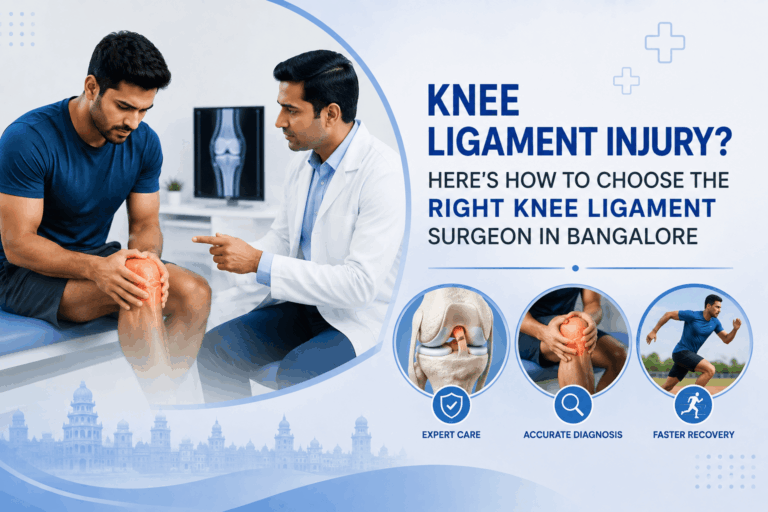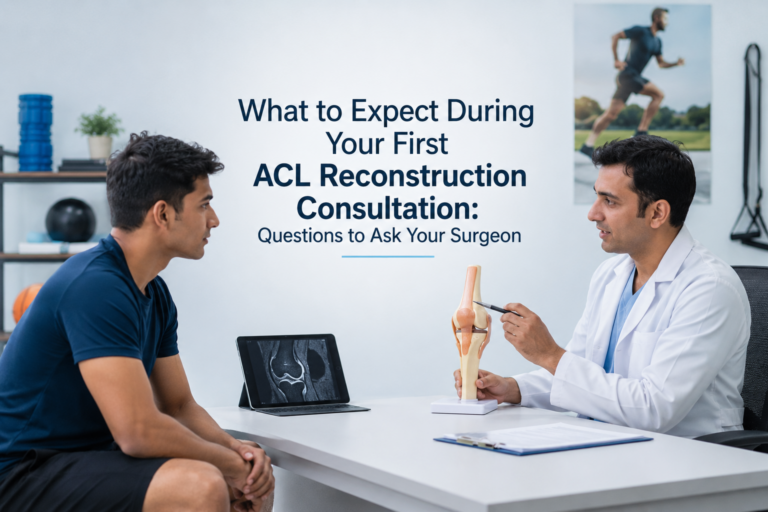

Yes, some people can live normally without ACL surgery when the knee remains stable and daily activities are not significantly affected. Dr. Abhinandan S. Punit, an Orthopaedic Surgeon in Bangalore with 15+ years of experience and 6,000+ orthopaedic surgeries, evaluates ACL injuries based on knee stability, activity level, associated injuries, and rehabilitation response before recommending surgery or non-surgical treatment.
What Is an ACL Injury?
An ACL injury is damage to the anterior cruciate ligament, an important ligament that helps stabilise the knee during walking, running, landing, and changes in direction. ACL injuries commonly occur after sudden twisting, pivoting, jumping, awkward landing, or direct impact.
The severity of the injury and the stability of the knee can influence whether a patient can manage without surgery. Patients experiencing persistent symptoms can explore knee ligament injury treatment for further evaluation.
Can You Live Normally Without ACL Surgery?
Yes, some people can live normally without ACL surgery, particularly when the knee remains stable and their daily activities are not demanding. They may be able to walk, work, exercise at an appropriate level, and manage their symptoms with rehabilitation.
However, being able to walk does not always mean the knee is fully stable. Repeated giving way or difficulty with turning movements can indicate that further assessment is needed.
Who Can Manage an ACL Injury Without Surgery?
You may be able to manage an ACL injury without surgery when:
- Your knee remains stable during everyday activities
- You do not experience repeated episodes of giving way
- Your lifestyle does not require frequent pivoting or high-impact sports
- Your surrounding muscles provide adequate knee support
- You can follow a structured physiotherapy programme
- Your symptoms remain controlled with rehabilitation
Some patients adapt well to an ACL injury and maintain good function without reconstruction. However, monitoring is important if symptoms or instability develop later.
Who May Need ACL Surgery?
ACL reconstruction surgery may be considered when knee instability affects daily activities, exercise, work, or sports.
Surgery may be discussed when:
- The knee repeatedly gives way.
- You want to return to pivoting or high-impact sports.
- There is associated meniscus or cartilage damage.
- Knee instability continues despite rehabilitation.
- Your activity requirements require reliable knee stability.
The decision should be based on symptoms, knee stability, activity goals, associated injuries, and clinical assessment.
Patients considering surgery can learn more about ACL reconstruction surgery in Bangalore.
What Happens If You Do Not Have ACL Surgery?
Not having surgery does not automatically mean that the knee will develop complications. The main concern is persistent instability.
If an unstable knee repeatedly gives way, it can increase the chance of additional injuries involving structures such as the meniscus or cartilage. Over time, repeated instability may affect knee function and activity levels.
For this reason, the decision should focus on whether the knee is functioning safely and reliably rather than simply whether the pain has improved.
Can Physiotherapy Replace ACL Surgery?
Physiotherapy plays an important role whether or not surgery is performed. It can help improve muscle strength, movement, balance, and control around the knee.
However, physiotherapy does not reconstruct a completely torn ACL. Some patients can function well without reconstruction because their knee remains stable with rehabilitation, while others continue to experience instability and may require surgery.
A structured ACL rehabilitation programme can help assess how well the knee responds to non-surgical management.
When Should You See a Doctor for an ACL Injury?
You should consider an orthopaedic assessment if you experience:
- Repeated episodes of knee giving way
- Swelling after physical activity
- Difficulty turning or changing direction
- Persistent knee instability
- Difficulty returning to your usual activities
- A desire to return to competitive or high-impact sports
Early assessment can help determine whether continued rehabilitation is appropriate or whether ACL reconstruction should be considered.
Can You Play Sports Without ACL Surgery?
Some people may continue selected physical activities without ACL reconstruction if their knee remains stable. However, sports involving running, sudden stopping, pivoting, jumping, and rapid changes of direction place greater demands on knee stability.
If the knee repeatedly gives way during these activities, continuing without appropriate assessment may increase the risk of further injury.
Why Is Knee Stability More Important Than Pain?
Pain may improve even when an injured ACL has not restored normal mechanical stability. Therefore, feeling better does not necessarily mean that the knee is ready for sports or demanding activities.
A doctor may assess knee stability, muscle strength, movement, associated injuries, and activity requirements before recommending continued rehabilitation or surgery.
How Do Doctors Decide If ACL Surgery Is Needed?
Doctors consider several factors before recommending ACL reconstruction, including the extent of the injury, knee stability, symptoms, associated meniscus or cartilage damage, physical activity, and rehabilitation response.
MRI findings can provide important information, but treatment decisions are not based on imaging alone. The patient’s clinical examination and functional requirements also matter.
Why Consult Dr. Abhinandan Punit for ACL Treatment?
Dr. Abhinandan S. Punit is an Orthopaedic Surgeon in Bangalore with 15+ years of experience and 6,000+ orthopaedic surgeries. He provides assessment and treatment guidance for patients with ACL injuries, sports injuries, and other knee ligament problems.
His evaluation considers knee stability, symptoms, activity requirements, associated injuries, and treatment goals before deciding whether non-surgical management or ACL reconstruction is appropriate.
Conclusion
Living normally without ACL surgery is possible for some patients, particularly when the knee remains stable and daily activities can be performed without repeated giving way. Rehabilitation, muscle strengthening, and activity modification can support non-surgical management.
However, persistent instability, associated meniscus or cartilage injuries, or a goal of returning to demanding sports may make ACL reconstruction an appropriate option.
Experiencing knee instability, pain, or difficulty returning to physical activities after an ACL injury? Consult an orthopaedic specialist to understand your condition and explore appropriate treatment options.
Book a Consultation with Dr. Abhinandan S. Punit to schedule an appointment.
Frequently Asked Questions About Living Without ACL Surgery
Can I walk normally without ACL surgery?
Yes, many people can walk normally after an ACL injury, particularly when the knee is stable. However, normal walking does not necessarily mean the knee can safely handle running, pivoting, jumping, or sports. Repeated giving way or instability should be assessed by an orthopaedic specialist.
Can an ACL tear heal without surgery?
A completely torn ACL generally does not reconnect in the same way as an intact ligament. However, some patients can function well without reconstruction because they develop adequate muscle control and the knee remains stable. Whether this approach is appropriate depends on knee function, activity level, and symptoms.
Is it safe to delay ACL surgery?
Delaying surgery may be reasonable for selected patients whose knees remain stable and who can manage their activities safely. However, repeated instability can increase the risk of additional knee problems. A specialist can assess whether continued rehabilitation is appropriate or whether reconstruction should be considered.
Can I play sports without ACL surgery?
Some people may participate in lower-demand activities without surgery if their knee remains stable. Sports involving pivoting, rapid direction changes, jumping, or sudden stops place greater demands on knee stability. Patients wanting to return to these activities should undergo appropriate assessment before resuming sports.
Where can I consult Dr. Abhinandan Punit in Bangalore?
Dr. Abhinandan Punit provides consultations at Elite Orthocare, Kanakapura Road, and Narayana Clinic, Electronic City, Bangalore. Patients can contact the clinic to confirm appointment availability and the appropriate consultation location.