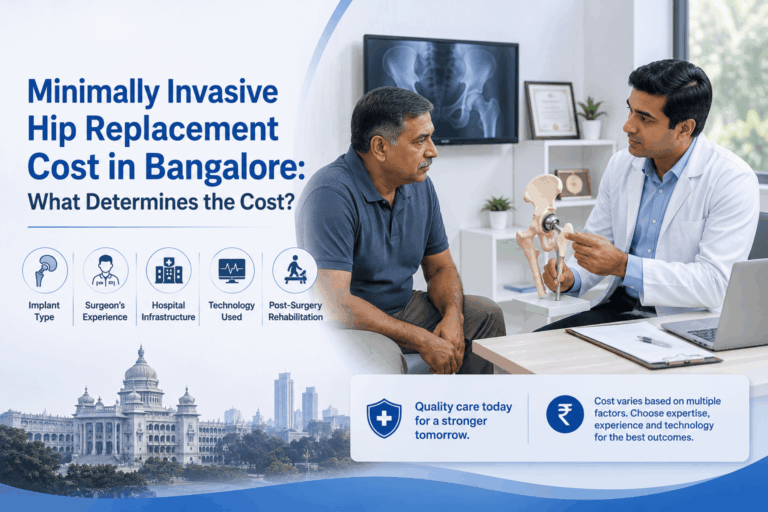

For active lifestyle patients, a ceramic-on-ceramic or ceramic-on-highly cross-linked polyethylene hip replacement implant is usually the best choice. These implants offer better wear resistance, smoother movement, and longer durability, often lasting 20–25 years, especially when placed using robotic-assisted, muscle-sparing techniques.
Choosing the right hip replacement implant in Bangalore isn’t just about relieving pain — it’s about getting back to walking, travelling, gardening, or playing sport without worrying about the implant wearing out early. With so many implant materials and surgical approaches available today, patients are often confused about which combination actually suits an active routine. Surgeons like Dr. Abhinandan Punit, who work closely with active patients on implant selection and surgical approach, often see this exact confusion during consultations. This blog breaks it down in plain language, so you know exactly what to ask your surgeon.
What Is a Hip Replacement Implant?
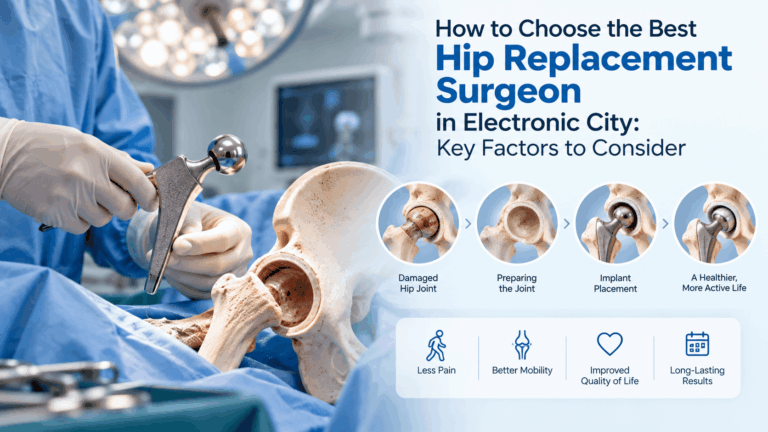
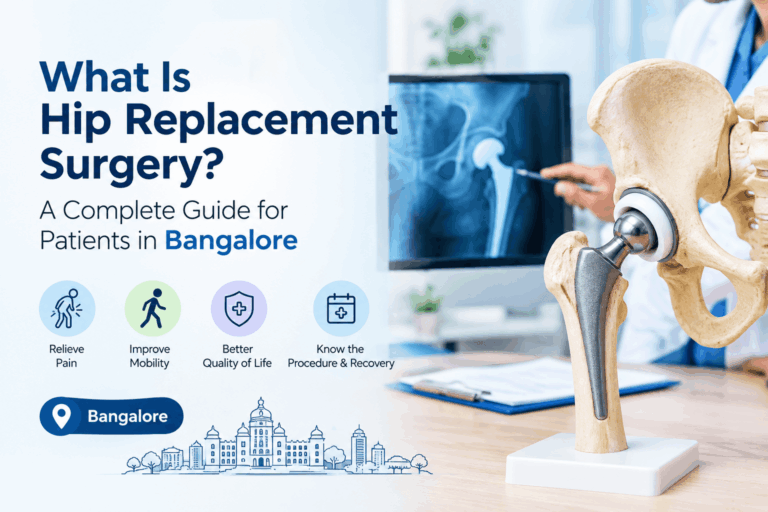
A hip replacement implant is an artificial joint used to replace a damaged hip during total hip arthroplasty. It usually has four parts — a stem, a ball, a liner, and a socket cup — made of metal, ceramic, or high-grade plastic. The implant recreates natural hip movement and helps relieve pain caused by arthritis or joint damage.
What Are the Main Types of Hip Replacement Implants?
Modern implants differ mainly in the material used for the ball-and-socket surface, which affects how long they last and how much wear they can handle:
- Metal-on-polyethylene: cost-effective, reliable, moderate wear resistance
- Ceramic-on-polyethylene: smoother motion, lower wear than metal-on-poly
- Ceramic-on-ceramic: highest wear resistance, ideal for active patients
- Metal-on-metal: rarely used today due to wear-related complications
- Cementless (press-fit): bone grows into implant for a strong, lasting hold
- Cemented: implant fixed with bone cement, often used in older patients
Which Hip Implant Is Best for Active Lifestyle Patients?
Active patients put more repetitive stress on the hip joint through walking, running, or sport, so implant durability matters more than it does for a sedentary lifestyle. Ceramic-on-ceramic and ceramic-on-highly cross-linked polyethylene implants are generally preferred because they resist wear better and support a fuller, more natural range of motion over the long term.
Metal vs Ceramic vs Polyethylene Implants: A Quick Comparison
| Implant Type | Durability | Best Suited For |
| Metal-on-polyethylene | 15–20 years | Moderately active, cost-conscious patients |
| Ceramic-on-polyethylene | 18–22 years | Active patients wanting smooth motion |
| Ceramic-on-ceramic | 20–25 years | Highly active or younger patients |
| Metal-on-metal | Variable, higher revision risk | Rarely recommended today |
| Cementless (press-fit) | Long-term bone integration | Younger patients with good bone quality |
How Do Surgical Technique and Approach Affect Implant Performance?
The implant material is only half the picture — the surgical approach used to place it matters just as much for active patients:
- Direct Anterior Approach (DAA): muscle-sparing, faster early mobility
- Robotic-assisted placement: sub-millimetre implant positioning accuracy
- 3D pre-surgical planning: implant size and alignment mapped in advance
- Minimally invasive incisions: less tissue disruption, quicker recovery
- Structured post-op physiotherapy: protects implant longevity long-term
When Should You Consider Hip Replacement Surgery?
Not every hip pain needs surgery, but you should consult a specialist if you notice:
- Hip pain that continues even while resting or sleeping
- Stiffness that limits walking, climbing stairs, or bending
- Reduced ability to do sports, gym, or recreational activities
- Pain that doesn’t improve with medication or physiotherapy
- X-rays confirming moderate to severe arthritis or joint damage
If you are experiencing persistent hip pain or difficulty with daily activities, you can book a consultation with Dr. Abhinandan Punit to discuss your condition and suitable treatment options.
About Dr. Abhinandan Punit – Hip Replacement Surgeon in Bangalore
Dr. Abhinandan Punit is a Consultant Orthopedic Surgeon specialising in Robotic Joint Replacement and Sports Medicine, holding MS (Kasturba Medical College, Manipal University), DNB, and MCh in Orthopaedics from the University of Edinburgh, along with an MSc in Sports & Exercise Medicine from the UK. He completed further fellowship training in hip, knee, and shoulder surgery across the UK, Europe, and Australia.
With 15+ years of surgical experience and 6,000+ orthopedic surgeries, including 200+ joint replacements annually, Dr. Punit is certified across multiple robotic platforms and is known for the Direct Anterior Approach (DAA), a muscle-sparing technique that supports faster mobility after surgery.
He is the founder of Elite Orthocare Multi-Specialty Clinic in Raghuvanahalli, Bangalore, and also practices as a consultant orthopedic surgeon at Narayana Health City, Bommasandra, and Narayana Clinic, Electronic City. Every treatment plan is customised based on the patient’s age, bone quality, activity level, and lifestyle goals. You can read more about his hip replacement procedures on his official website: doctorabhinandanpunit.com.
Frequently Asked Questions
- Which hip implant lasts the longest?
Ceramic-on-ceramic implants generally last the longest, often 20–25 years, because ceramic surfaces resist wear better than metal or plastic combinations. Actual longevity still depends on the patient’s activity level, bone quality, weight, and how closely they follow post-surgery rehabilitation guidance from their surgeon.
- Is robotic hip replacement better than traditional surgery?
Robotic-assisted hip replacement allows sub-millimetre precision in implant positioning through 3D pre-surgical planning and real-time guidance during surgery. This typically results in more accurate alignment, less tissue damage, and improved long-term implant performance compared to fully manual, traditional techniques.
- What is the Direct Anterior Approach (DAA)?
The Direct Anterior Approach is a muscle-sparing hip replacement technique performed from the front of the hip instead of the side or back. It avoids cutting through major muscles, which typically leads to faster early mobility, less post-operative pain, and a shorter hospital stay for many patients.
- How long does recovery take after hip replacement surgery?
Initial recovery usually takes 6–8 weeks, during which patients regain basic walking ability with support. Full recovery, including a return to sports or more demanding activities, can take up to 6 months and depends heavily on consistent physiotherapy and following the surgeon’s rehabilitation plan.
- Can young or active patients get a hip replacement?
Yes, younger and active patients can safely undergo hip replacement, particularly with durable implants like ceramic-on-ceramic and modern techniques like robotic-assisted DAA. Surgeons typically choose implant materials and fixation methods based on the patient’s bone quality, activity level, and expected implant lifespan.
- What factors affect the cost of a hip replacement implant in Bangalore?
The final cost depends on the implant type and material, the surgical technique used (robotic vs conventional), hospital stay duration, and physiotherapy needs. It’s best to discuss a personalised cost estimate during consultation, as insurance coverage can also affect the total expense.
- Is hip replacement surgery safe?
Yes, hip replacement is a well-established procedure with high success rates, especially when performed by an experienced surgeon using modern techniques. Risks are further reduced with proper pre-surgical evaluation, precise implant placement, and structured post-operative care and physiotherapy.
- How do I know which implant type is right for me?
The right implant depends on your age, activity level, bone density, and overall health. Dr. Abhinandan Punit can assess these factors along with your imaging to recommend the implant material and fixation method best suited to your lifestyle.