
Doctor’s Bio
- Dr. Abhinandan Punit,(Best Knee Replacement surgeon Bangalore) MS, DNB, MCh (Edinburgh), MSc Sports & Exercise Medicine
- 15+ years of surgical experience with 6,000+ orthopedic surgeries
- Performs 200+ knee replacements annually, specializing in robotic techniques (MAKO, Cuvis, Cori)
- Fellowship training in the UK and Australia
- Founder of Elite Orthocare Multi-Specialty Clinic and consultant at Narayana Clinic & Hospitals
- Member of ISHKS and ISTA, with published outcome research in peer-reviewed journals
If you are suffering from arthritis affecting only one part of your knee, partial knee replacement may be the most effective solution. Many patients often ask, what is partial knee replacement, and ” Is it better than total knee replacement. In simple terms, partial knee replacement surgery replaces only the damaged compartment of the knee while preserving healthy bone, cartilage, and ligaments.
What Is Partial Knee Replacement?
Many patients search online for what a partial knee replacement is or what a half-knee replacement is. Both terms refer to the same procedure, also known as unicompartmental knee replacement (UKR).
The knee joint has three compartments:
- Medial (inner side)
- Lateral (outer side)
- Patellofemoral (front of the knee)
When arthritis damages only one compartment, a partial knee replacement operation is performed instead of replacing the entire joint. This preserves natural knee structures and results in more natural movement.
So, what is a half-knee replacement? It is simply another term patients use to describe partial knee replacement surgery because only one portion of the knee is replaced rather than the whole joint.
Who Needs Partial Knee Replacement Surgery?
Partial knee replacement surgery in Bangalore is ideal for patients who:
- Have arthritis confined to one compartment
- Experience pain localized to one side of the knee
- Have intact ligaments
- Have a mild knee deformity
- Do not respond to medications or physiotherapy
A proper evaluation, including X-rays and clinical examination, determines eligibility. Not all patients are suitable candidates, and correct patient selection is essential for long-term success.
Partial Knee Replacement vs Total Knee Replacement
Understanding the difference helps patients make informed decisions.
| Feature | Partial Knee Replacement | Total Knee Replacement |
| Area Treated | One compartment | Entire knee |
| Incision | Smaller | Larger |
| Bone Removal | Minimal | Extensive |
| Recovery | Faster | Longer |
| Knee Feel | More natural | Artificial feel |
When considering partial knee replacement pros and cons, the advantages include quicker healing, less blood loss, and preservation of healthy tissue. However, one limitation is that arthritis may progress in other compartments over time, which could require further treatment.
Discussing the partial knee replacement pros and cons with an experienced surgeon ensures the right treatment choice.
Types of Partial Knee Replacement
Depending on the affected compartment, partial knee replacement may be:
Medial Partial Knee Replacement
The most common type addresses arthritis on the inner side.
Lateral Partial Knee Replacement
Used when damage affects the outer compartment.
Patellofemoral Replacement
Performed when arthritis affects the front of the knee.
Each partial knee replacement operation is carefully planned to match the patient’s anatomy.
Robotic-Assisted Partial Knee Replacement Surgery
Robotic technology has significantly improved the accuracy of robotic partial knee replacement surgery.
Robotic-assisted systems create a 3D model of the patient’s knee, allowing highly precise implant positioning. This results in:
- Better alignment
- Reduced tissue damage
Less post-operative pain - Faster partial knee replacement recovery
Robotic assistance enhances safety and improves implant longevity. While robotic procedures may have slightly higher costs, they often improve functional outcomes.
The Partial Knee Replacement Operation: Step-by-Step
The partial knee replacement operation usually takes 60 to 90 minutes.
Step 1: Preoperative Planning
Comprehensive imaging and planning ensure accurate implant sizing and positioning.
Step 2: Small Incision
A minimally invasive incision is made over the affected compartment.
Step 3: Removal of Damaged Tissue
Only the worn-out cartilage and bone are removed.
Step 4: Implant Placement
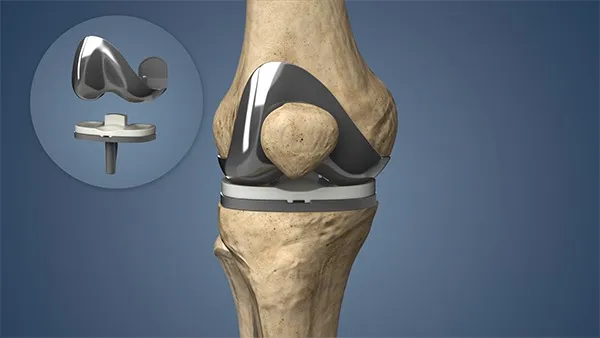
A specially designed metal and polyethylene implant is positioned precisely.
Step 5: Alignment and Closure
The joint is balanced, checked for smooth motion, and then closed carefully.
Patients are transferred to recovery shortly after surgery.
Because only part of the knee is replaced, partial knee replacement surgery is less invasive than total knee replacement.
Hospital Stay and Early Mobility
One of the biggest advantages of partial knee replacement is early mobilization.
- Walking begins within 24 hours
- Hospital stay is typically 2–3 days
- Most patients resume light activities within weeks
Early physiotherapy plays a crucial role in partial knee replacement recovery.
Partial Knee Replacement Recovery Time
Patients frequently ask about partial knee replacement recovery time and how soon they can walk normally.
Recovery is generally faster compared to total knee replacement.
Typical Partial Knee Replacement Recovery Timeline:
- Day 1–2: Walking with support
- Week 2–3: Improved mobility
- Week 4–6: Independent walking
- 2–3 months: Near full recovery
The overall partial knee replacement recovery period is shorter because less bone and tissue are disturbed.
While partial knee replacement recovery time varies from patient to patient, most individuals regain daily activity within 4–6 weeks.
Exercises During Partial Knee Replacement Recovery
A structured rehabilitation plan ensures optimal healing.
Common exercises include:
- Quadriceps strengthening
- Straight leg raises
- Knee-bending exercises
- Controlled walking
- Balance training
Proper physiotherapy improves flexibility and strengthens surrounding muscles, ensuring successful partial knee replacement recovery.
Cost of Partial Knee Replacement in India
The cost of partial knee replacement depends on:
- Implant type
- Conventional vs robotic surgery
- Hospital facilities
- Surgeon expertise
In general, a partial knee replacement operation is more cost-effective than total knee replacement when medically appropriate. Robotic procedures may involve slightly higher expenses but provide enhanced precision and better outcomes.
A personalized consultation provides accurate cost details based on individual needs.
Life After Partial Knee Replacement Surgery
Most patients experience significant pain relief and improved quality of life after partial knee replacement surgery.
After recovery, patients can:
- Walk comfortably
- Climb stairs with minimal discomfort
- Resume daily household activities
- Participate in low-impact sports
Maintaining a healthy weight and staying active improves implant longevity.
Risks and Complications
Although highly successful, partial knee replacement carries certain risks:
- Infection
- Blood clots
- Implant loosening
- Knee stiffness
- Progression of arthritis
Choosing an experienced surgeon significantly reduces these risks and improves surgical success rates.
When to Contact Your Surgeon
Seek immediate medical attention if you experience:
- Persistent swelling
- Fever
- Severe calf pain
- Increasing knee pain
- Wound discharge
Early intervention prevents complications during partial knee replacement recovery.
Why Choose Dr Abhinandan Punit?
Dr. Abhinandan Punit is known for precision-based joint replacement techniques and patient-centered care. His expertise in robotic partial knee replacement surgery ensures:
- Accurate implant positioning
- Reduced surgical trauma
- Faster partial knee replacement recovery time
- High success rates
With advanced technology and global training, patients receive safe and effective treatment tailored to their condition.
Frequently Asked Questions
1. Is partial knee replacement safe?
Yes, when performed on suitable candidates by an experienced surgeon.
2. How long does the surgery take?
Approximately 60–90 minutes.
3. Is robotic partial knee replacement better?
Robotic surgery improves precision and may enhance recovery outcomes.
4. Can a partial knee replacement convert to a total knee replacement?
Yes, if arthritis progresses to other compartments in the future.
5. How long do implants last?
Most implants last 15–25 years with proper care.
Conclusion
If you are wondering what a partial knee replacement or a half knee replacement is, it is a minimally invasive surgical solution designed for patients with localized knee arthritis. Partial knee replacement surgery preserves healthy tissues while replacing only the damaged portion of the knee, resulting in faster recovery and more natural movement.
Under the expert care of Dr. Abhinandan Punit, Best knee replacement Surgeon patients benefit from advanced robotic technology, precise surgical planning, and comprehensive rehabilitation support. With proper selection and expert execution, partial knee replacement offers long-lasting pain relief and improved mobility.
Elite Orthocare is TrustIndex verified doamin who provide Total Knee Replacement Consultation to Pateint
For best surgeon clcik here on Best Robotic Knee Replacement surgeon in Bangalore