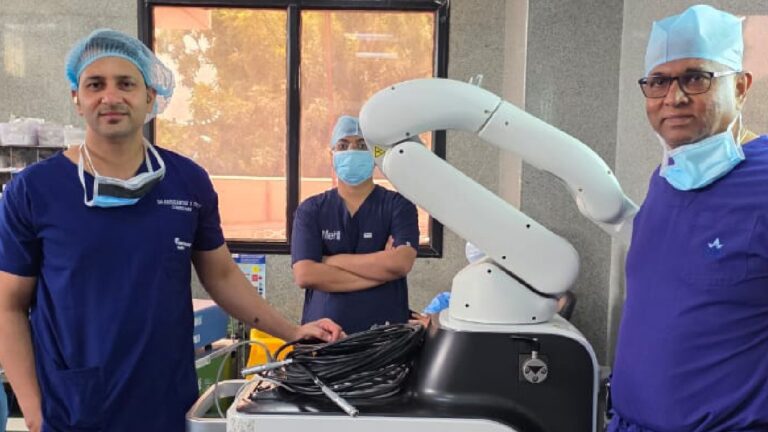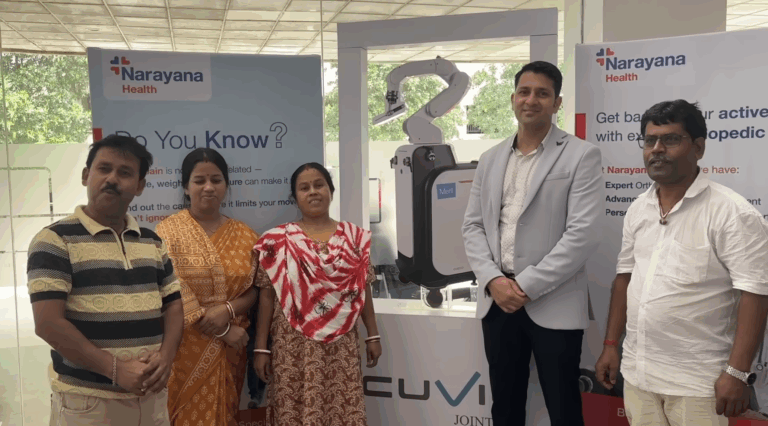

On 8 January 2026, at ROC 2026 in Bengaluru, a session on personalised arthroplasty using robotics brought together experts to discuss the evolving landscape of joint reconstruction. Within this larger conversation, Dr. Abhinandan Punit briefly spoke on personalised arthroplasty in complex deformities. These cases often challenge standard algorithms and remind us that anatomy doesn’t always follow templates. They push us to think beyond alignment targets and toward truly patient-specific solutions.
What does personalisation really mean in complex deformities? Is it technology alone, or is it the way we interpret and apply it? And can robotics help us bring consistency to situations where variability is the norm?
Why Complex Deformities Matter
Complex deformities are more than “difficult cases.” They challenge fundamental assumptions about alignment and reconstruction:
• Anatomical landmarks may be absent or distorted
• Mechanical axes rarely reflect true functional alignment
• Long-standing compensations complicate surgical planning
• Standardised workflows risk overcorrection or instability
This raises an important question: Can uniform strategies ever serve patients whose anatomy defies the textbook?
Reflections and Practical Takeaways
The session distilled several insights that remain relevant to everyday practice:
➜ Standardisation ensures safety; individualisation ensures relevance
➜ Planning is now as critical as execution
➜ Robotics reduces variability, but clinical judgement defines intent
➜ Success must be measured in function and patient-specific outcomes
Looking Ahead
As robotic platforms become increasingly integrated into arthroplasty practice, the challenge will not be adoption—but discernment. Knowing when to follow established pathways and when to deliberately deviate from them will define the next phase of joint reconstruction.