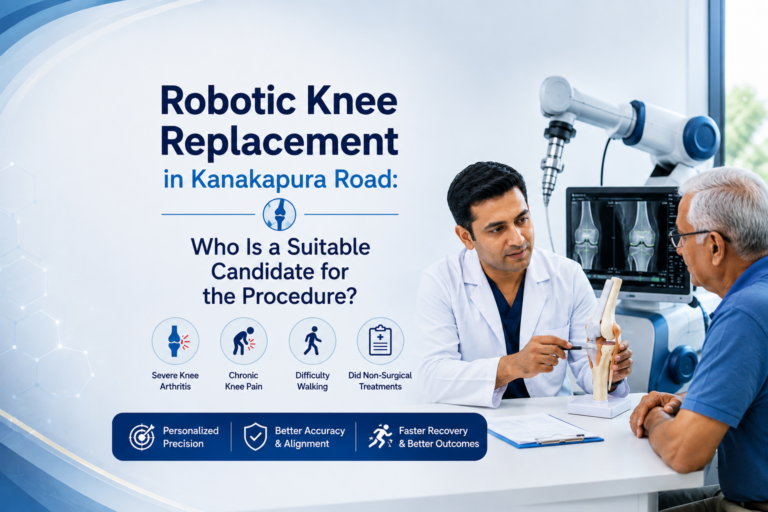

Robotic knee replacement is a knee replacement procedure supported by computer-assisted planning and robotic technology. It helps the surgeon plan the procedure according to the patient’s knee anatomy and assists with bone preparation and implant positioning. However, the surgeon remains in control of the operation, and robotic assistance is not automatically necessary for every patient.
What Is Robotic Knee Replacement?
Robotic knee replacement is a form of knee replacement surgery in which technology assists the surgeon with planning and performing specific parts of the procedure.
Unlike the common misconception, the robot does not independently perform the surgery. The orthopedic surgeon evaluates the patient’s knee, makes the clinical decisions and controls the surgical procedure.
The technology can provide detailed information about the patient’s knee anatomy and help the surgeon plan bone preparation and implant positioning.
For patients considering robotic knee replacement in Bangalore, the first question should be whether knee replacement itself is appropriate. Robotic assistance is then considered as part of the surgical plan.
How Does Robotic Knee Replacement Work?
Robotic-assisted knee replacement generally involves detailed planning before surgery followed by technology-assisted guidance during the procedure.
Preoperative Planning
The surgeon first evaluates the patient’s symptoms, physical examination and imaging. Depending on the robotic system and procedure, imaging may be used to create a detailed representation of the knee.
This information can help the surgeon plan implant size, positioning and alignment according to the patient’s individual anatomy.
During Surgery
During the operation, the surgeon uses the robotic system as a surgical-assistance tool.
The technology can provide real-time information and help guide specific aspects of bone preparation and implant positioning. The surgeon remains responsible for the procedure and can make adjustments according to the clinical situation.
Implant Positioning
One of the purposes of computer-assisted technology is to help the surgeon plan and execute implant positioning according to the patient’s anatomy.
Accurate positioning and alignment are important considerations in knee replacement, but good surgical outcomes depend on more than technology alone.
Who May Be a Candidate for Robotic Knee Replacement?
Robotic knee replacement may be considered for patients who are appropriate candidates for knee replacement and whose surgeon believes computer-assisted technology is suitable for their procedure.
Knee replacement may be considered when advanced arthritis or other joint damage causes persistent pain, stiffness and difficulty with daily activities despite appropriate non-surgical treatment.
Factors that may be considered include:
- Severity and location of joint damage
- Knee alignment and deformity
- Symptoms and functional limitations
- Previous knee surgery
- Bone condition
- Overall health
- Type of knee replacement required
- Patient expectations and activity goals
Not every patient with knee arthritis needs knee replacement, and not every knee replacement requires robotic assistance.
What Are the Benefits of Robotic Knee Replacement?
Robotic assistance can provide detailed surgical planning and computer-assisted guidance during knee replacement.
Potential advantages include:
- Patient-specific surgical planning
- Assistance with implant positioning
- Computer-guided assessment of knee alignment
- Real-time information during parts of the procedure
- Assistance in planning bone preparation
However, patients should distinguish between technical advantages and proven clinical outcomes.
Robotic technology can improve aspects of surgical planning and accuracy, but it should not be presented as a guarantee of faster recovery, less pain or better long-term results for every patient.
What Are the Limitations of Robotic Knee Replacement?
Robotic knee replacement is not a risk-free or universally superior alternative to conventional knee replacement.
The technology adds another layer of planning and equipment to the procedure, and its usefulness depends on the patient’s anatomy, the type of surgery and the surgeon’s assessment.
Current AAOS guidance reports no significant short-term difference in function, outcomes or complications between robotic-assisted and conventional total knee replacement, although robotic assistance may improve implant positioning and reduce alignment outliers in some circumstances.
This is why patients should discuss both the potential benefits and limitations before choosing robotic-assisted surgery.
Is Robotic Knee Replacement Better Than Conventional Surgery?
There is no single answer that applies to every patient.
Robotic-assisted surgery can offer computer-assisted planning and guidance, while conventional knee replacement relies on established surgical techniques and instrumentation.
The appropriate choice depends on the patient’s condition, anatomy, type of knee replacement, surgeon’s experience and available facilities.
Rather than asking only, “Is robotic surgery better?”, patients should ask:
“Would robotic assistance provide a meaningful benefit for my particular knee?”
That question allows the decision to be based on the individual treatment plan rather than the technology itself.
How Much Does Robotic Knee Replacement Cost in Bangalore?
The cost of robotic knee replacement in Bangalore varies depending on the hospital, implant, surgical requirements, technology used and individual patient factors.
The total cost may include:
- Surgeon and surgical team charges
- Hospital and operating-room charges
- Implant cost
- Anesthesia
- Investigations and imaging
- Medications
- Physiotherapy and rehabilitation
- Follow-up care
Because these factors vary between patients and hospitals, an exact price should not be assumed from a general online estimate.
Patients should ask for a detailed treatment estimate during their consultation and clarify what is included in the quoted cost.
What Is Recovery Like After Robotic Knee Replacement?
Recovery after robotic knee replacement involves gradual improvement in knee movement, strength, walking ability and function.
Early recovery generally includes pain management, wound care, walking with appropriate assistance and physiotherapy.
Rehabilitation then progresses toward:
- Improving knee movement
- Reducing swelling
- Regaining muscle strength
- Improving balance and walking
- Returning gradually to daily activities
Recovery varies according to age, general health, muscle strength, preoperative mobility, knee condition and rehabilitation.
Robotic assistance does not eliminate the need for physiotherapy. Rehabilitation remains an important part of recovery after knee replacement.
What Should You Ask Before Choosing Robotic Knee Replacement?
Before deciding on surgery, patients should have a clear discussion with their orthopedic surgeon.
Useful questions include:
- Do I actually need knee replacement?
- Could non-surgical treatment still help me?
- Do I need a total or partial knee replacement?
- Why is robotic assistance being recommended?
- What are the potential benefits in my particular case?
- What are the limitations and risks?
- Which implant is appropriate for me?
- How long may rehabilitation take?
- What activities can I expect to return to?
- What will the total treatment cost include?
These questions can help patients understand the treatment rather than choosing surgery solely because robotic technology is available.
Why Consult Dr. Abhinandan Punit for Robotic Knee Replacement in Bangalore?
Dr. Abhinandan Punit is an orthopedic and joint replacement surgeon in Bangalore with 15+ years of clinical and surgical experience and 6,000+ orthopedic surgeries. He is a Senior Consultant and Clinical Lead for Joint Replacement at Narayana Health City, Bengaluru.
His published qualifications include MS Orthopaedics, DNB Orthopaedics, MCh Orthopaedics from the University of Edinburgh, UK, and MSc Sports & Exercise Medicine from the University of South Wales. His profile also describes international orthopedic training and specialized training in robotic joint replacement.
For patients considering robotic knee replacement, the consultation can focus on whether knee replacement is appropriate, whether robotic assistance is suitable for the individual knee and what recovery and rehabilitation may involve.
Where Can You Consult Dr. Abhinandan Punit in Bangalore?
Dr. Abhinandan Punit’s current website lists consultation and treatment locations including Elite Orthocare, Kanakapura Road, Narayana Clinic, Electronic City, Narayana Health HSR Layout Clinic, and Narayana Health City, Bommasandra. Patients should confirm the current consultation schedule before visiting.
This can be useful for patients travelling from different parts of Bangalore who are considering a consultation for knee replacement.
Frequently Asked Questions About Robotic Knee Replacement
Is robotic knee replacement suitable for everyone?
No. Robotic assistance is not automatically required for every patient who needs knee replacement. Suitability depends on the patient’s knee condition, anatomy, joint damage, type of replacement required, overall health and the surgeon’s assessment. A consultation is needed to determine whether robotic assistance is appropriate.
Is robotic knee replacement better than conventional knee replacement?
Not necessarily for every patient. Robotic assistance can support surgical planning and implant positioning, but current AAOS guidance has not established a significant short-term difference in function, outcomes or complications compared with conventional total knee replacement. The choice should be individualized.
How long does robotic knee replacement recovery take?
Recovery varies between patients. Walking and rehabilitation generally begin early after surgery, followed by progressive strengthening and mobility exercises. Many patients improve considerably during the first several weeks, but strength, flexibility and confidence can continue improving for several months.
Where can I consult for robotic knee replacement in Bangalore?
Dr. Abhinandan Punit provides orthopedic and joint replacement consultations through locations listed on his official website, including Elite Orthocare, Kanakapura Road, Narayana Clinic Electronic City, Narayana Health HSR Layout Clinic and Narayana Health City, Bommasandra. Patients should confirm the current appointment location before visiting.