
Doctor’s Bio
- Dr. Abhinandan Punit,(Best Knee Replacement surgeon Bangalore) MS, DNB, MCh (Edinburgh), MSc Sports & Exercise Medicine
- 15+ years of surgical experience with 6,000+ orthopedic surgeries
- Performs 200+ knee replacements annually, specializing in robotic techniques (MAKO, Cuvis, Cori)
- Fellowship training in the UK and Australia
- Founder of Elite Orthocare Multi-Specialty Clinic and consultant at Narayana Clinic & Hospitals
- Member of ISHKS and ISTA, with published outcome research in peer-reviewed journals
Yes, knee arthritis can often be managed without surgery, especially when symptoms are mild or moderate. Treatment may include exercise, physiotherapy, weight management, activity modification and appropriate pain relief. However, advanced arthritis with persistent pain and major difficulty walking or performing daily activities may eventually require evaluation for knee replacement.
What Is Knee Arthritis?
Knee arthritis is a condition in which the tissues that help the knee move smoothly gradually become damaged, causing pain, stiffness and reduced movement. Osteoarthritis is one of the most common forms of knee arthritis and becomes more common with age.
People may notice pain while walking, climbing stairs or standing for long periods. Stiffness after sitting for some time, swelling and difficulty bending or straightening the knee can also occur.
Importantly, the severity seen on an X-ray does not always perfectly match how much pain a person experiences. Treatment should consider both the condition of the joint and how the symptoms affect everyday life.
What Is the Difference Between Knee Arthritis and a Knee Injury?
Knee arthritis is usually a long-term joint condition, while a knee injury generally results from a specific event such as a fall, sports injury or sudden twisting movement.
Arthritis commonly causes gradually increasing pain, stiffness and reduced mobility. An injury may cause more sudden pain, swelling, instability or difficulty putting weight on the leg.
However, previous knee injuries can also increase the risk of developing arthritis later. This is why persistent knee symptoms should be evaluated rather than assuming that every painful knee is simply an age-related problem.
Can Knee Osteoarthritis Be Managed Without Surgery?
Yes. Many people with knee osteoarthritis can manage their symptoms without immediate surgery.
Exercise and strengthening are important parts of treatment. Physiotherapy can help improve muscle strength, joint movement and physical function. Staying active is generally encouraged, although the type and intensity of exercise should be appropriate for the person’s symptoms and overall health.
Other measures may include activity modification, weight management when appropriate, pain-relieving medicines and supportive devices when recommended by a healthcare professional.
The goal is not necessarily to make the arthritis disappear. Instead, treatment aims to reduce symptoms and help the person maintain mobility and independence.
Can Older Adults Manage Knee Arthritis Without Surgery?
Age alone does not mean that a person needs knee replacement surgery.
Older adults may benefit from appropriate strengthening exercises, physiotherapy, weight management and other non-surgical treatments. The treatment plan should take into account overall health, mobility, muscle strength, other medical conditions and personal goals.
For some older adults, these measures may provide sufficient symptom control for a long time. For others, arthritis may eventually become severe enough to interfere substantially with walking, sleep or everyday activities.
Therefore, the decision should be based on the individual’s symptoms and functional limitations rather than age alone.
Does Losing Weight Actually Reduce Knee Pain?
Yes, if a person is overweight, losing weight can reduce the load placed on the knees and may improve pain and physical function.
Extra body weight increases the mechanical load on weight-bearing joints such as the knees. Current AAOS guidance recommends sustained weight loss to improve pain and function in overweight or obese patients with knee osteoarthritis.
However, weight loss should not be viewed as a way to simply “cure” advanced arthritis.
Can Weight Loss Reverse Knee Arthritis?
Weight loss can improve symptoms and function, but it does not mean that established cartilage damage has been completely reversed.
This distinction is important. A person may experience less pain, better mobility and improved ability to exercise after losing weight, even though structural changes in the knee may remain.
For someone with knee arthritis, weight management can therefore be part of a broader treatment plan rather than a replacement for medical evaluation.
When Does Knee Arthritis Become Severe Enough to Consider Surgery?
Knee replacement may be considered when arthritis causes persistent symptoms that significantly affect daily life and appropriate non-surgical treatment has not provided enough relief.
Warning signs that further evaluation may be appropriate include:
- Persistent knee pain despite appropriate treatment
- Difficulty walking even short distances
- Increasing difficulty climbing stairs
- Pain that interferes with sleep
- Significant stiffness or loss of movement
- Difficulty performing normal daily activities
- Symptoms that substantially affect quality of life
Surgery should not be recommended solely because an X-ray shows arthritis. The decision involves the patient’s symptoms, examination findings, imaging, previous treatment and individual goals.
Can You Delay Knee Replacement If You Have Arthritis?
Sometimes, yes. If symptoms remain manageable with non-surgical treatment, immediate knee replacement may not be necessary.
Some patients can continue with exercise, physiotherapy, weight management and other treatments for an extended period. However, there is no universal timeline that applies to everyone.
If pain progressively limits walking, sleep, independence or everyday activities despite appropriate treatment, it may be useful to discuss surgical options with an orthopedic surgeon.
The goal is not simply to delay surgery for as long as possible. The goal is to choose treatment that provides an appropriate balance between symptom control, mobility, health and quality of life.
How Do Doctors Decide If Knee Replacement Is Necessary?
Doctors consider the whole clinical picture rather than relying on one test or symptom.
The evaluation may include:
- Your medical history
- How long you have had symptoms
- Physical examination
- Knee movement and stability
- X-rays or other imaging when appropriate
- Previous treatments
- Effect on walking and daily activities
- Overall health
- Your expectations and treatment goals
This approach helps determine whether continued non-surgical treatment is reasonable or whether knee replacement should be discussed.
Recovery and Rehabilitation After Robotic Surgery
One of the biggest advantages of robotic-assisted surgery is faster recovery.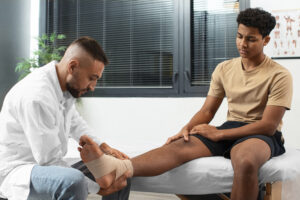
Typical Recovery Timeline:
-
Day 1–2: Walking with minimal assistance
-
Week 1–2: Light exercises and physiotherapy begin
-
Week 4–6: Return to routine activities
-
3 Months: Full recovery with improved knee function
Dr. Punit and his physiotherapy team ensure every patient receives a customized rehabilitation plan to regain full mobility.
How to Book a Consultation with Dr. Abhinandan Punit
If you’re struggling with chronic knee pain and looking for the best robotic knee replacement surgeon in Bangalore, it’s time to consult Dr. Abhinandan Punit.
📍 Clinic Locations:
-
Elite Orthocare, Kanakpura Road
-
Narayana Clinic, Electronic City
-
Narayana Health City, Bommasandra
-
Book a consultation today📞
Dr. Punit and his team will guide you through every step — from diagnosis to surgery to full recovery — ensuring you regain your freedom of movement with confidence.
For further query, click here on Robotic knee replacement Surgery
Conclusion
Knee pain doesn’t have to define your life. With the power of robotic-assisted precision and the expertise of Dr. Abhinandan Punit, recovery is faster, smoother, and more reliable than ever.
Combining experience, technology, and empathy, Dr. Abhinandan Punit continues to set new benchmarks in orthopedic excellence as the best robotic knee replacement surgeon in Bangalore.
Elite Orthocare is TrustIndex verified doamin who provide Total Knee Replacement Consultation to Pateint
Frequently Asked Questions About Knee Arthritis
Can knee arthritis be treated without surgery?
Yes. Many patients can manage knee arthritis with exercise, physiotherapy, weight management when appropriate, activity modification and pain-management strategies. The effectiveness of these approaches varies depending on the severity of arthritis and the individual’s symptoms. Surgery may be considered when persistent symptoms substantially affect daily life despite appropriate non-surgical treatment.
Is knee arthritis normal with age?
Knee osteoarthritis becomes more common as people get older, but significant knee pain and disability should not simply be dismissed as a normal part of ageing. Persistent symptoms deserve evaluation because several treatments can improve pain, mobility and function, even when arthritis cannot be completely reversed.
Can losing weight cure knee arthritis?
No. Weight loss cannot be expected to completely reverse established joint damage. However, for people who are overweight, sustained weight loss can reduce knee loading and may improve pain and physical function. It is therefore an important part of managing knee osteoarthritis for appropriate patients.
When should an older person see a knee specialist?
An older adult should consider an orthopedic evaluation when knee pain is persistent, walking becomes difficult, sleep is disturbed, the knee repeatedly swells or normal activities become increasingly difficult. An evaluation can help determine whether symptoms can continue to be managed without surgery or whether additional treatment should be considered.
Does everyone with severe knee arthritis need knee replacement?
No. The need for knee replacement depends on symptoms, functional limitations, examination findings, imaging and response to non-surgical treatment. Even significant arthritis on imaging does not automatically mean surgery is required. The decision should be individualized and discussed with an orthopedic specialist.
What should I do if non-surgical treatment is no longer helping?
If exercise, physiotherapy, weight management and other appropriate treatments are no longer providing enough relief, an orthopedic consultation can help reassess the condition. Depending on the severity of symptoms and joint damage, your doctor may discuss additional non-surgical options or whether knee replacement is appropriate.